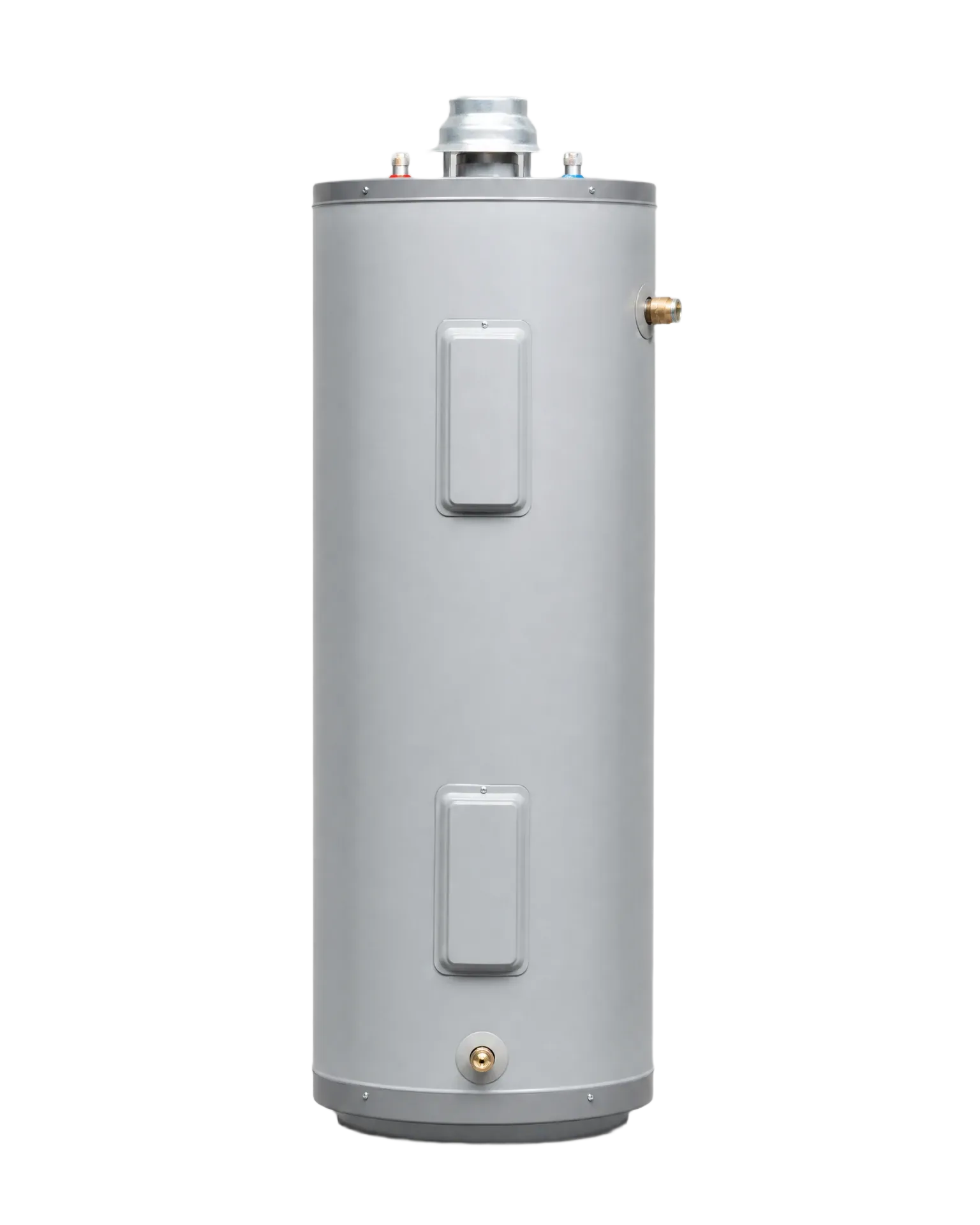
What a sound tank looks like
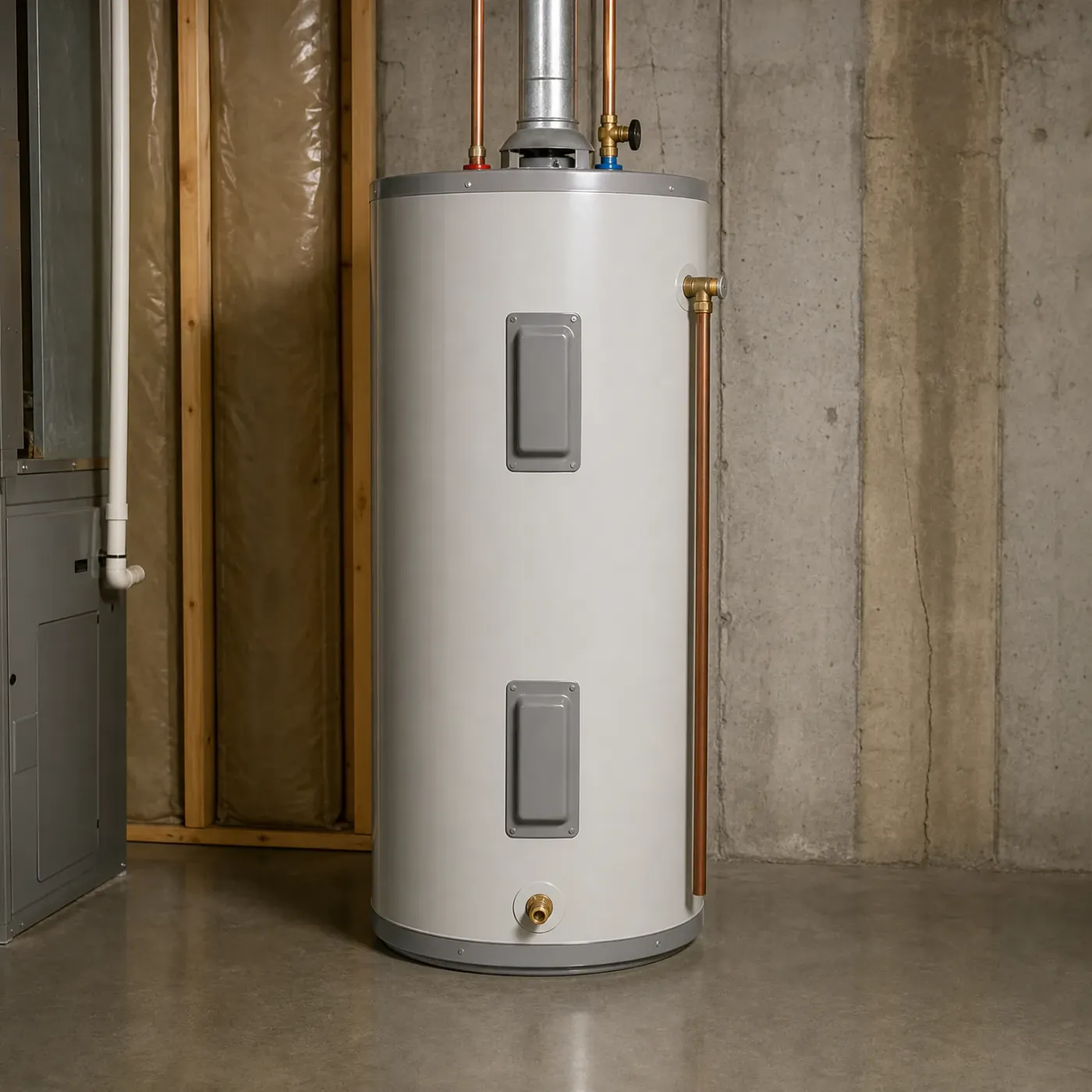
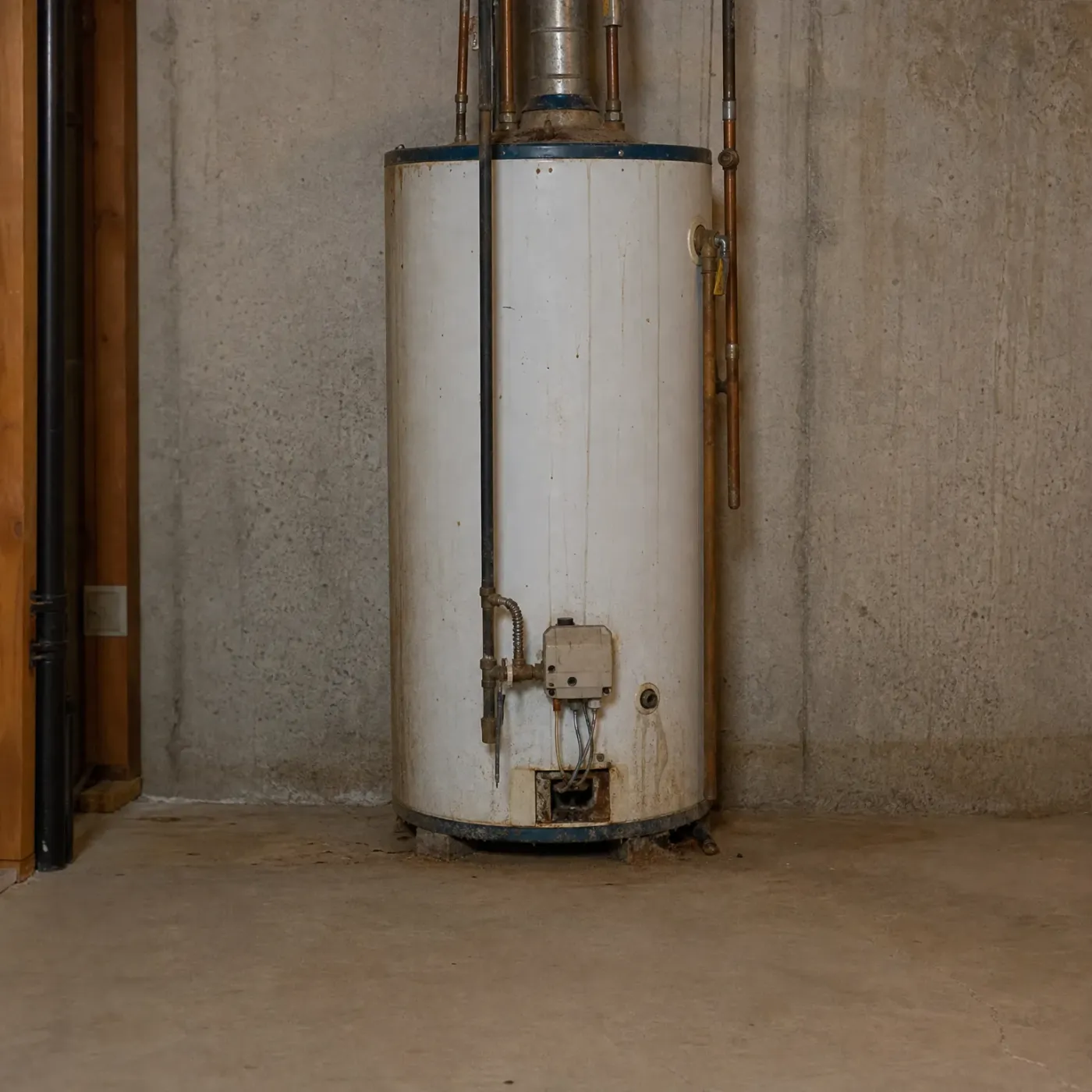
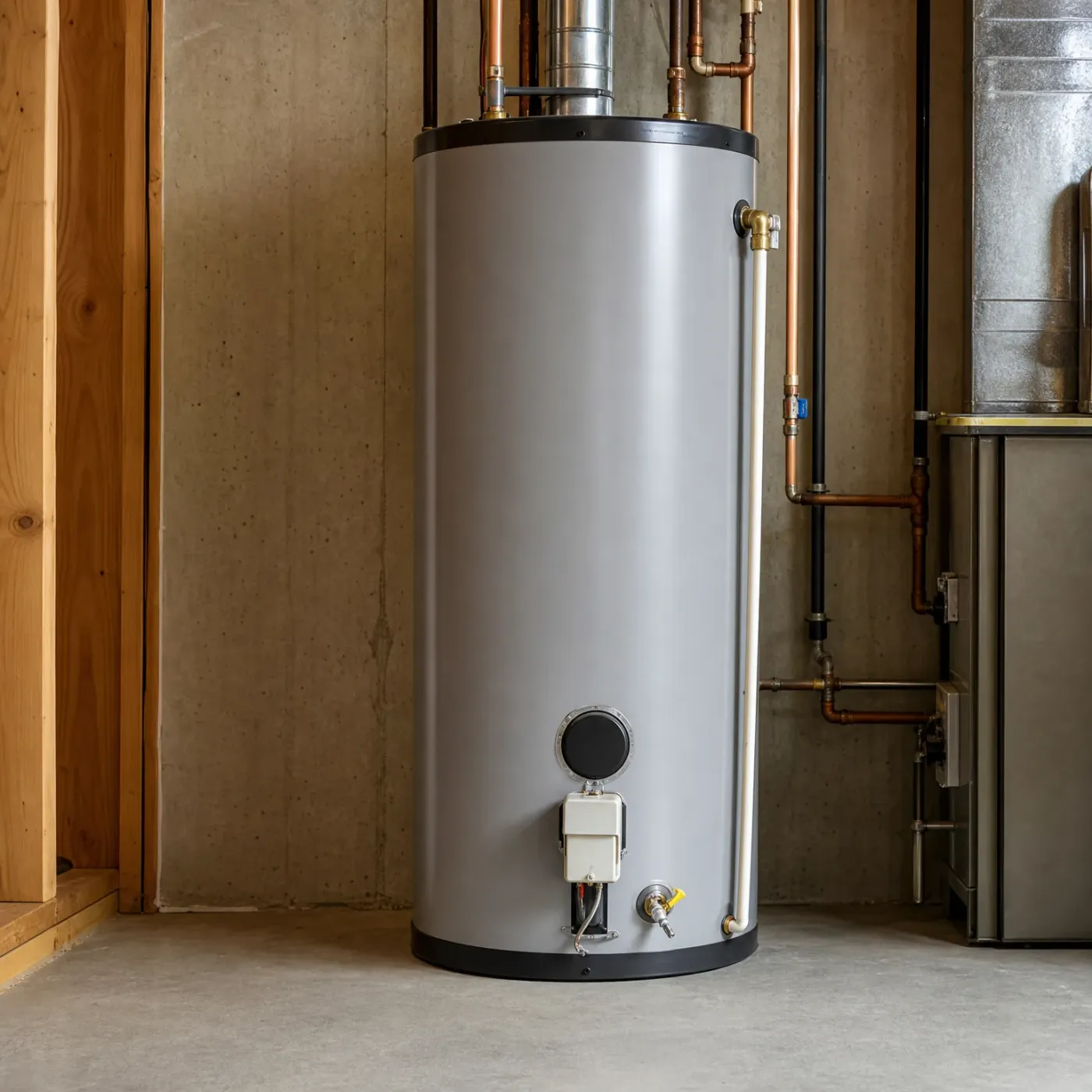
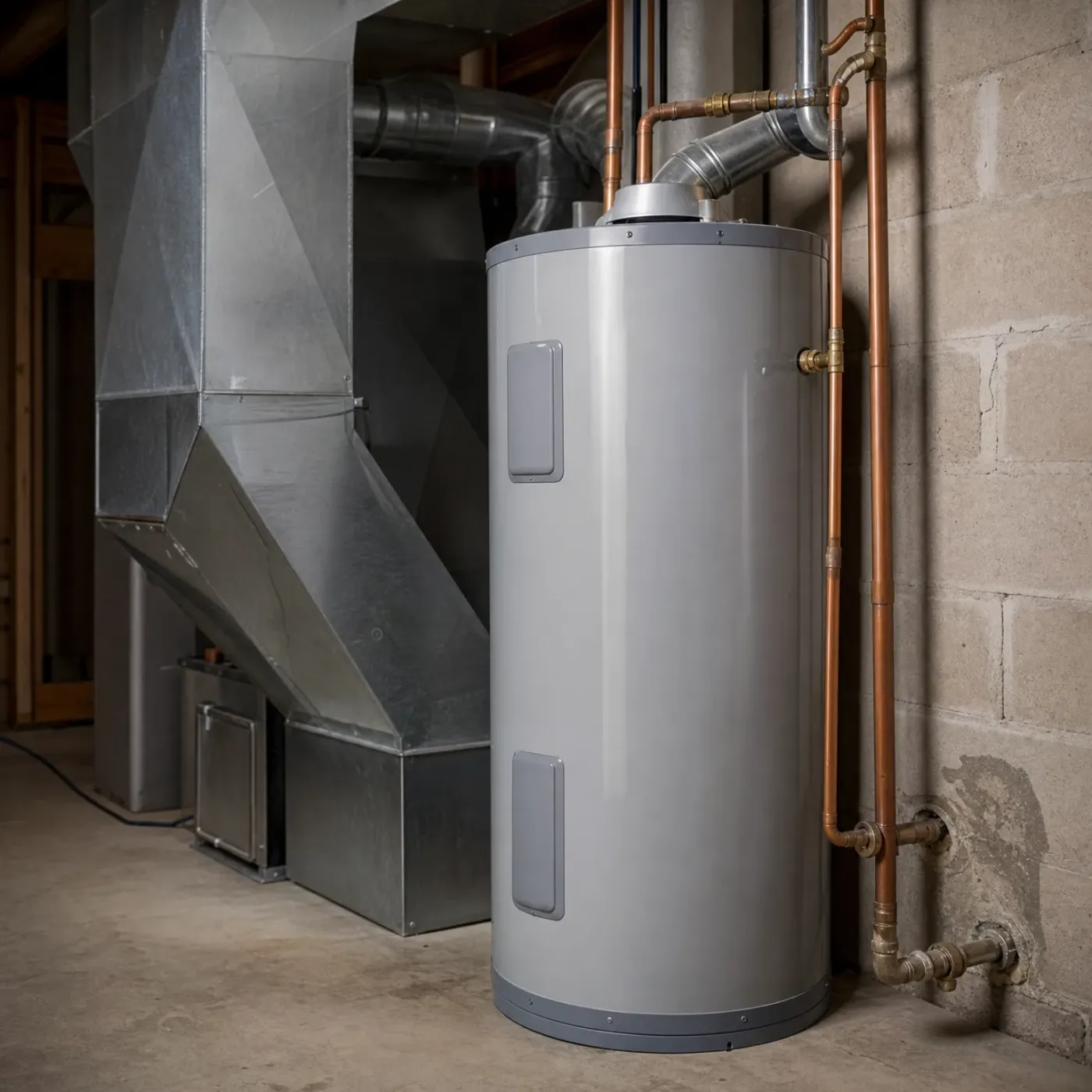
The copper lines stay dry at every joint. The tank wall is clean steel, no streaking, no rust at the seams. The flue sits straight and the panels on the front show nothing leaking behind them.
A leaking water heater usually means the tank itself has failed. Inside, the steel tank is lined with glass, and once that lining cracks, the metal underneath rusts through and water finds its way out through the seam or the bottom. That's a tank you replace, not patch. But not every leak means a dead tank. Water pooling at the top can come from a loose inlet or outlet fitting, or a fitting that just needs a wrench. A leak from the relief valve, the one on the side with the small pipe running down, can mean too much pressure is building inside, and that one is worth taking seriously rather than waiting on. If your water heater sits in a basement or a closet near other rooms in the house, even a slow leak is worth tracking down fast, since that water has somewhere to go.
Where the water shows up tells you most of what you need to know. Bottom of the tank, and you're almost certainly looking at the inner tank itself giving out, since that's below the water line and nothing there gets fixed with a wrench. But water under the tank isn't always the tank. The pressure relief valve sits on the side or top and it's designed to let water out when pressure inside climbs too high, so a puddle can mean the valve did its job. Up top, where the cold water comes in and the hot water goes out, a leak there is usually just a fitting that worked loose, and that's a quick fix. The drain valve near the bottom is its own part too, and if it's dripping, the valve itself is probably worn, not the tank around it. One more thing worth ruling out: a cold water line running into the tank will sweat in summer, and that moisture can look like a leak until the air around it dries out.


2.53 people per household on average
Dallas County homes average 2.53 people, so a leaking tank usually means everyone is sharing hot water from whatever unit you have left working or none at all.
Half the homes here were built by 2006
Half the homes in Dallas County were built in 2006 or earlier, which puts a lot of original tanks at or past the point where a leak means the tank is failing, not just loose.
59.2% of homes heat with gas
Gas heats 59.2% of homes here, more than any other fuel, so a leaking gas water heater needs someone who knows how to shut off the gas supply safely before touching the tank.
ACS 2020-2024
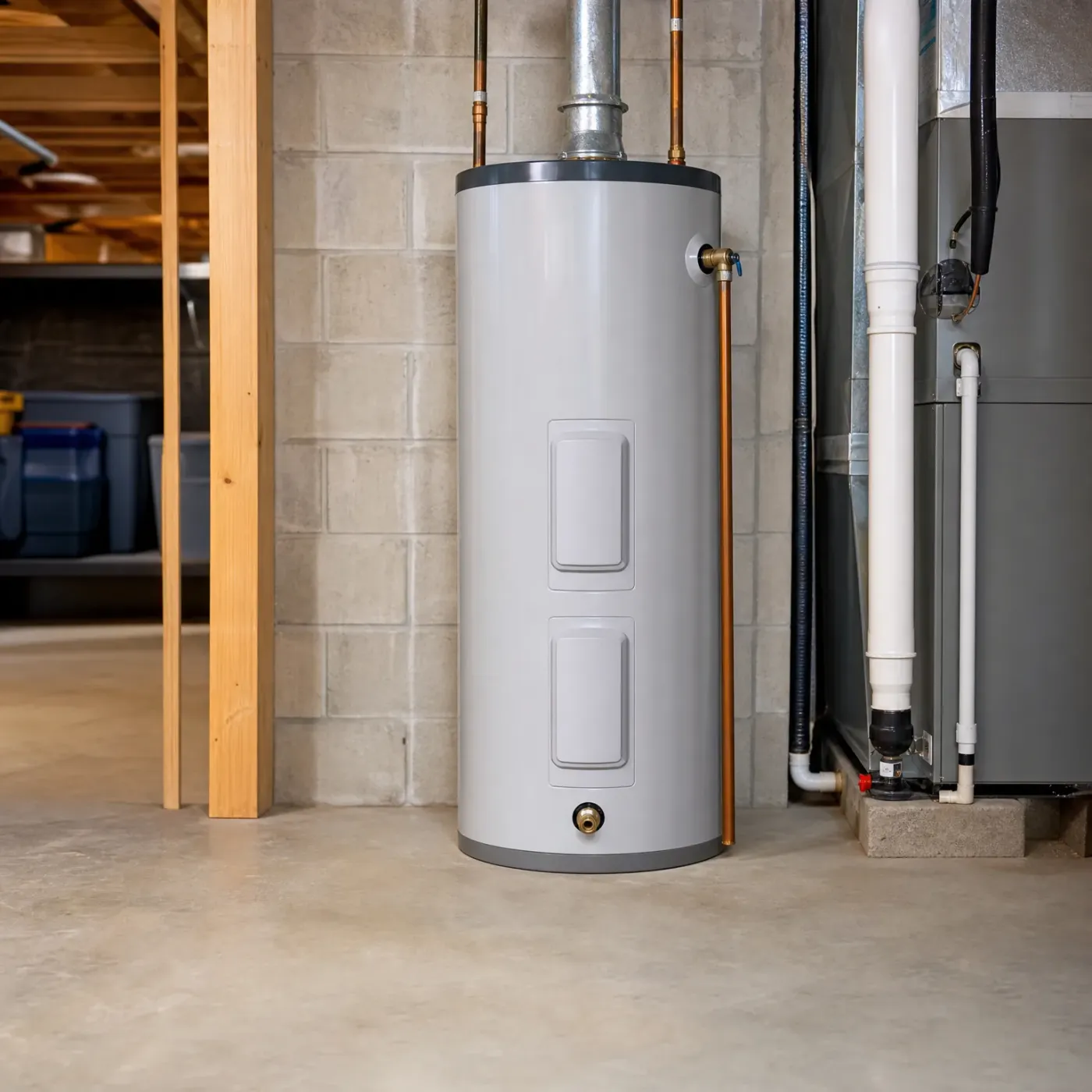
The copper lines stay dry at every joint. The tank wall is clean steel, no streaking, no rust at the seams. The flue sits straight and the panels on the front show nothing leaking behind them.
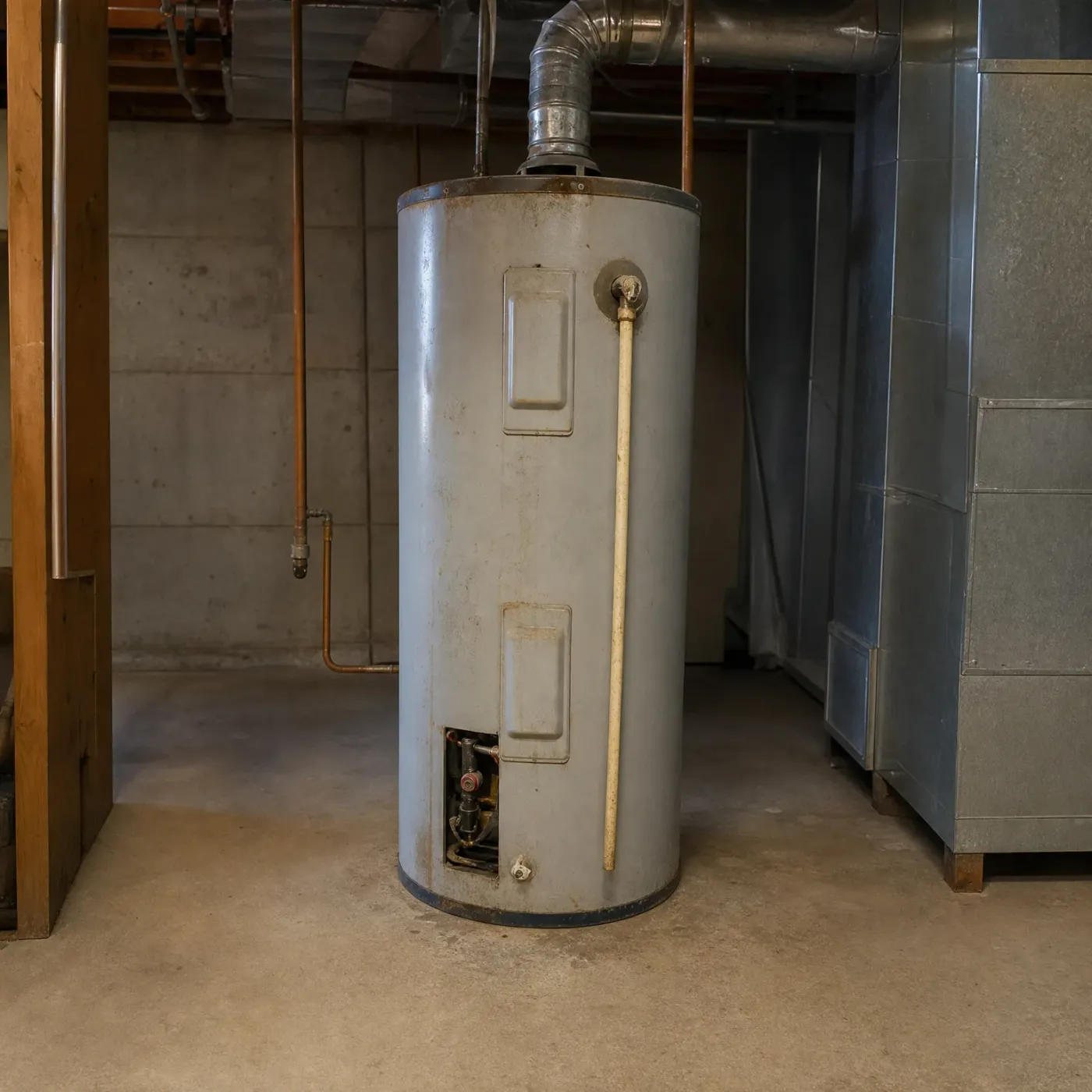
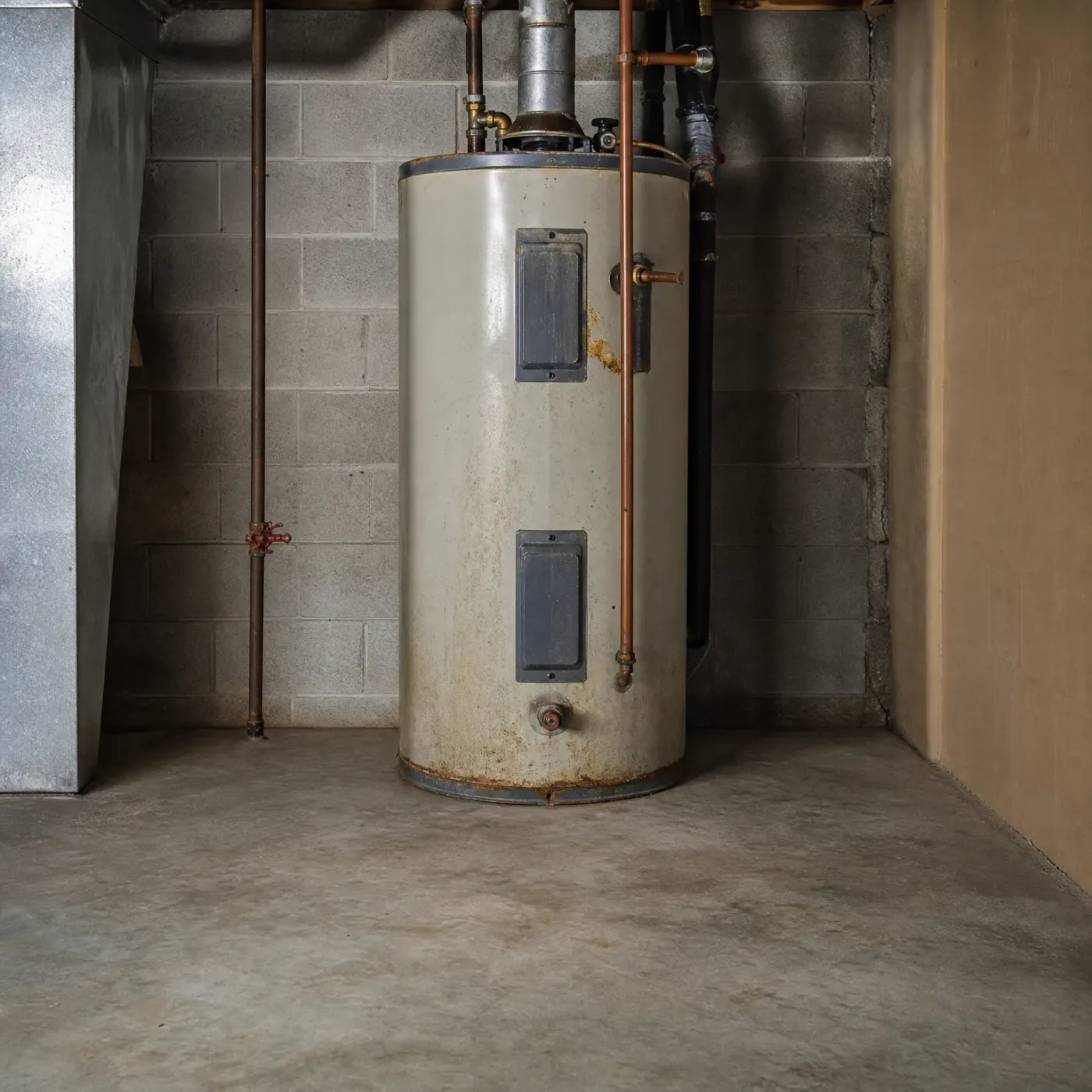
Rust has spread across the gray tank and down toward the floor. The relief valve pipe runs down the side, and if water is tracking along it or pooling at the base, the tank underneath is going, not just the paint on it.
A leak at the top of the tank reads different from one pooling underneath, and it worries people for a different reason. It usually shows up as water running down the side of the tank or dripping from above, and it's easy to assume the worst, that the whole tank is rusting out. Sometimes that's true. Often it isn't.
The top of the tank is where the cold water inlet, the hot water outlet, and the cold water shutoff all connect, along with the anode rod and sometimes the pressure relief valve. Any one of these can loosen or corrode and let water seep out without the tank itself being at fault. A loose fitting can often be tightened or resealed. The anode rod, which protects the steel tank from rust, wears down over years and can leak around its fitting once it's spent. If the leak is coming from the pressure relief valve on top, that's the valve releasing pressure, which is a safety function, not a defect to ignore.
A licensed pro who repairs water heaters in Dallas County gets your request.
A Dallas County pro who repairs water heaters gets your request.
Sending the form costs nothing.
At 11.54 cents per kilowatt-hour, an electric water heater here doesn't cost much to run, which is why a leaking tank catches people off guard. The failure isn't about what you paid to heat the water. It's the tank itself giving out underneath.
EIA-861 2025
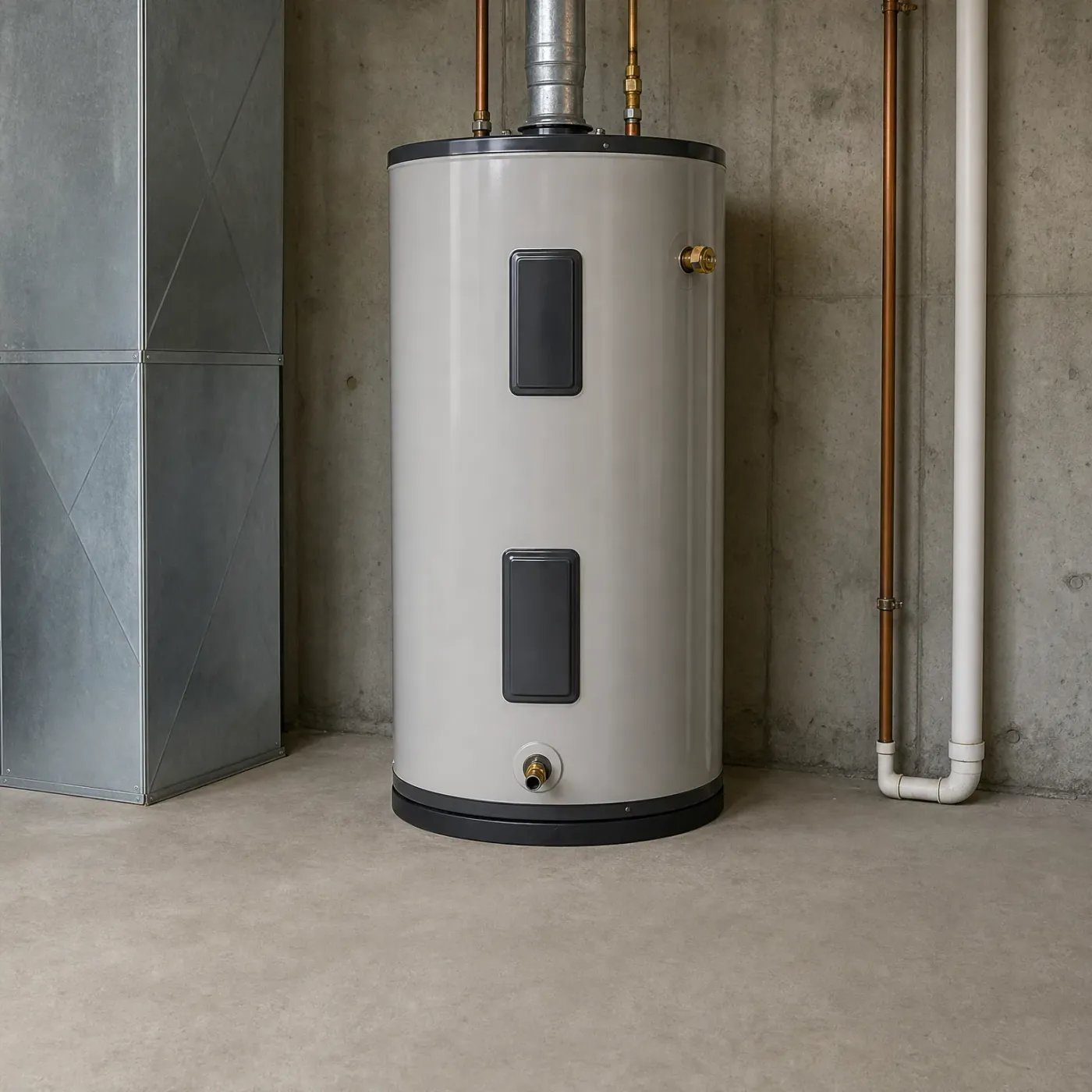
This is what a healthy water heater looks like. The panels sit flush with nothing weeping behind them, the drain valve is dry, and the copper and PVC lines run clean along the wall. No rust on the steel, no staining on the floor beneath it.
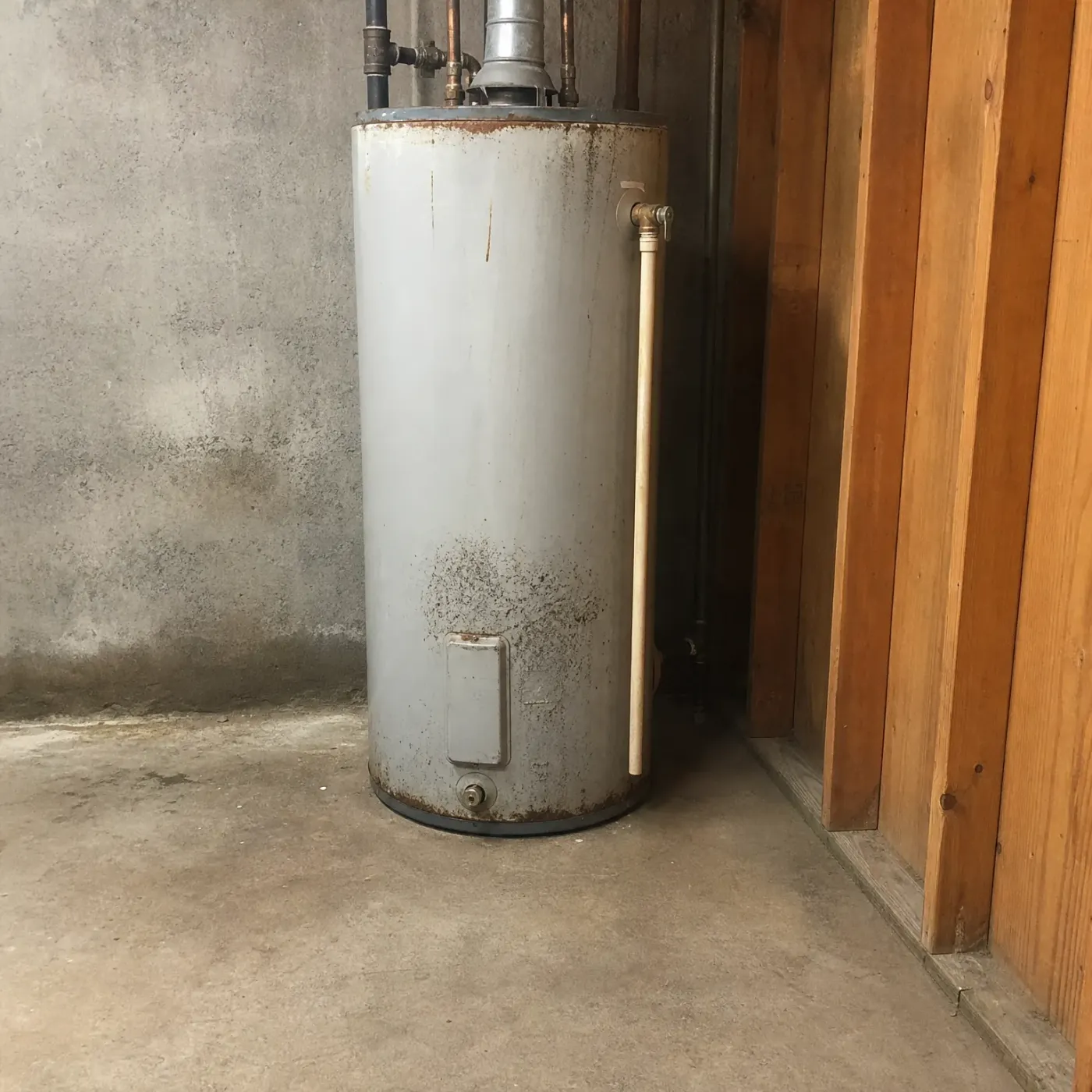
This is what failure looks like. Rust has eaten across the steel and down toward the base, with soot marking the spot where it's worst. Once corrosion shows like this on the outside, the tank has already given out on the inside, and the leak is just the first sign you can see.
A plumber shuts off the water and power to the tank
They check the T&P valve and drain valve first
They trace water back to find the actual source
They confirm whether the inner tank has rusted through

A water heater leaking in Waukee usually comes down to one of two things: a fitting or valve that's failed, or the tank itself rusted through. Only one of those is worth repairing. The only way to know which one you've got is to have someone trace the water back to where it starts.
A plumber local to Dallas County who works on these tanks all year knows what tends to give out first and what it looks like when it does. Getting matched with one means a single contractor looks at your unit and tells you straight whether it's a part or the tank, instead of you fielding calls from several companies guessing over the phone. From there you'll know where you stand, and what it actually takes to get your hot water back.





Find a water heater repair pro in Dallas County
The pro who gets in touch is licensed in Iowa and works in Dallas County.