Still doing its job
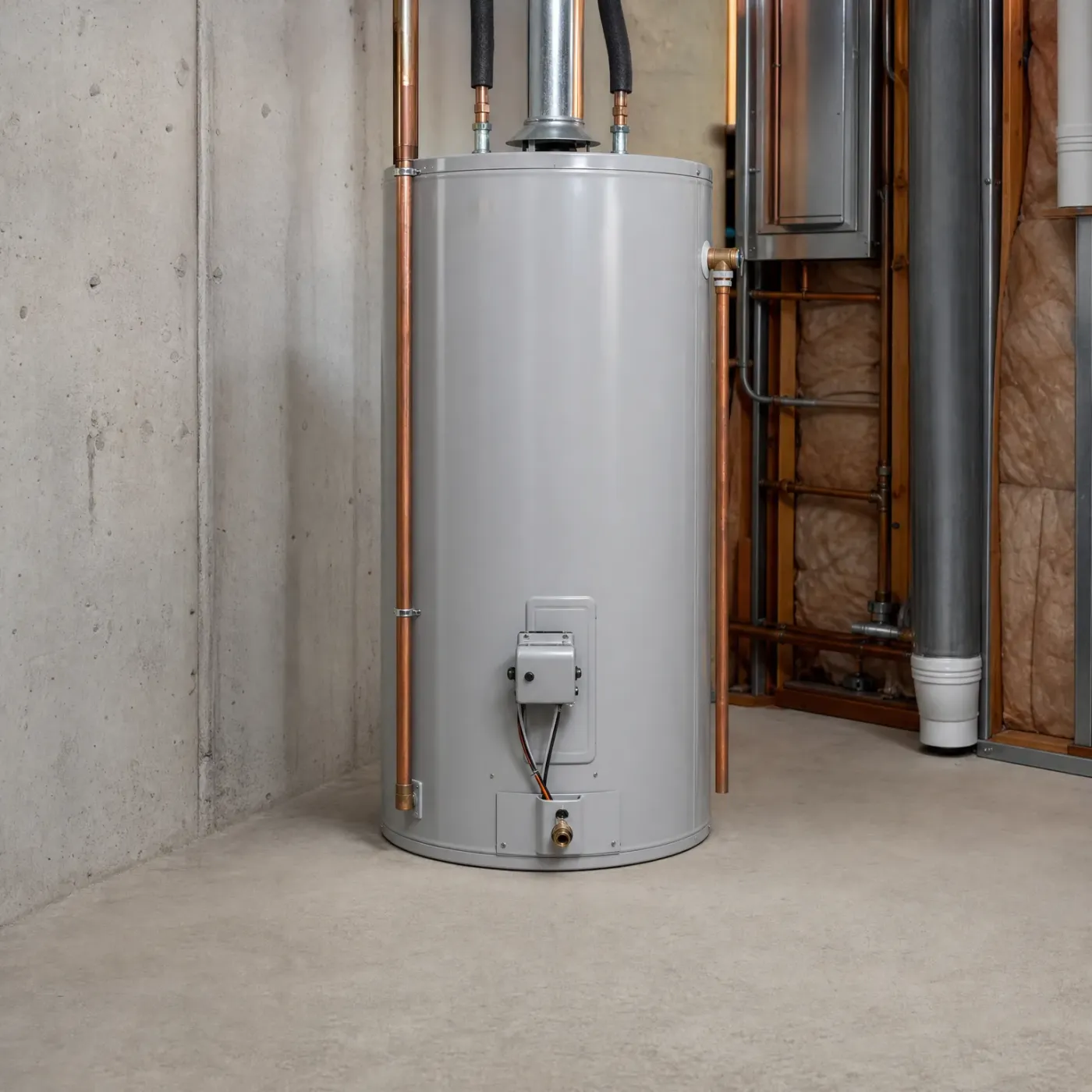
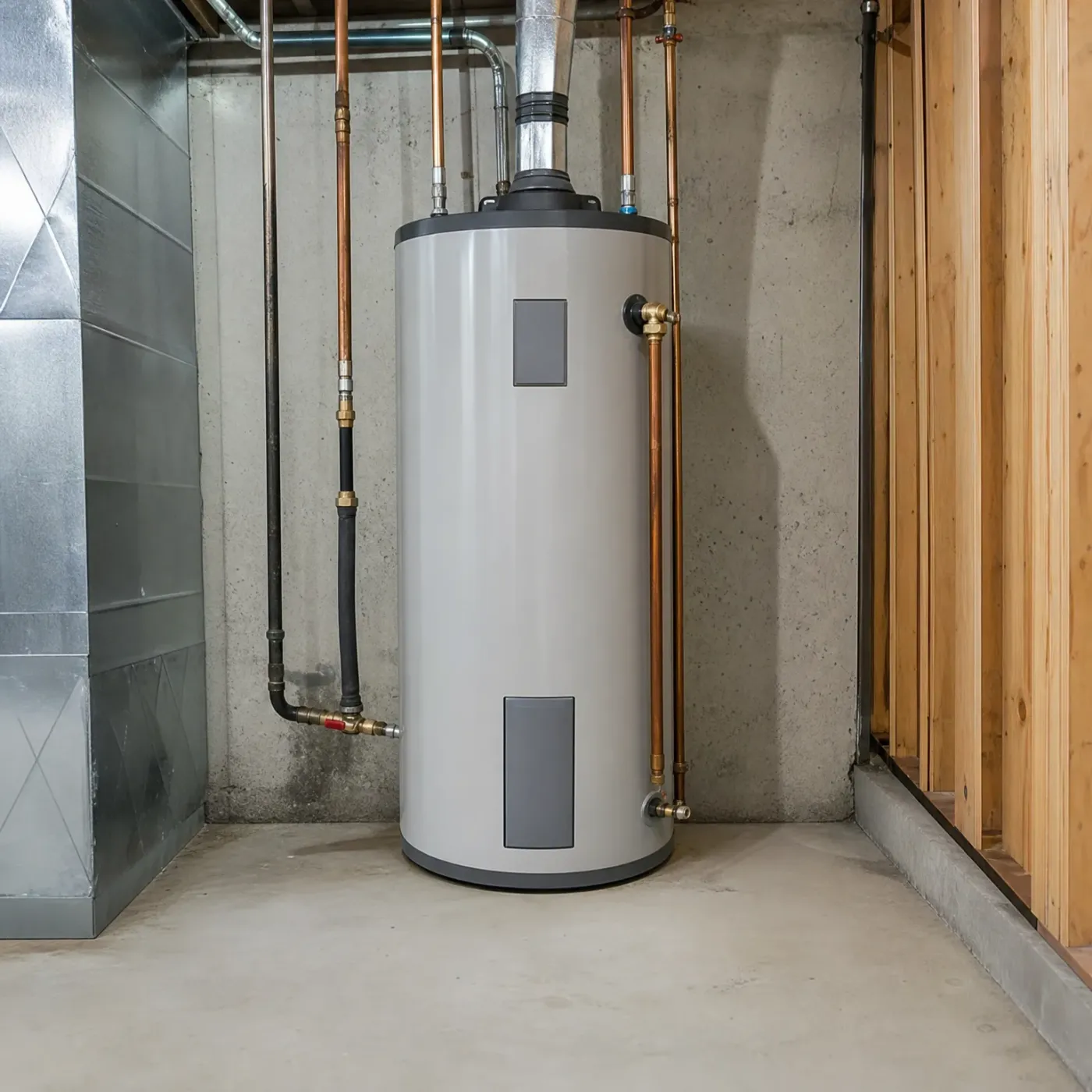
A water heater like this one is holding pressure the way it should. The fittings are dry, the drain valve isn't weeping, and the vent pipe is doing nothing but venting. Nothing here needs more than a look to confirm it's fine.

A leaking water heater almost always means something inside has failed, not just a loose fitting. If water is coming from the top, it's likely a supply line connection or the cold inlet valve. If it's coming from the bottom, the tank itself has probably rusted through from the inside, and that means replacement, not repair. Gas water heaters, which run most Iowa homes, can also leak from the drain valve or the temperature and pressure relief valve when pressure inside builds too high. A tank that's been quietly corroding for years can hold for a long time and then let go all at once, often after a summer where it's been working harder to keep up with hot, humid weather and heavier hot water use. Either way, a leak means the tank is under active stress right now, and water pooling at the base can damage flooring or whatever is stored nearby. Getting a licensed plumber to look at it quickly tells you whether it's a fixable part or a tank that needs to come out.


Every tank water heater has a glass lining inside the steel, and that lining is what keeps the water from eating through the metal. Once it cracks, rust gets a foothold on bare steel and spreads from there. It doesn't blow out in one spot. It works along a seam or around the bottom until the steel finally lets go, and sediment sitting on the bottom makes that spot go first because it holds heat against the tank. Not every drip means the tank is done, though. The pressure relief valve is supposed to open when pressure inside builds too high, so water at that valve can just mean it's working. Same with the fittings and the anode rod, they're threaded into the tank, so a leak there is usually a seal or the rod, not the tank itself. One thing worth noticing: if the leak only shows up while the burner or element is running, that's the tank, because pressure climbs as the water heats and pushes water out through wherever it's already weak.




A water heater that's leaking from the tank itself won't wait for a convenient time, and in an Iowa basement or utility closet that water finds drywall and flooring fast. Most homes here run gas water heaters, so the fix might be the gas control valve, the anode rod, or the tank itself, and telling those apart matters before anyone touches a wrench. A plumber who works on these units all year in this state has seen which ones fail first in houses like yours, and knows whether what you're looking at is a fitting worth tightening or a tank that's done. Sending the request to one licensed local contractor instead of guessing which company to call means someone who actually knows this equipment gets the full picture of what's going on under your water heater, not a fraction of it split across five phone calls. That's worth doing before the leak gets worse.
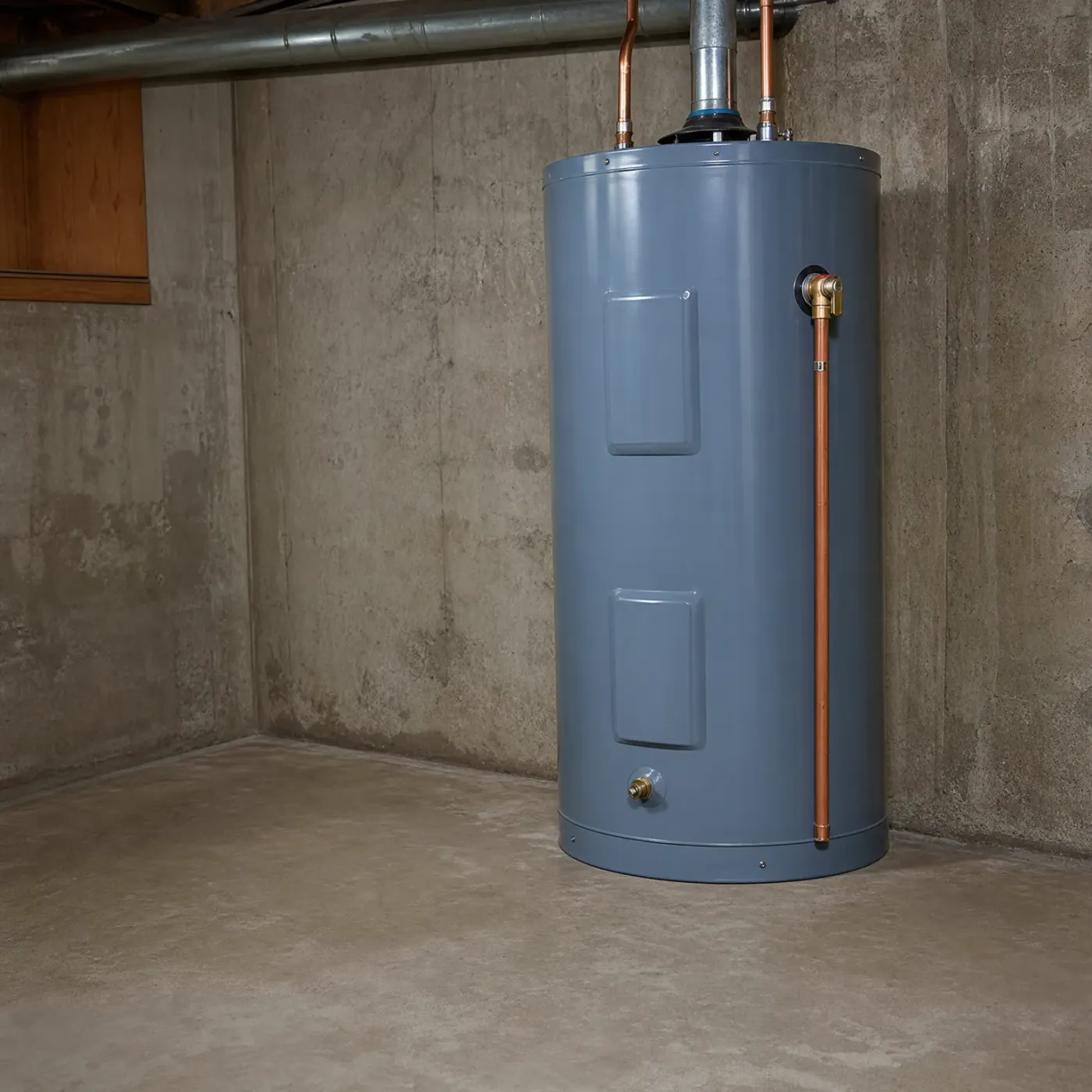
A water heater like this one is holding pressure the way it should. The fittings are dry, the drain valve isn't weeping, and the vent pipe is doing nothing but venting. Nothing here needs more than a look to confirm it's fine.
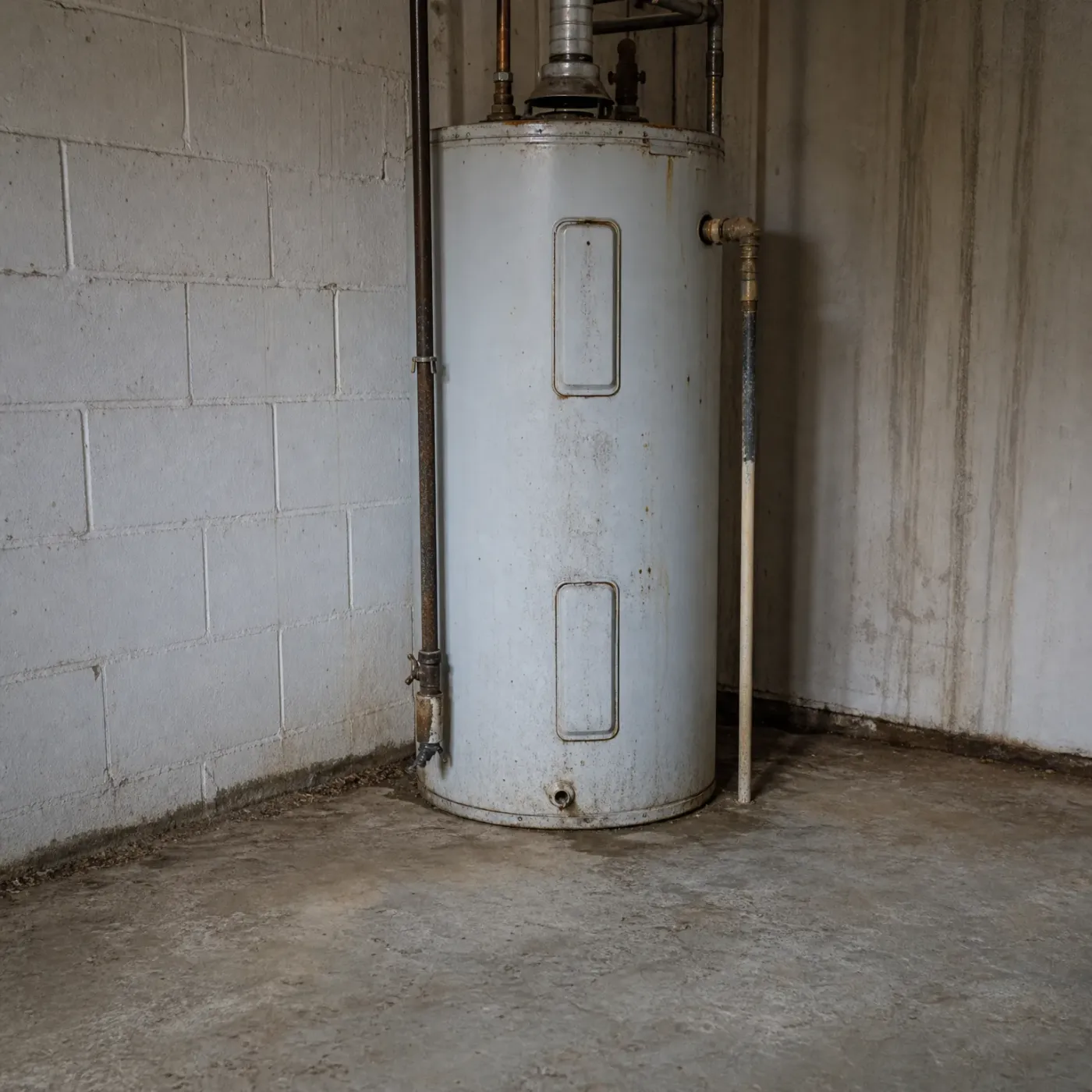
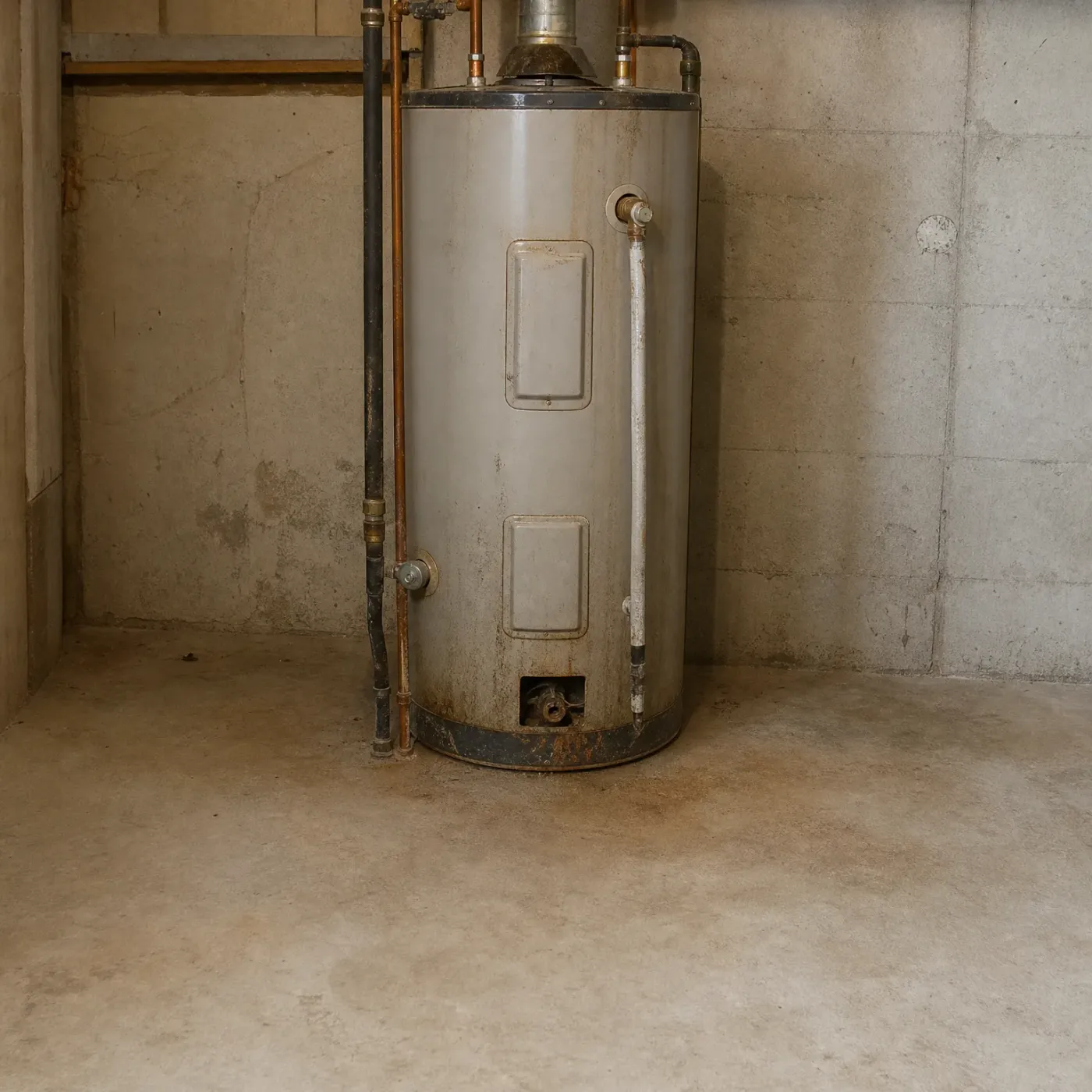
Rust like this on the tank itself means the steel is going, not just a fitting. Once corrosion gets to this point there's no patching it. A contractor who sees tanks like this every season can tell you fast whether it's still holding or already through.
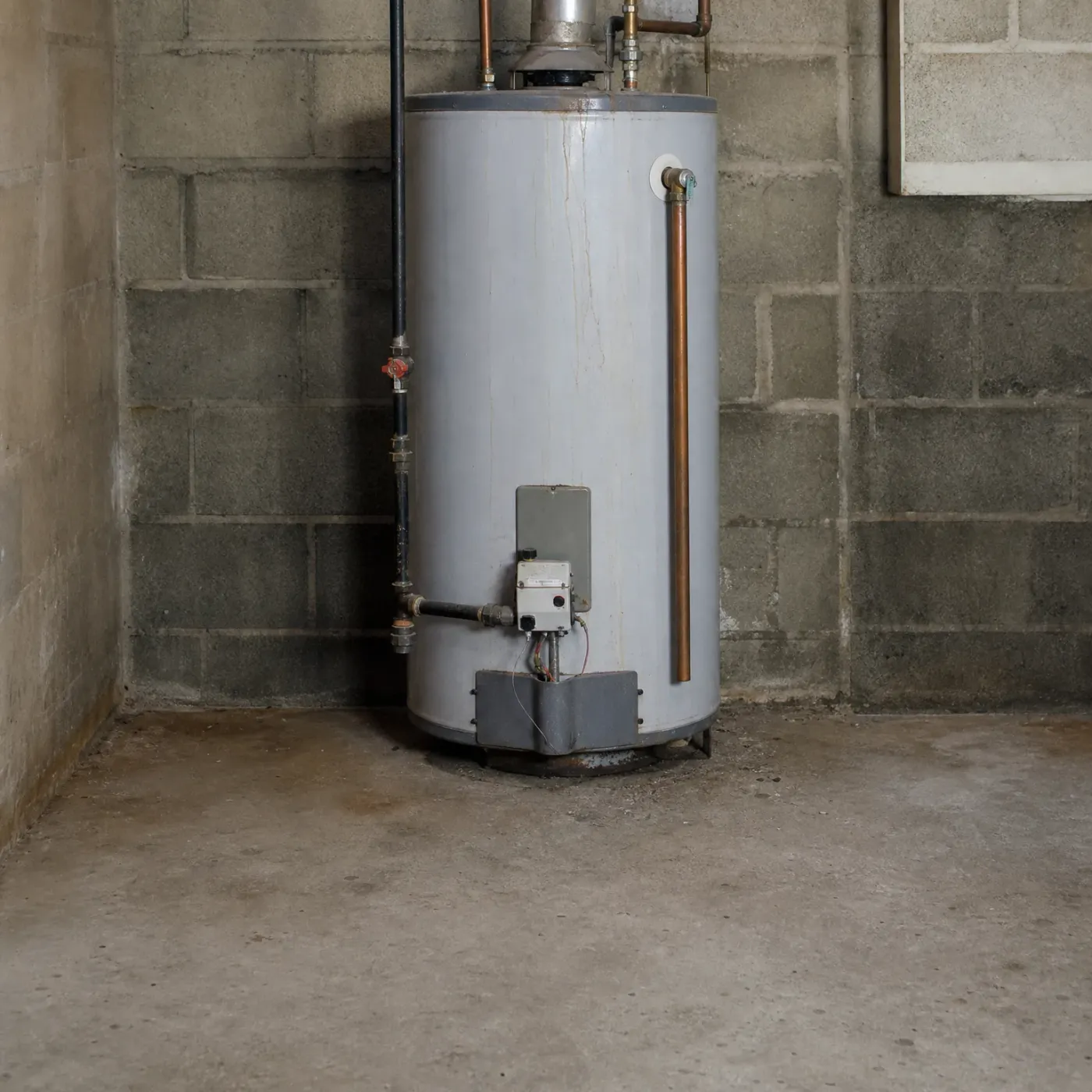
Go look at it. Water pooling on the floor around the base, or a damp ring on the drywall behind it, usually means the tank is rusting through. A drip or wet spot higher up, near the pipes going in and out of the top, points to a fitting instead. You might notice a rusty smell, or rust-colored water, or the floor near the tank staying damp even after you wipe it down. In an Iowa basement or utility closet, that water doesn't stay contained. It soaks into flooring, drywall, and anything stored nearby, and the longer it sits, the more it ruins.
A contractor checks fittings, valves, and the drain valve first.
Pressure and temperature readings show whether the tank is overworking.
The tank itself gets inspected for rust or a cracked lining.
Fittings get tightened or replaced if the tank is sound.
Most homes in Iowa heat water with gas, not electricity. That means a leak is as likely to trace back to the gas control valve or the flue fitting as to a supply line, and a contractor working on your unit needs to know gas systems, not just electric ones.
ACS 2020-2024 5-year B25040
A leak comes down to one question: is it a fitting or is it the tank. Water at a connection or valve is a repair. Water working its way out of the steel itself is not. Checking which one you have means looking at the tank, the fittings, and on a gas unit, the control valve and the flue fitting too, since those are places a gas water heater can leak that an electric one never will. Most water heaters in Iowa run on gas, so whoever looks at yours needs to know those parts as well as the supply lines and washers.
That's the kind of thing a contractor who works on these units every week already knows walking in. Someone local who's been inside enough Iowa basements has seen a cold inlet fitting let go, seen a tank weep along a seam until it gave out, seen a flue fitting loosen on a gas unit. They're not guessing at what it might be. They're checking the places that actually fail, in order, and telling you which one it is.
Once you send the request, one contractor takes it, not three or four companies all calling the same day. That contractor comes out, checks the tank and the fittings, and tells you straight whether this is a fix or a replacement. You're not left sorting through quotes or explaining the problem over and over. You get an answer, and you get it from someone who already knows what's usually wrong with a water heater like yours.





Only one pro gets your request, so you hear from one company.
No charge to send it. You decide if you hire them.