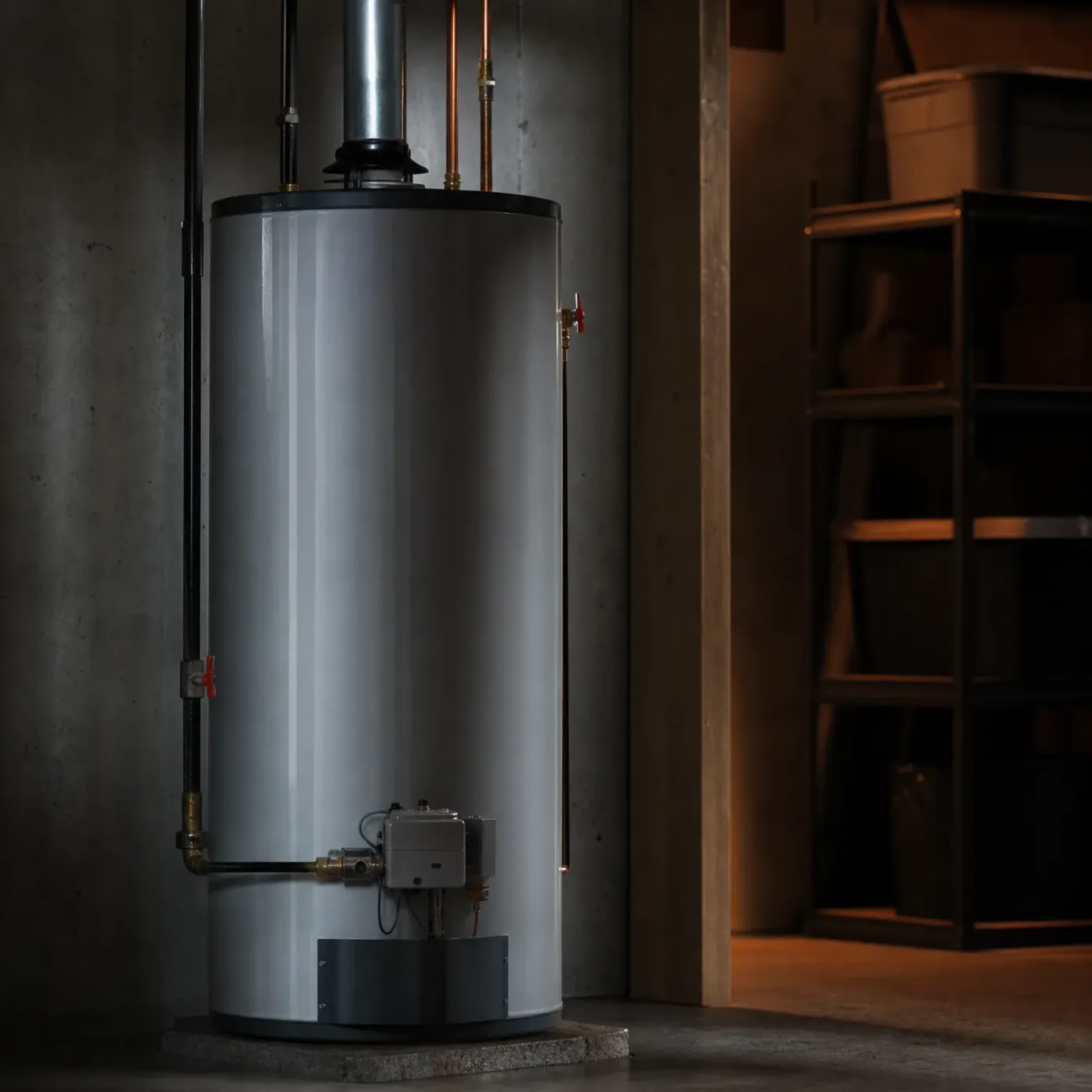
A large gray cylindrical gas water heater with copper and black pipes and a flue stack, standing on a concrete pad against a concrete wall, with a dark metal shelving unit in the background.

Hand off the search today

Why you run out of hot water fast in Iowa

Hot water running out fast usually means the tank isn't heating the way it used to, or it's too small for what your house is asking of it now. Could be the burner, could be a bad dip tube, could be sediment sitting at the bottom. Below is what to check first, and what it means for a gas tank running in Iowa. When you're ready for a hand, skip the search for who's available and who'll actually show, and send the form instead.

Hand it off

Running out of hot water fast almost always means the tank can't heat new water as quickly as you're using it up, or the hot water you're getting mixed with cold somewhere along the way. In a gas water heater, that usually comes down to the burner not putting out the heat it should, a dip tube that's broken and letting cold water mix straight into the hot layer at the top of the tank, or sediment built up on the bottom that insulates the water from the burner's heat. Any one of these cuts into how much hot water the tank can actually deliver, even if the tank itself is the right size for your house. A full tank that still runs cold fast is usually telling you something inside it isn't working right, not that you need a bigger tank. Worth checking before anything else: the temperature setting, and whether the water coming out ever gets properly hot at all, even for a minute.

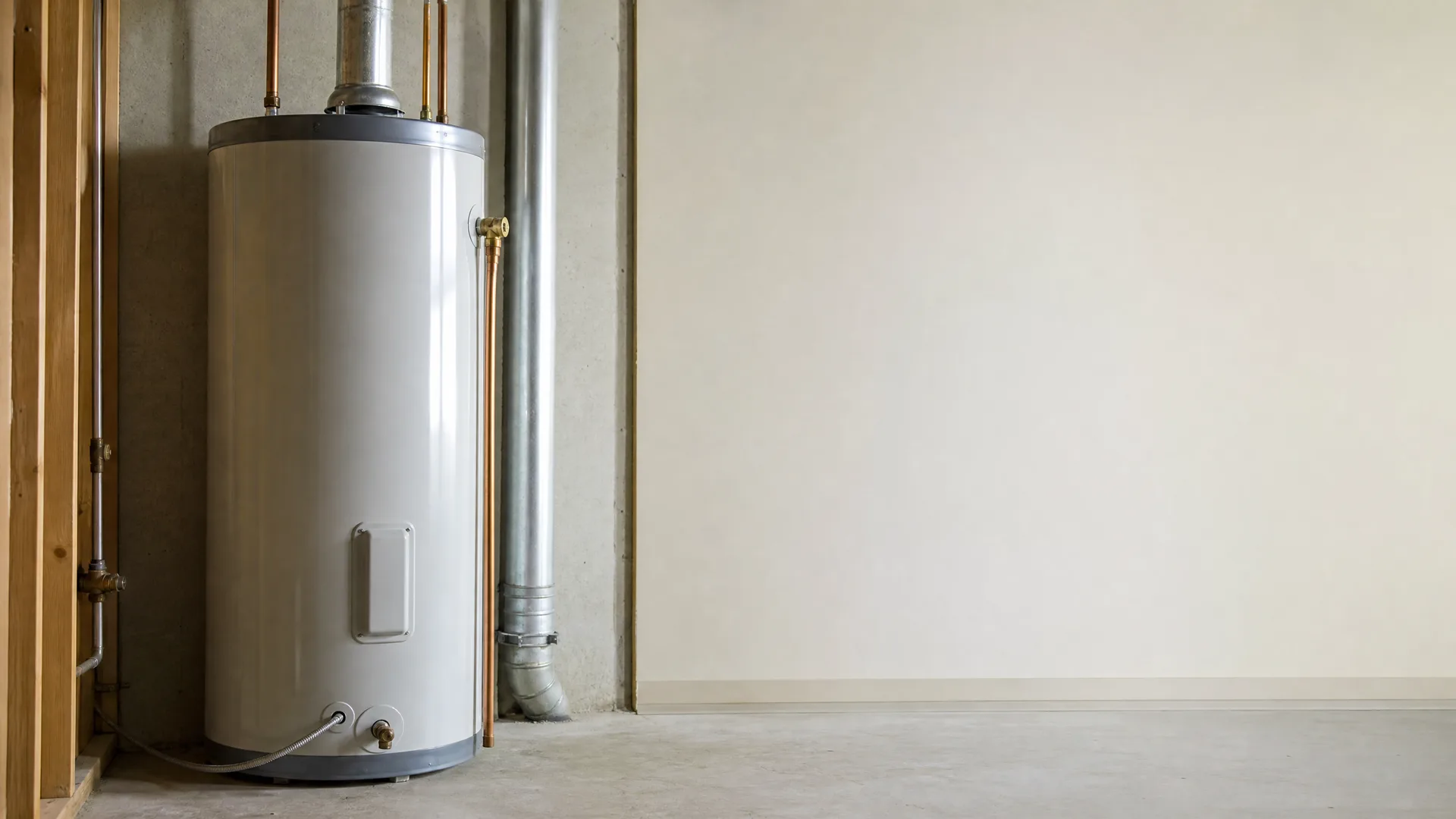
A white cylindrical water heater with copper pipes and a metal flue stands in the corner of an empty room with bare concrete floor, wood framing at left, and a plain light-colored wall.

Sediment at the bottom of the tank

Gas water heaters sit on a burner at the bottom, and that's where sediment collects over time. Once it builds up, it sits between the flame and the water, so the burner is heating sediment instead of water. A tank that used to give you a full shower now runs out halfway through, and the recovery time between uses gets longer too. Flushing the tank is part of what a repair visit checks.

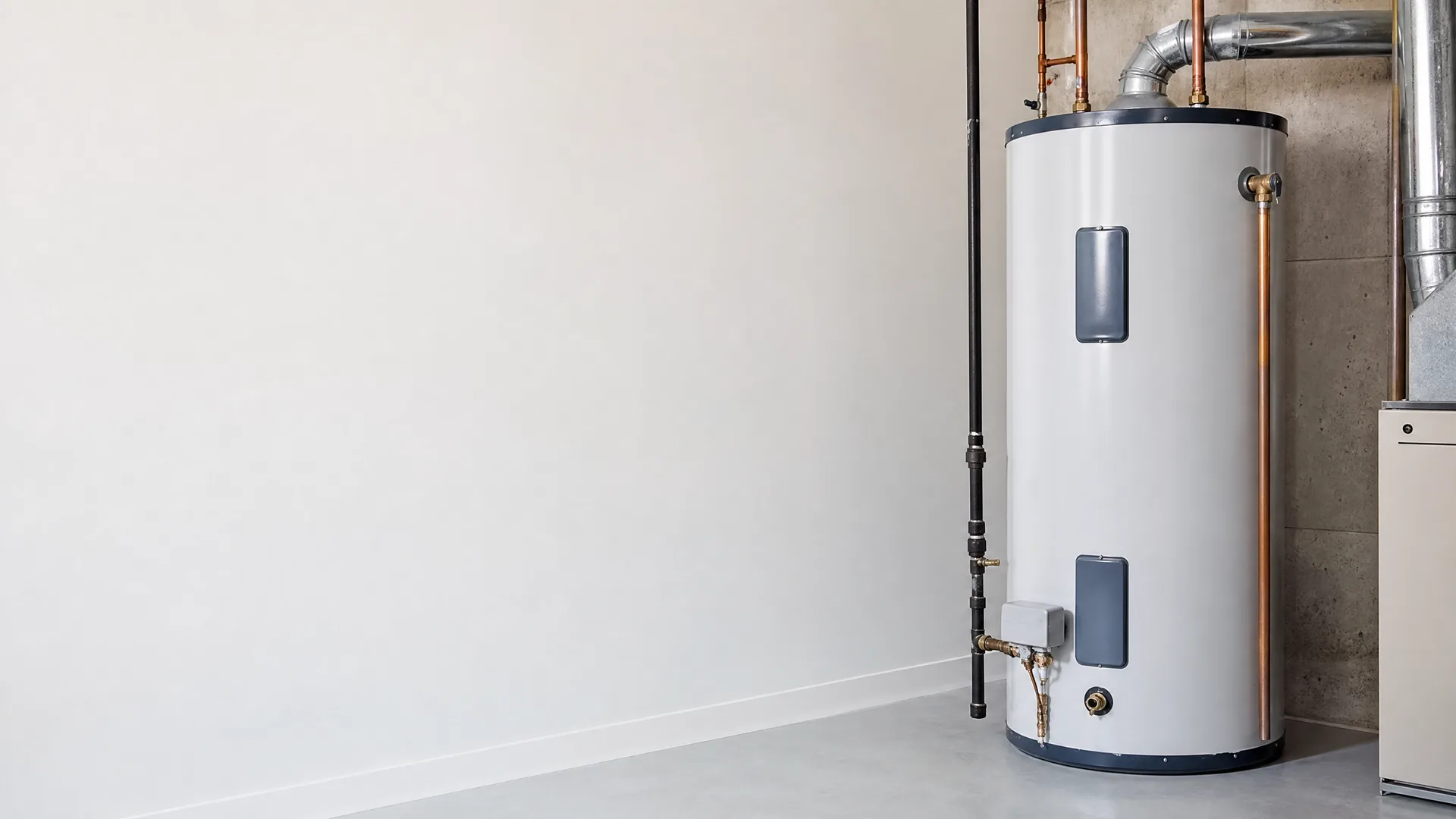
A white cylindrical water heater with copper and black pipes stands against a plain white wall on a gray floor, beside a concrete wall and metal ductwork.

A dip tube that's failed

Cold water enters the tank through a dip tube that's supposed to carry it to the bottom, so it heats from the bottom up while you draw hot water off the top. If that tube cracks or breaks off, incoming cold water dumps in near the top and mixes straight into what you're about to use. You get lukewarm water fast, even though the tank still has plenty left in it.

Why does my dip tube cause hot water to run out fast?

You've heard sediment can cause this, but someone mentioned the dip tube too, and you're not sure what that part even does or how it would make your hot water run out faster than it used to.

A cracked or broken dip tube sends cold water straight to the top of the tank

The dip tube runs down from the cold water inlet to the bottom of the tank, so incoming cold water gets heated before it rises to where the hot water outlet pulls from. When that tube cracks or breaks, cold water dumps out near the top instead, and it mixes straight into the hot water you're drawing from. You end up with lukewarm water a lot sooner than you should, even though the tank still has plenty of hot water sitting lower down. It's a plastic part, and it can fail on its own over time, no sediment involved. A plumber can check it by pulling the cold inlet fitting and looking at what's left of the tube.

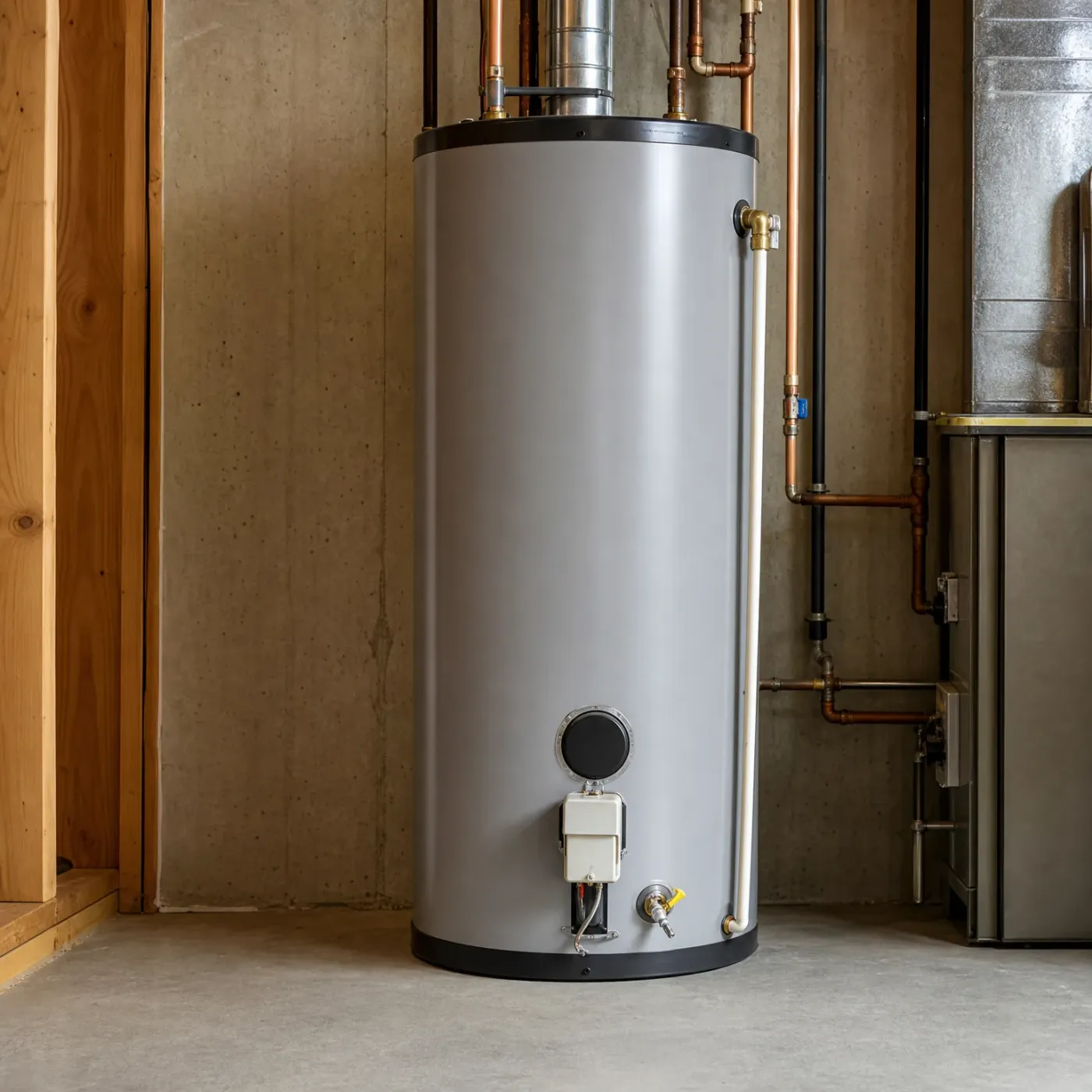
A gray cylindrical water heater stands on a concrete floor against a concrete wall, with copper and black pipes running overhead and a metal duct and dark equipment cabinet to the right.

Working the way it should

A gas water heater that's keeping up heats each new tank of water on a normal burner cycle, no longer, no rust creeping up the flue, no stains down the side. If yours still looks like this, the short recovery time is probably a sediment or dip tube problem, not the tank itself.
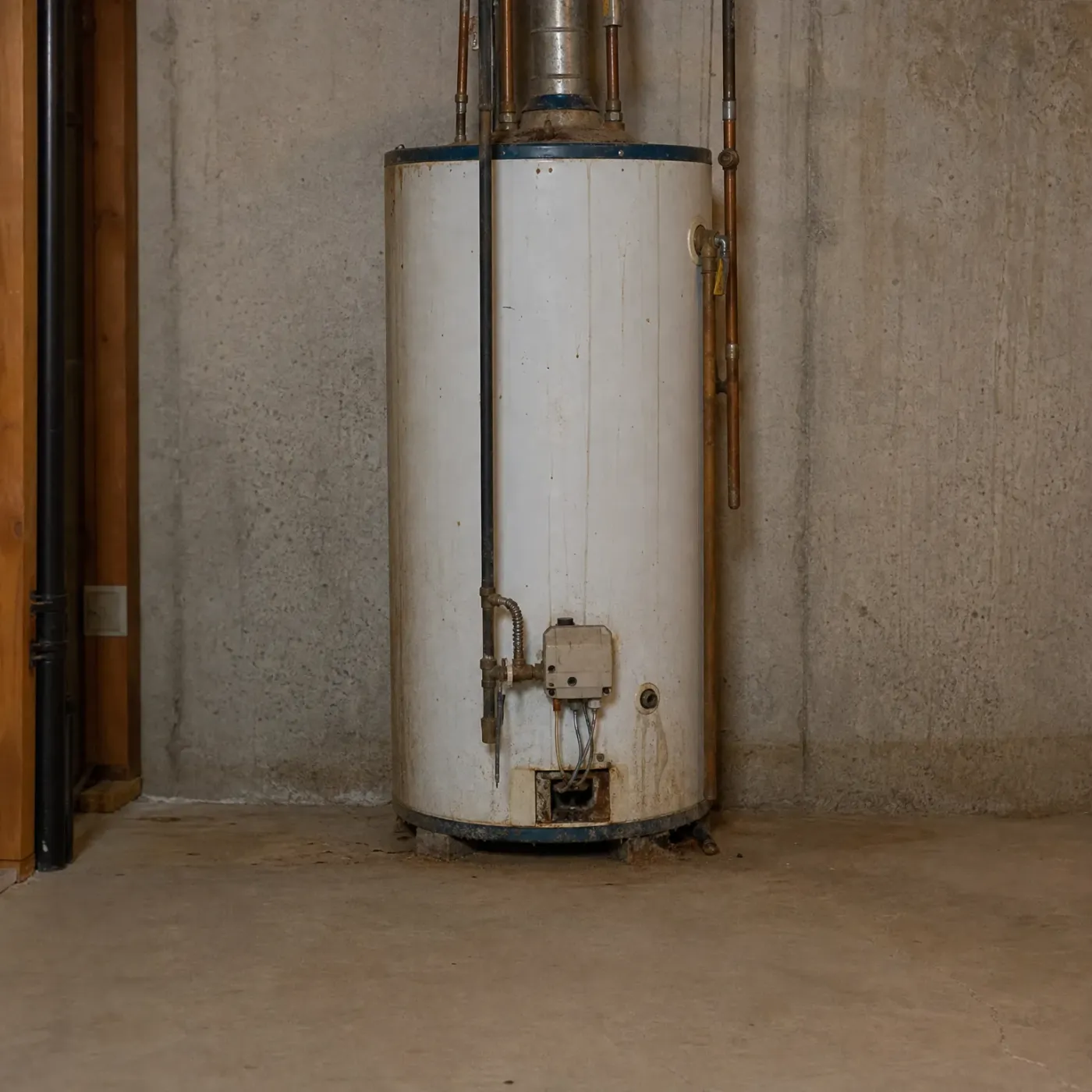
An old white gas water heater with rust stains, copper pipes and a flue stands in the corner of a concrete-walled room with a bare concrete floor and a wooden door frame at left.

Showing its age

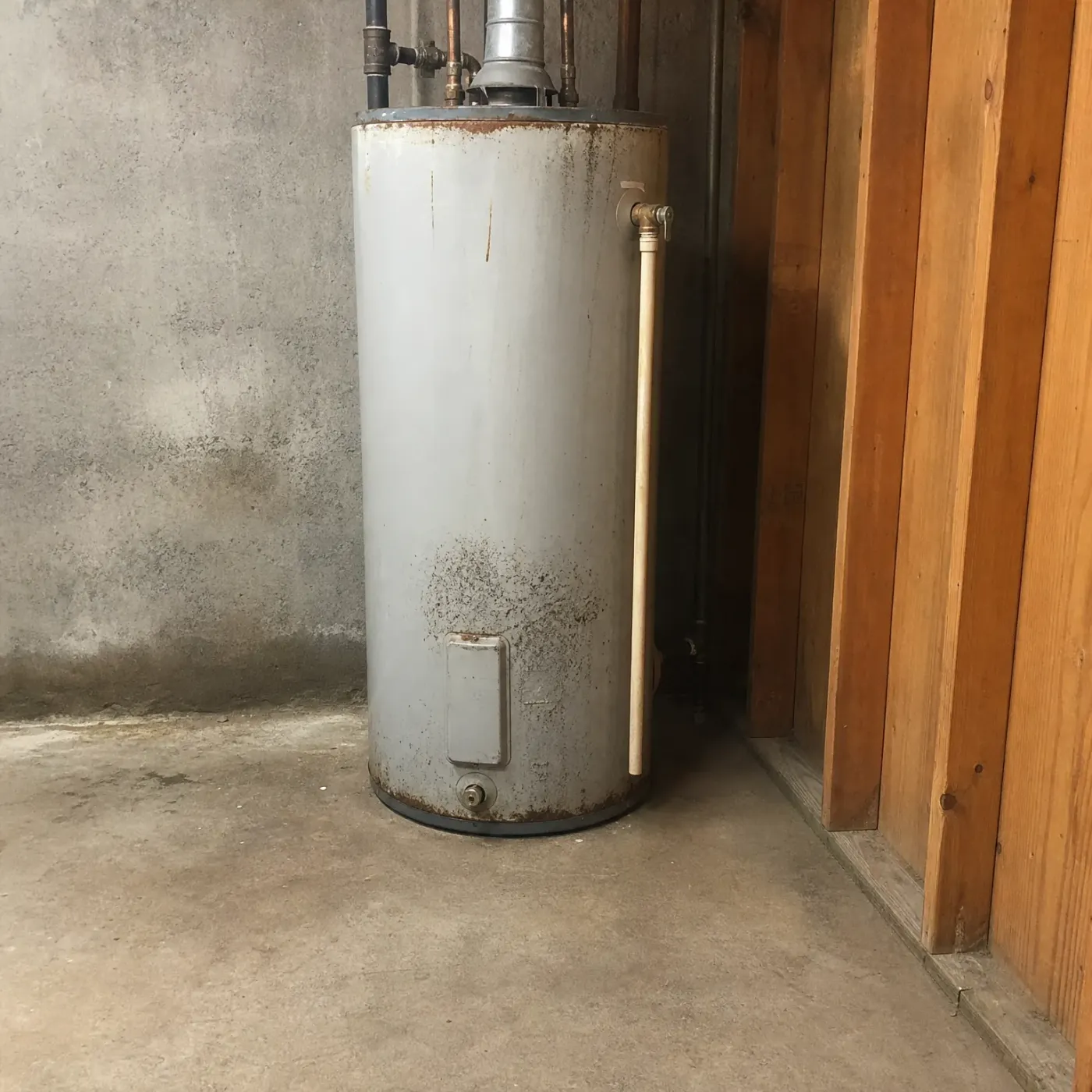
Rust on the jacket, a corroded flue pipe, worn paint around the burner box. A tank that looks like this has likely been losing capacity for a while, and running out of hot water fast is often one of the last signs before it fails outright. Worth having someone look at it before it quits on its own.

A rusting gray cylindrical water heater with copper pipes and a drain tube stands on a concrete floor against a concrete wall beside vertical wood paneling.
Before you get your water heater repair
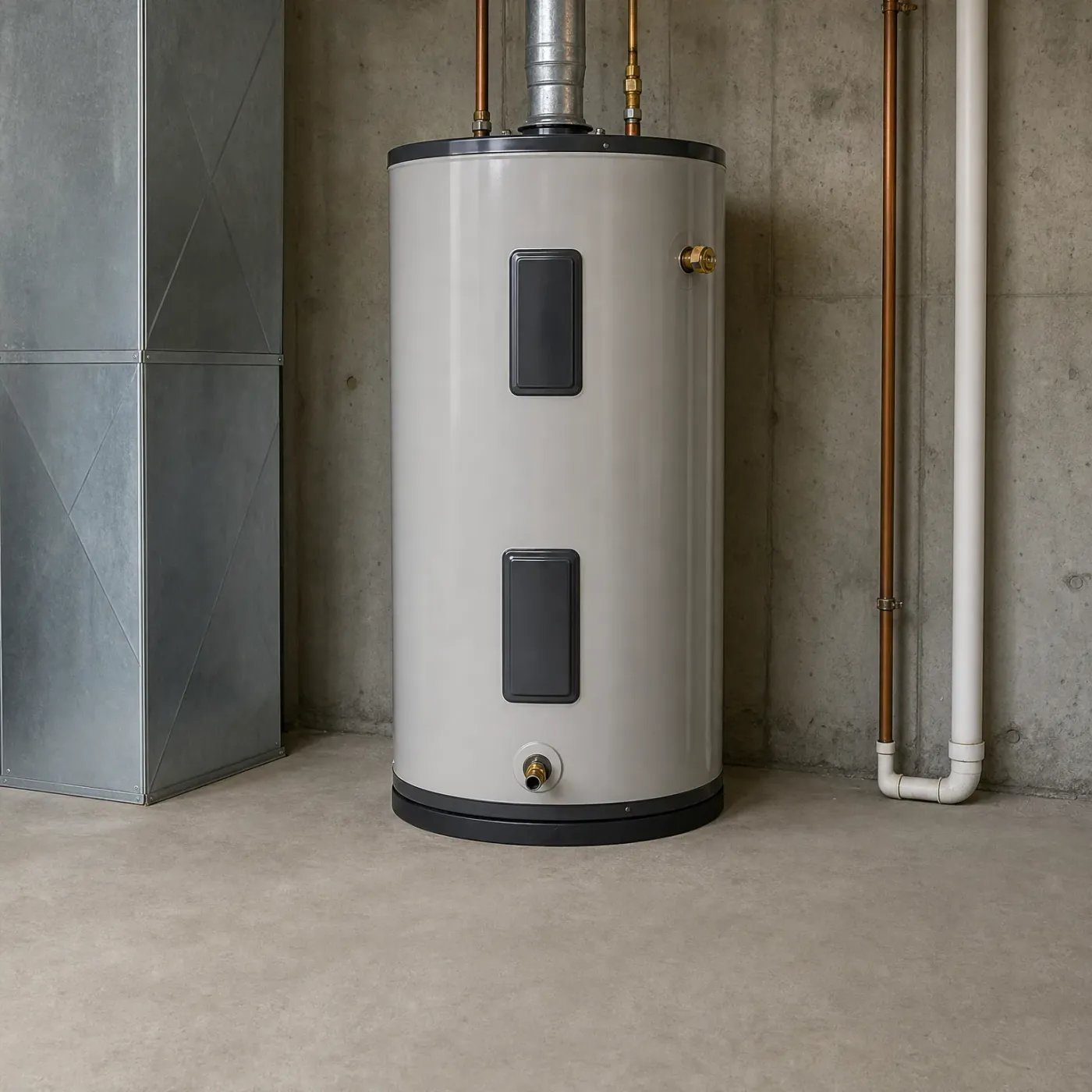
A cylindrical beige water heater with two dark access panels stands on a concrete floor against a concrete wall, with copper and white pipes to the right and sheet-metal ductwork to the left.
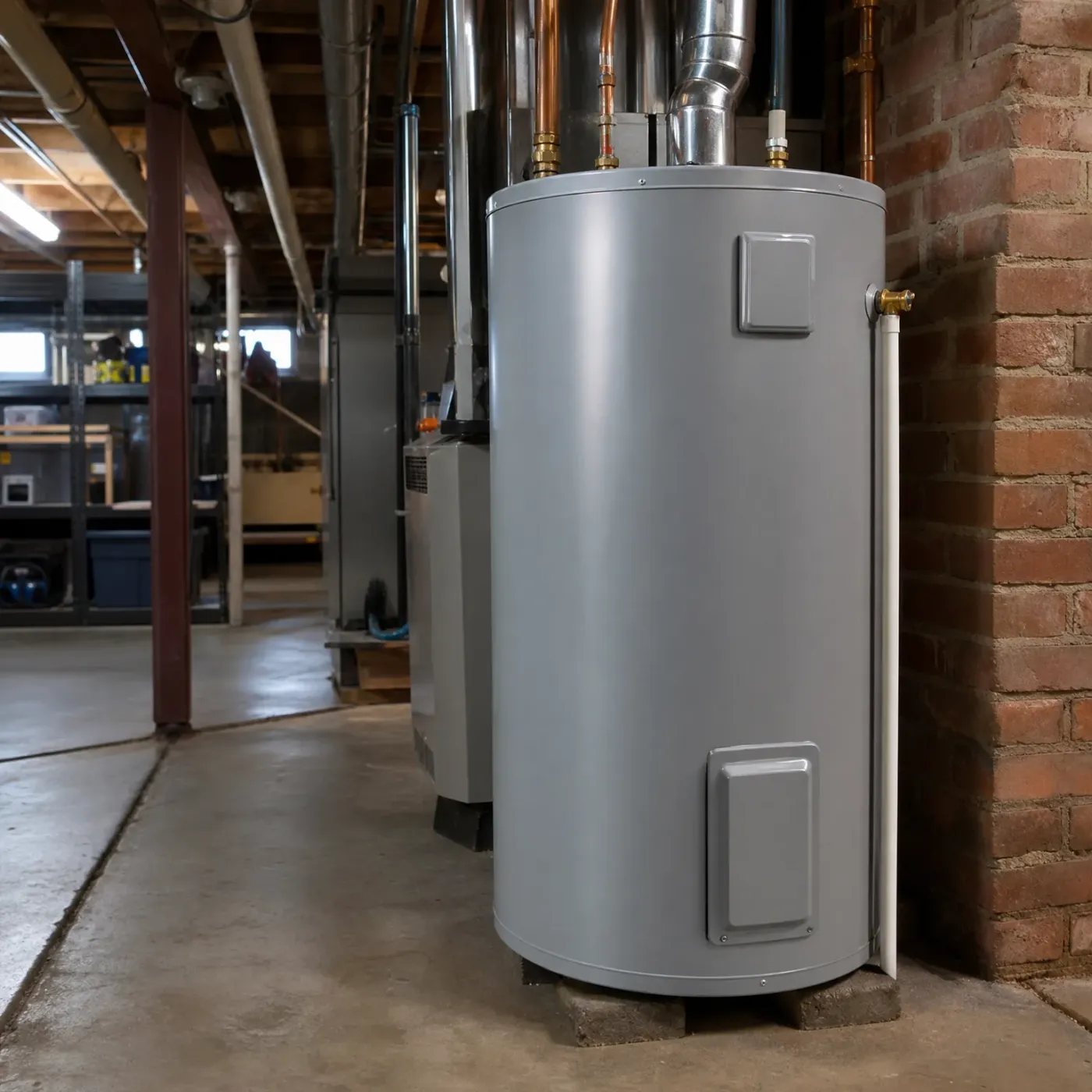
After you get your water heater repair
A gray cylindrical water heater with two access panels stands on concrete blocks beside a brick wall in a basement, with copper and metal pipes above and shelving visible in the background.

Stop chasing a water heater pro

Skip searching for a water heater pro and answer a few questions instead.

Send the request today and let a water heater pro reach out to you.

Hand off the search

Asking costs nothing, and the choice to hire stays yours.

A closed silver laptop and a ceramic mug of dark coffee sit on a wooden table in front of two chair backs, with a kitchen counter, tiled backsplash, wooden cutting boards, a vase of greenery and a potted plant by a window behind.

What a shorter tank means for your house

With a gas water heater that's slow to recover, you notice it in whoever showers second. The first person gets a full ten minutes, the next gets five, and by the time the dishwasher or a load of laundry wants hot water too, the tank can't keep up with all of it at once. That's a burner and a dip tube problem, not a you problem, but it plays out as cold showers until someone deals with it.

Left alone, it doesn't fix itself. Sediment keeps building on the bottom of the tank, the burner keeps working harder to heat through it, and the gap between what you need and what you get keeps widening. You could spend an evening calling around Iowa for someone who works on gas water heaters, explaining the same thing to three different shops and comparing what each one quotes you. Sending the form here does that part for you, so the only thing left on your plate is answering the door.

A gray upholstered sofa with a matching cushion sits beside a potted plant and a wooden table holding a small green plant in a stone pot, near a curtained window.
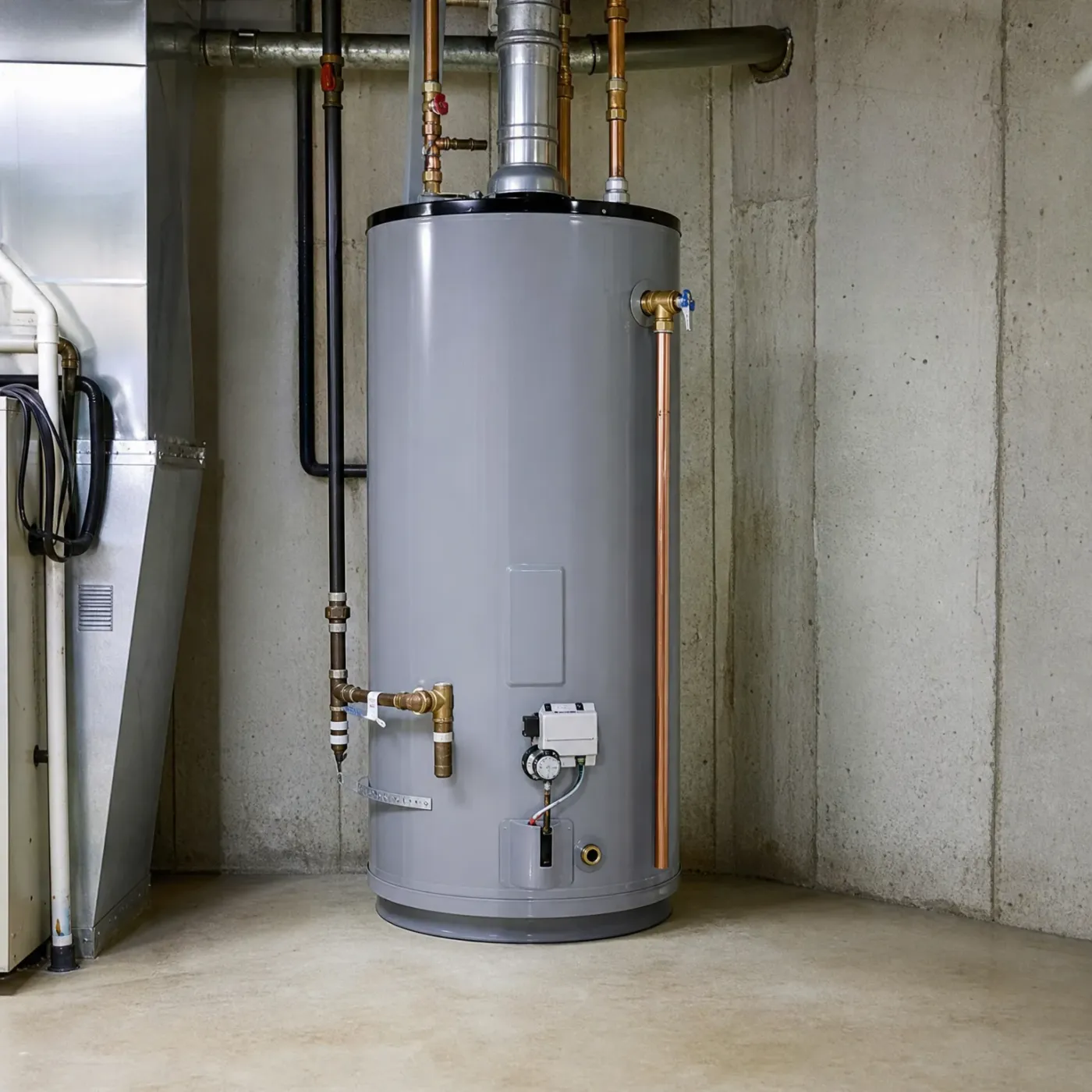
A large gray cylindrical gas water heater stands in a concrete-walled basement corner, connected to copper and black pipes and a metal flue, with ductwork at left.

Running clean and sealed

The fittings are tight, the flue vent sits clear, and the jacket is free of rust. A tank in this shape should bring a full load of water up to temperature on one normal burner cycle, with nothing leaking at the base.

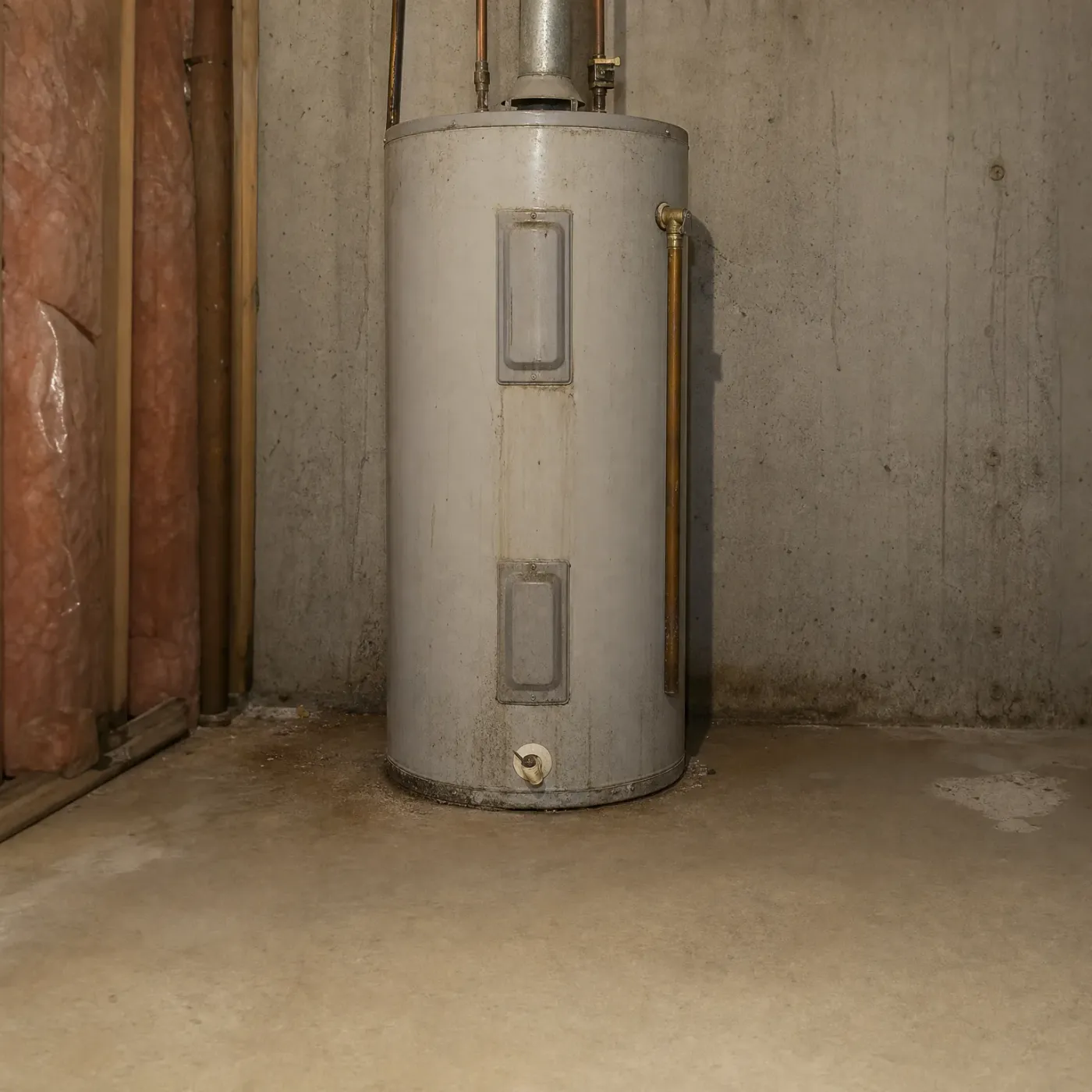
A gray cylindrical water heater with two access panels and copper piping stands in the corner of a concrete-walled basement next to exposed pink insulation.

Rust, stains, and old seals

Rust staining down the tank and worn access panels mean the inside has been working harder than it should for a while. A tank at this stage struggles to hold a full tank of hot water, let alone recover quickly once it runs out.

60.2% of homes statewide heat with gas

With most houses in Iowa running on gas, your water heater has a burner under the tank, not an electric element inside it. That's the part sediment coats and the burner has to work through, so a buildup at the bottom shows up as hot water that runs out sooner than it used to.

ACS 2020-2024 5-year B25040

A smiling man in a dark blue T-shirt sits on a light gray sofa in a living room with a wooden shelf and window behind him, with a laptop edge visible in the foreground.
A bearded man in a plaid flannel shirt stands indoors looking out a frost-covered window, with a steaming dark blue mug on the wooden sill and snow-covered trees outside.

What's behind the short tank

  • A tank that recovers slowly almost always points to the burner, the dip tube, or sediment built up at the bottom.
  • Sediment sitting between the flame and the water is the most common reason a gas tank stops keeping up.
  • A cracked dip tube lets cold water mix into the hot, so what comes out of the tap is cooler sooner.
  • Rust at the fittings or stains down the side usually mean the tank is already past a simple fix.
  • A technician can check the burner, the dip tube, and the sediment level and tell you which one is behind it.
  • Sending the request means you stop calling around and explaining the same problem to every contractor you reach.

Three things cause a gas water heater to run out fast, and they all keep the burner from heating water the way it used to. Sediment at the bottom gets between the flame and the tank, so the burner is warming sediment instead of water and the recovery time stretches out. A cracked dip tube lets cold water mix straight into the hot water sitting above it, so what reaches the tap is already cooler than it should be, and it cools off sooner than you're used to. And if the burner itself isn't firing the way it once did, the tank just can't bring a full load up to temperature in one normal cycle anymore. Rust at the fittings or stains running down the side of the tank are worth noting too, since they usually mean the tank has been struggling for a while and a simple fix may not be enough. None of these show themselves the same way from the outside, which is why the shorter supply of hot water is the symptom you notice and the cause underneath is something a technician has to check directly. Sending the request here means you're not the one tracking down who's available, calling around, and going through the same explanation with every contractor you reach. That part is off your plate once the form goes in.

A smiling man in a navy long-sleeve shirt sits at a wooden table in a kitchen and dining area, with a ceramic mug, a potted plant, and a sliding glass door behind him.
A smiling bearded man in a green henley shirt stands at a kitchen island with a gray mug, looking off to the side, with a dining area and shelves blurred behind him.
A smiling bearded man in a navy sweater sits at a white kitchen island with a ceramic mug, with open shelves, potted plants and a range hood behind him.
A smiling man in a dark olive long-sleeve shirt sits in a kitchen beside a counter with a dark mug, with a dining table, sideboard and hallway visible in the blurred background.

Water Heater Repair

Hand off the water heater problem

One form replaces the calls you'd make to find a water heater pro.

A black-framed smartphone standing upright against a plain light gray background, its screen filled with solid green.
Step 1 of 3: Equipment