

Before you get your water heater installation
You're checking the data plate, watching for rust, and weighing a repair against a tank that keeps failing. Finding a plumber who'll give you a straight answer takes calling around.
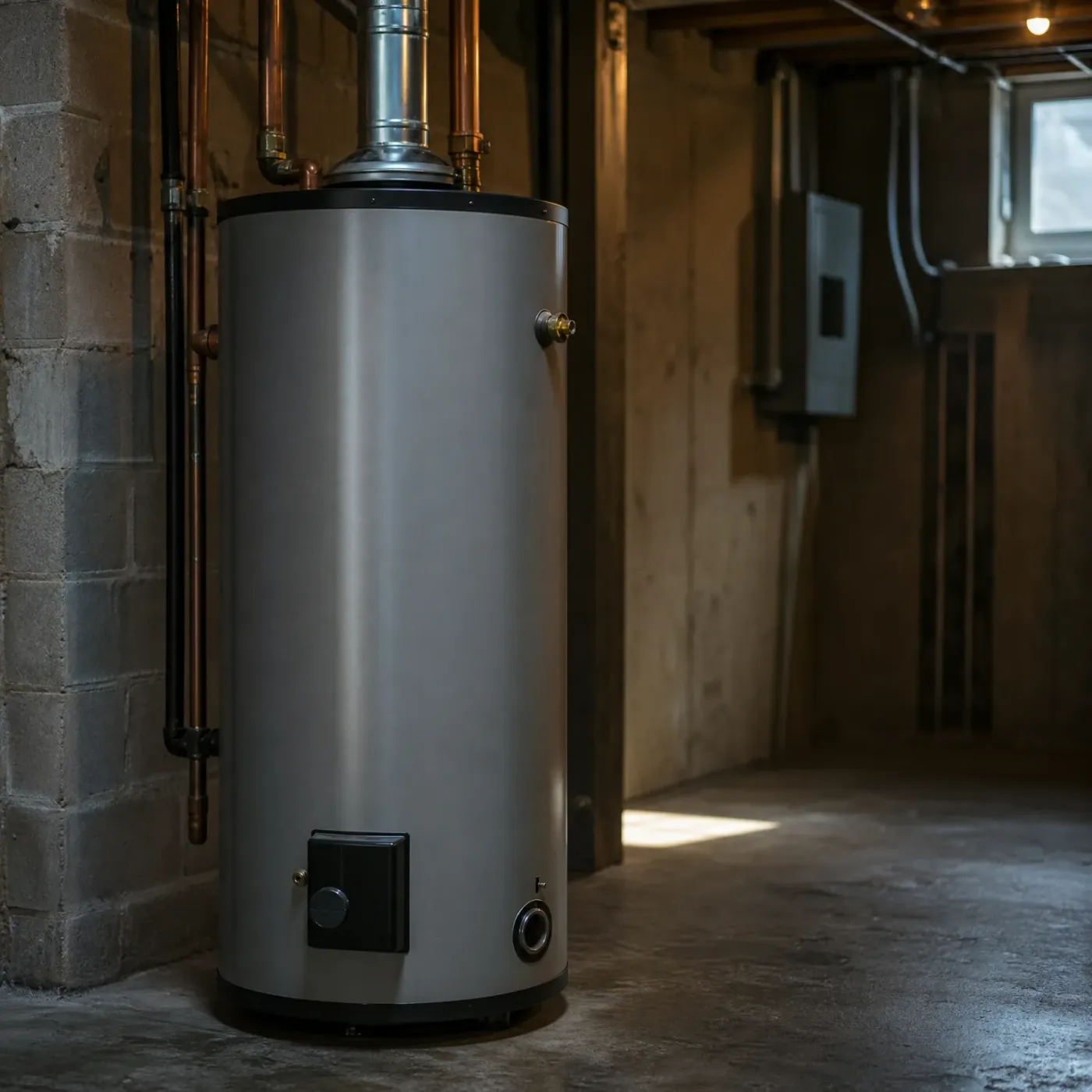
No quotes to chase
Most water heaters give some warning before they quit: rusty water, a tank that's noisy, water that doesn't get as hot as it used to. This page goes through what those signs mean and when it's time to replace rather than repair. Skip the search for a plumber in Johnson County and the back and forth of getting quotes. One call connects you to a local contractor who installs water heaters for a living.
Start one formMost water heaters last between 8 and 12 years, and a tank at or past that age is worth replacing rather than fixing. Johnson County's hard winters push tanks harder for months at a time, and once a tank starts rusting on the inside, that damage doesn't stop. A repair might buy a few months, but a leaking tank can flood a basement or utility closet with no warning. Water that smells off, a tank that rumbles or pops, or hot water that runs out faster than it used to all point the same direction, especially once the unit is past ten years old. If the tank is younger than that and the problem is one part, like a thermostat or heating element, repair still makes sense. Past that point, you're paying to delay the same outcome.

A water heater tank has a glass lining, and that lining cracks in spots over years of heating and cooling. Once it cracks, the steel underneath starts to rust. Rust doesn't stay put. It spreads from that one spot until it opens a pinhole leak somewhere in the tank. There's no patch for this. A rod inside the tank is built to corrode first and slow this process down, but it wears out, usually years before the tank itself does.
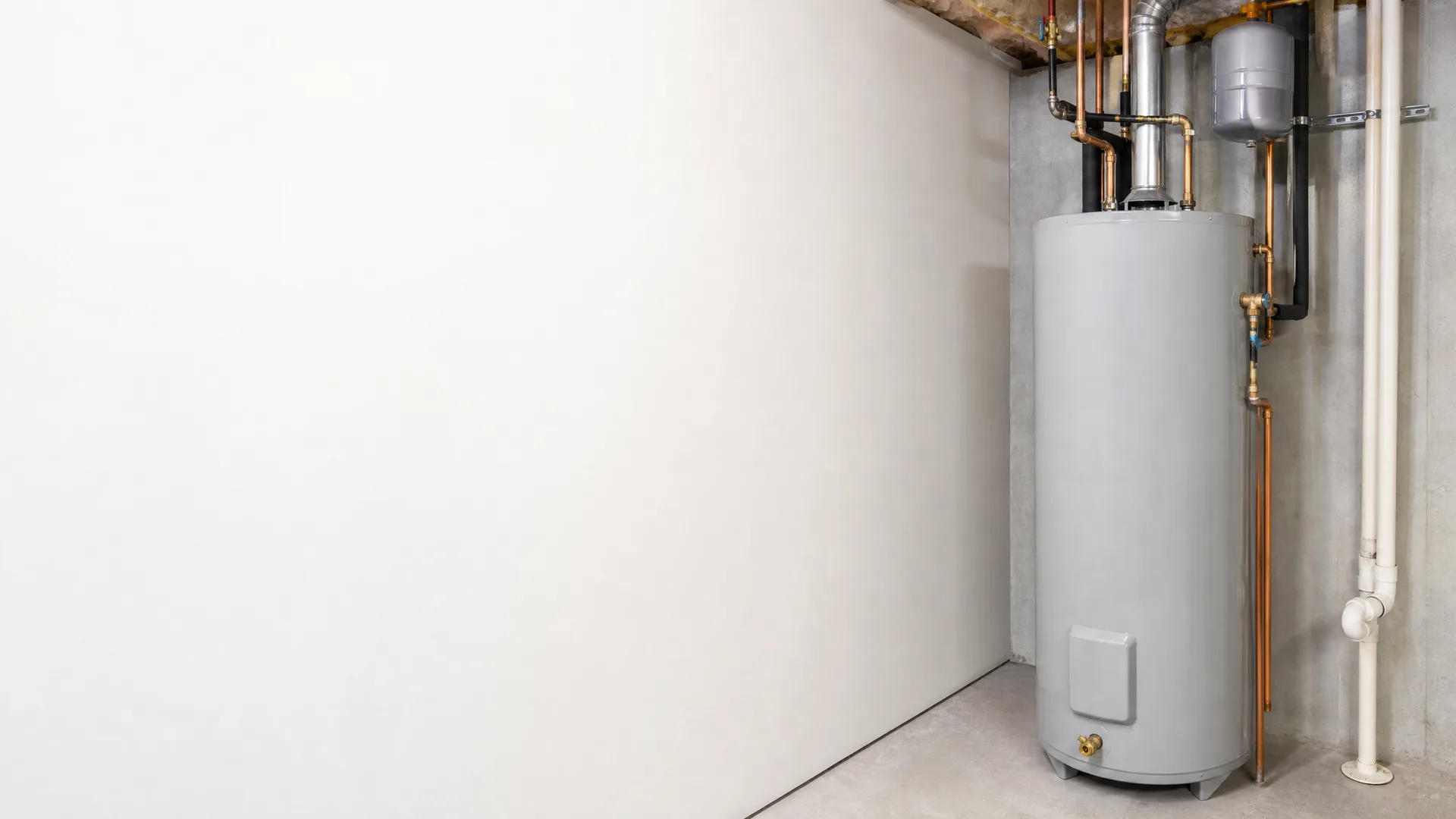
Incoming water in Johnson County runs cold, especially from November through March. A gas burner or electric element has to work harder to bring that water up to temperature, and it runs longer to do it. A tank already near the end of its life gets pushed through more heating cycles each winter than it would somewhere with milder incoming water, and that's time working against a lining that's already thinning.
How do I know if it's time to replace my water heater?
Look at the data plate on the side of the tank for the manufacture date, or check the serial number against the manufacturer's date code if the plate doesn't spell it out. If the tank is 8 to 12 years old or older, age alone makes replacement the better call, even if it's still running. Past that point, check the water itself. Rusty water at the hot tap, especially right when you turn it on, usually means the tank is rusting from the inside, not the pipes. A tank making popping or rumbling sounds has sediment built up on the bottom, which makes the burner work harder and wears the tank faster. Any one of these on an older tank is a sign to stop repairing and start planning the replacement.
Rust spreads from a cracked lining until it opens the steel
Water starts seeping from that spot, usually near the bottom seam
A damp patch or puddle forms under the tank first
Pressure pushes the leak wider once steel has thinned enough
2.34 people per household on average
Johnson County households average 2.34 people. A tank sized for one or two people runs out of hot water fast with a full house.
Half the homes here were built by 1992
Half the homes in Johnson County were built in 1992 or earlier. A tank that old wasn't sized for how a family uses hot water today.
63.3% of homes heat with gas
Gas heats 63.3% of homes here. A gas water heater recovers faster than electric, which matters when several people need hot water back to back.
ACS 2020-2024
A repair makes sense when the tank is still young and the problem is one part. A thermocouple, a heating element, a thermostat or a pressure relief valve can all be swapped without touching the tank itself, and a water heater under six or seven years old is usually worth fixing if that's what failed. The cost of one part is small next to a full install. If the tank has been flushed now and then and the anode rod was replaced on schedule, the steel inside is in better shape and a repair holds longer. None of that changes once the tank itself is rusting from the inside. At that point there's no part to swap. The steel is going, and no repair reaches that.
Replacement is the right call once the tank is leaking, once it's past 10 or 12 years, or once a repair would cost close to what a new one runs. A leak from the tank body means the lining has already failed somewhere, and that spot only widens. Age matters on its own too: a tank in its last couple of years is more likely to fail again soon even after a repair, so paying for parts and labor twice ends up costing more than replacing it once. A licensed local plumber can size the new tank to the house and get it installed without the back and forth of calling around for quotes and explaining the same leak to three different companies.




A licensed installer who works in Johnson County gets your project.
No charge to send it. You decide if you hire them.
A water heater usually doesn't fail quietly. It fails in ways that show up in your house, your schedule, and your bill before the tank ever stops working completely. Most are installed in a basement, often near a furnace or near whatever gets stored down there, and a leak that starts small can run for days before anyone notices a damp patch on the floor. If the tank goes out in the middle of winter, you're without hot water at the time of year Johnson County makes it hardest to do anything about that fast. Before it fails outright, a tank that's lost capacity tends to make itself known in smaller ways. Showers get timed around each other. The dishwasher runs separately from laundry because the tank can't keep up with both. Rust-colored water in a tub or sink is the tank itself, not anything wrong with the water coming into the house, and it means the lining has already cracked. A tank working harder to do the same job usually pulls more gas or electricity to do it, so a bill can climb for months before the cause is obvious. And a tank that fails on its own schedule rather than yours turns what could have been a planned replacement into a same-day call, with water already on the floor and no hot water until someone gets there. None of this happens on a fixed timeline. But a tank that's showing any of these signs is telling you something about what's coming.
You're checking the data plate, watching for rust, and weighing a repair against a tank that keeps failing. Finding a plumber who'll give you a straight answer takes calling around.
A licensed plumber local to Johnson County looks at your tank, tells you what it needs, and does the install. One contractor, not a handful of quotes to sort through.


At 13 cents a kilowatt-hour, power here is cheap, and most homes in the area heat water with gas anyway. If yours runs on electricity, a new tank with a better-insulated jacket or a heat pump water heater still cuts into that bill month after month.
EIA-861 2025
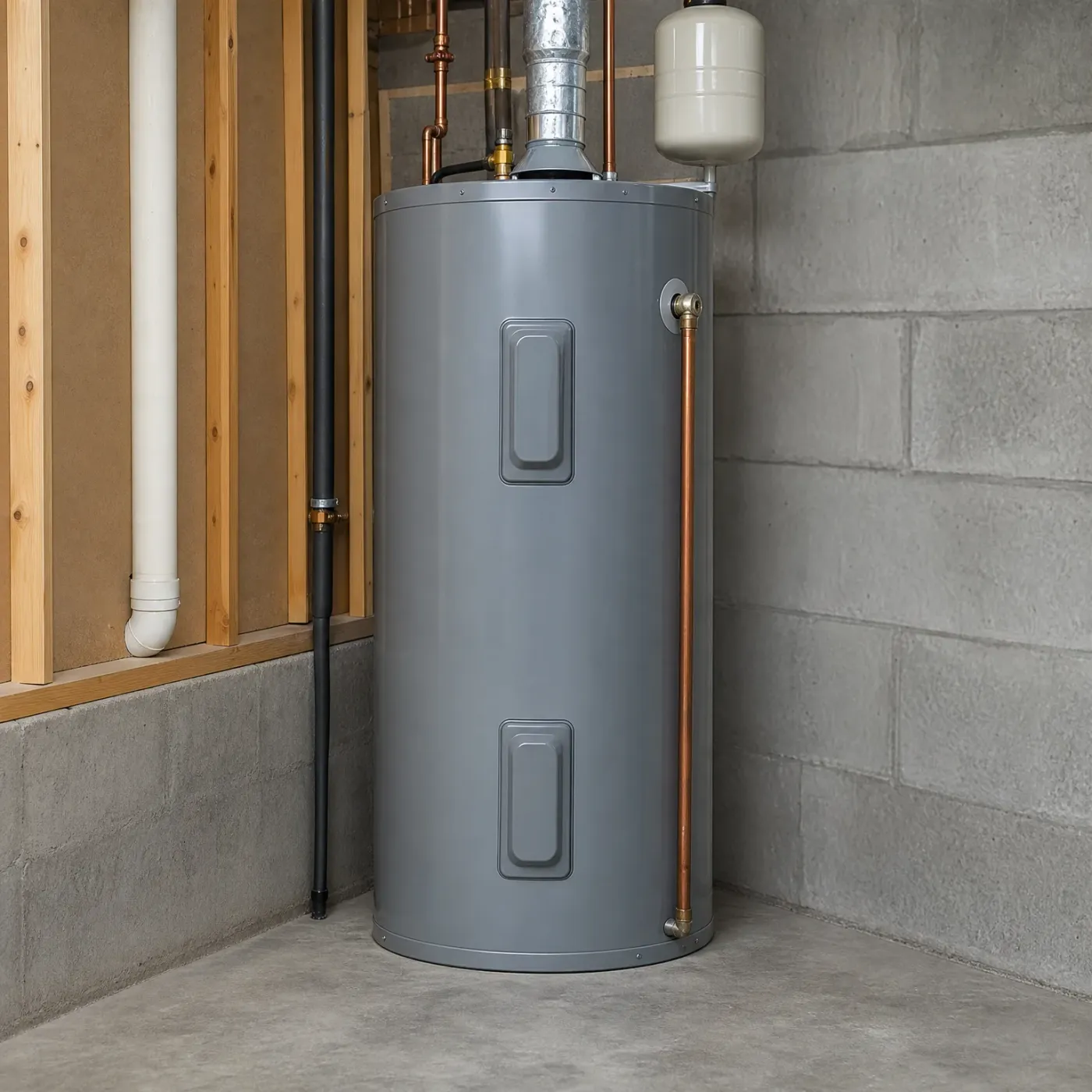
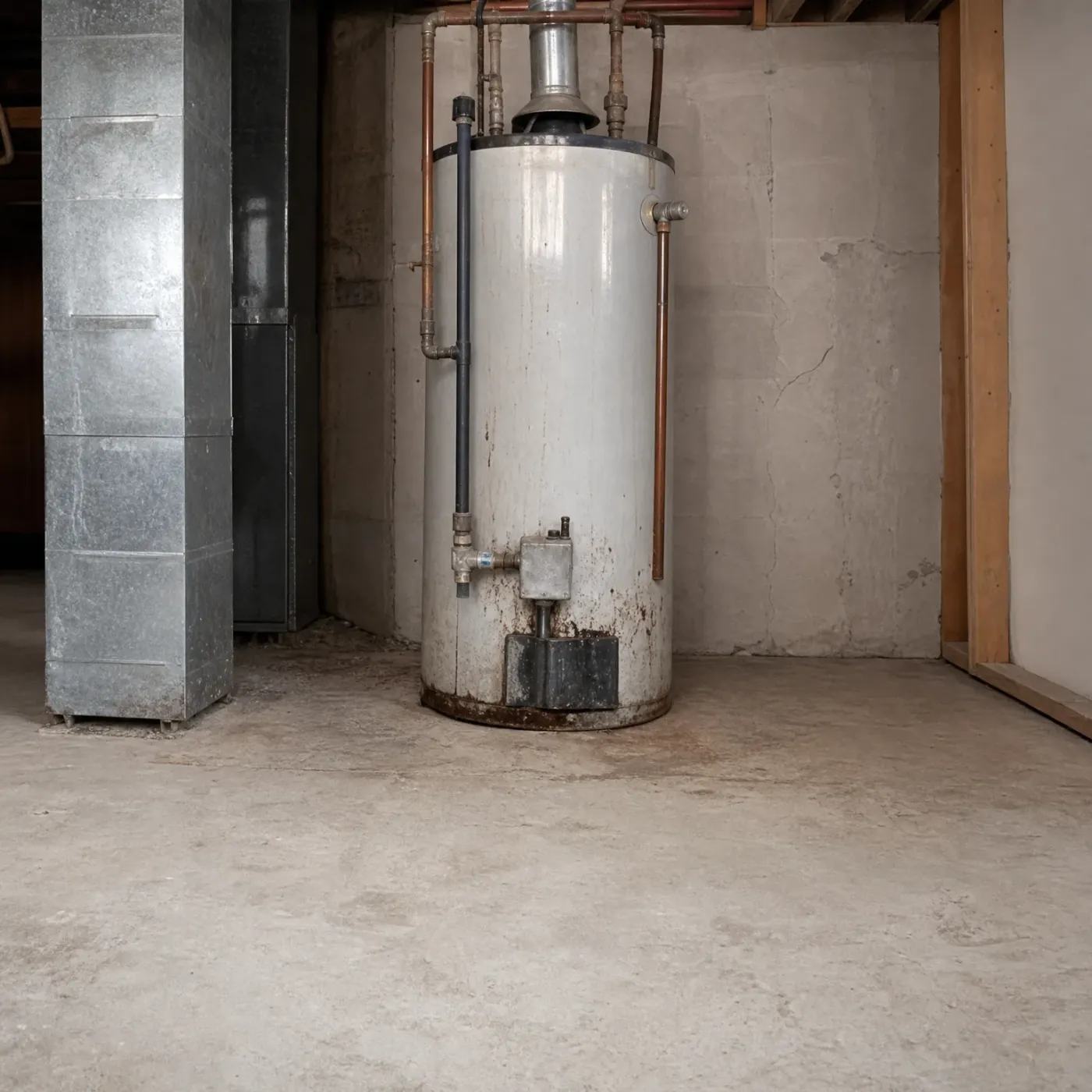
Go look at it. Water pooling under the tank, even a small amount, means steel has rusted through somewhere. Water coming out rust colored, or with a metallic smell, means the inside of the tank is corroding. A tank that bangs or rumbles when it heats has sediment baked onto the bottom, and that buildup makes it work harder to do the same job. If showers run lukewarm faster than they used to, the tank can't hold a full heat cycle anymore. Any of these on their own is worth checking. A leak especially shouldn't wait, since a tank that's starting to go in the basement can reach a furnace or whatever's stored nearby before you notice standing water.
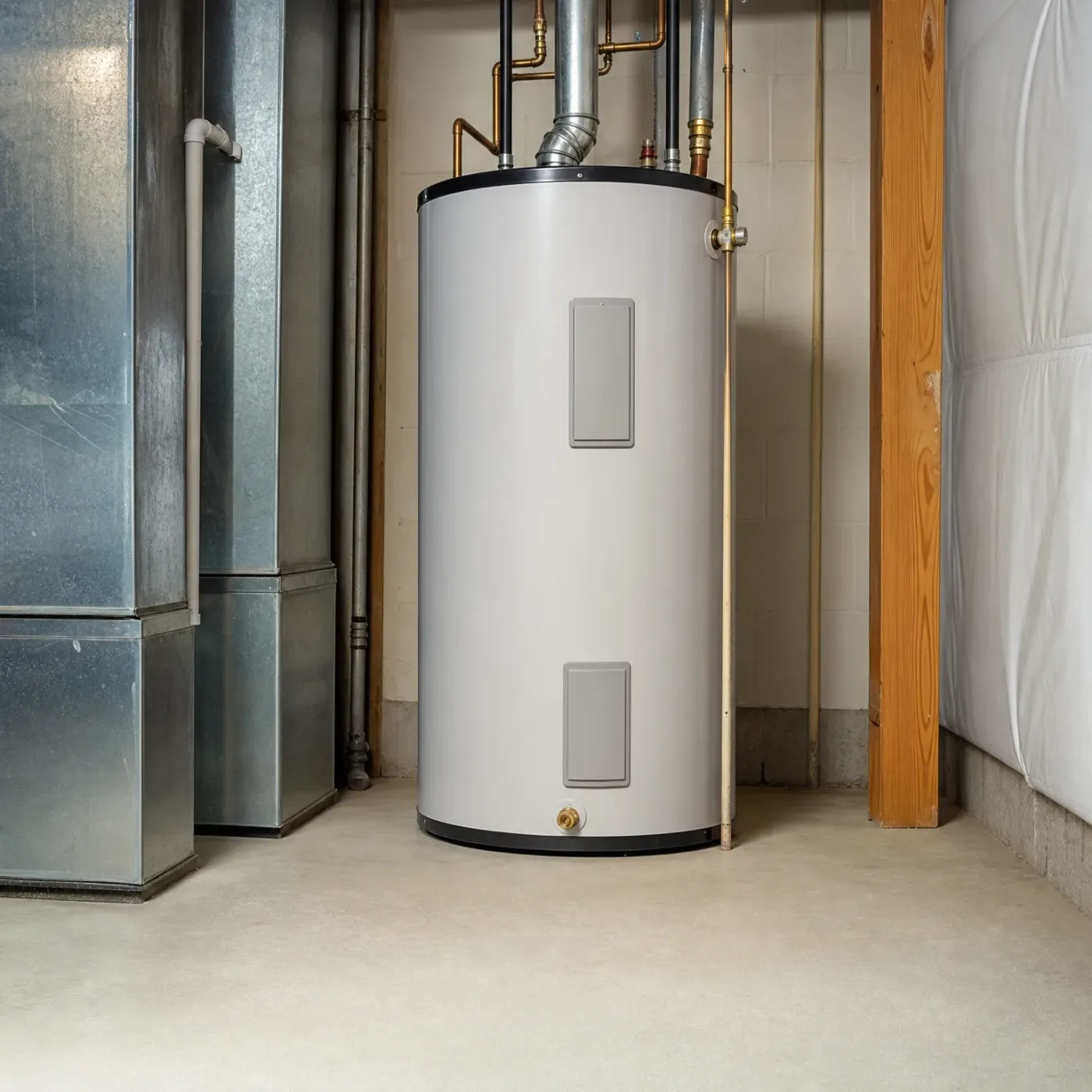
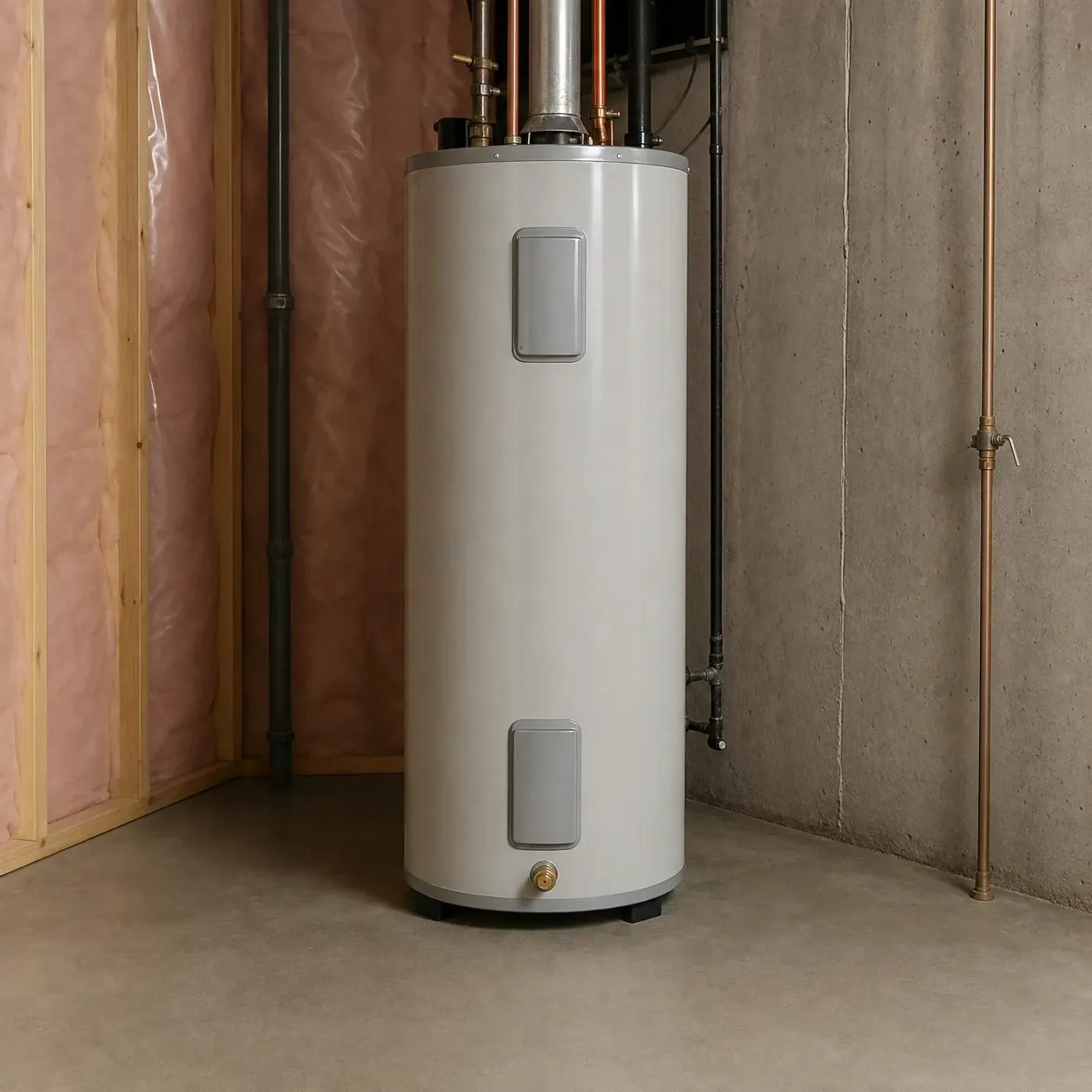
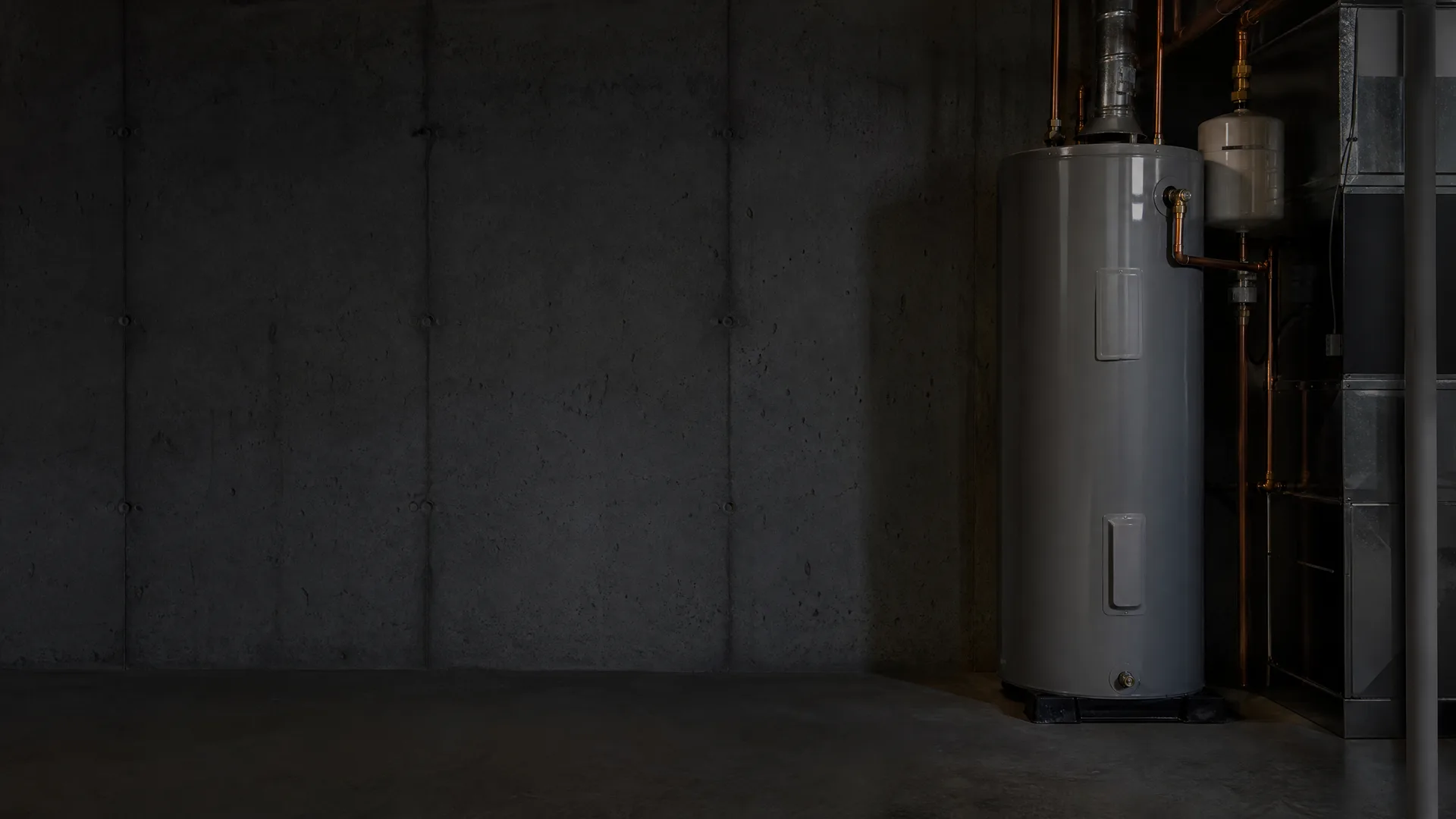
Clean fittings, a dry floor, no rust on the tank itself. The copper and galvanized connections at the top are tight, and nothing's seeping down into the ductwork run next to it. A tank like this has years left in it, and a repair is the right call if something does go wrong.
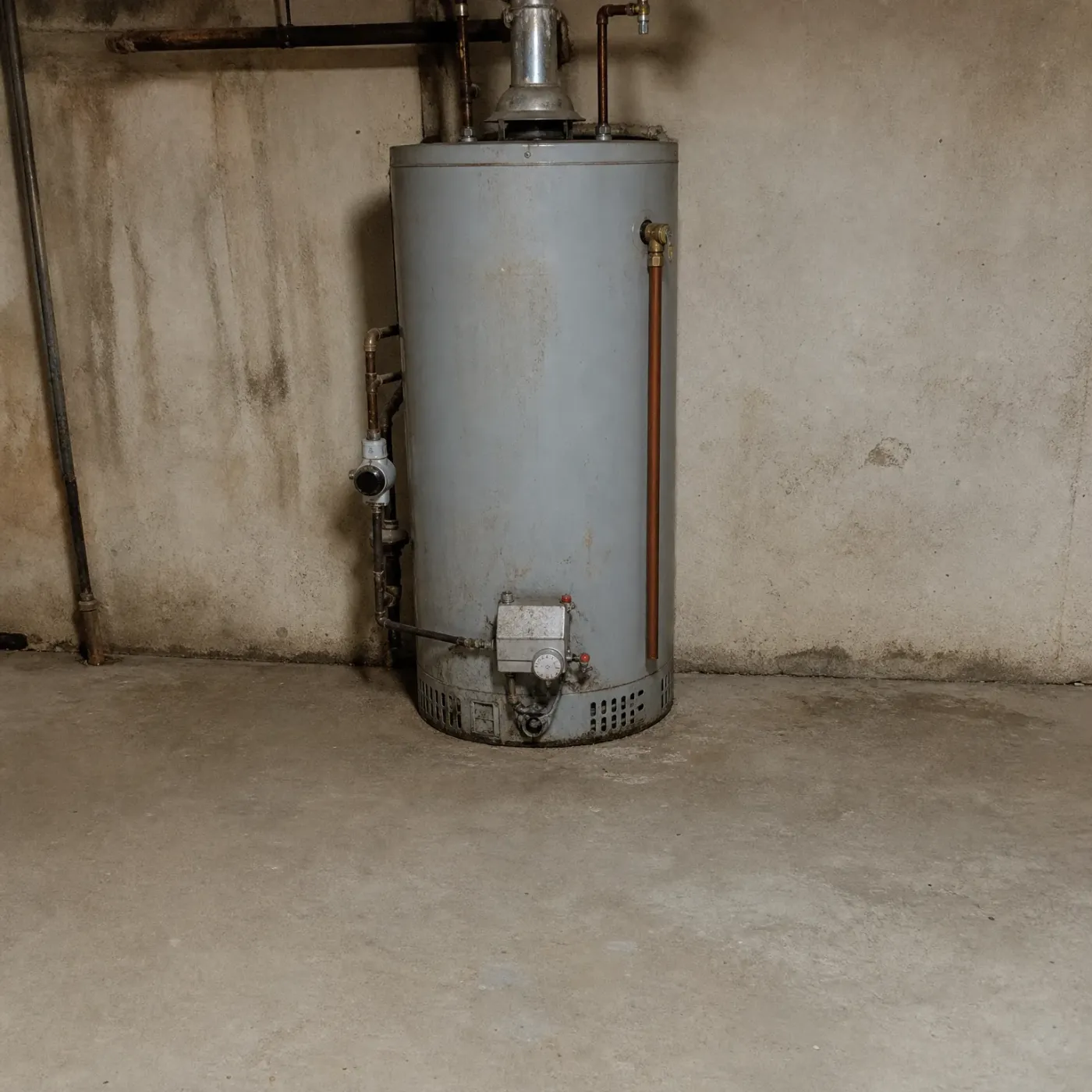
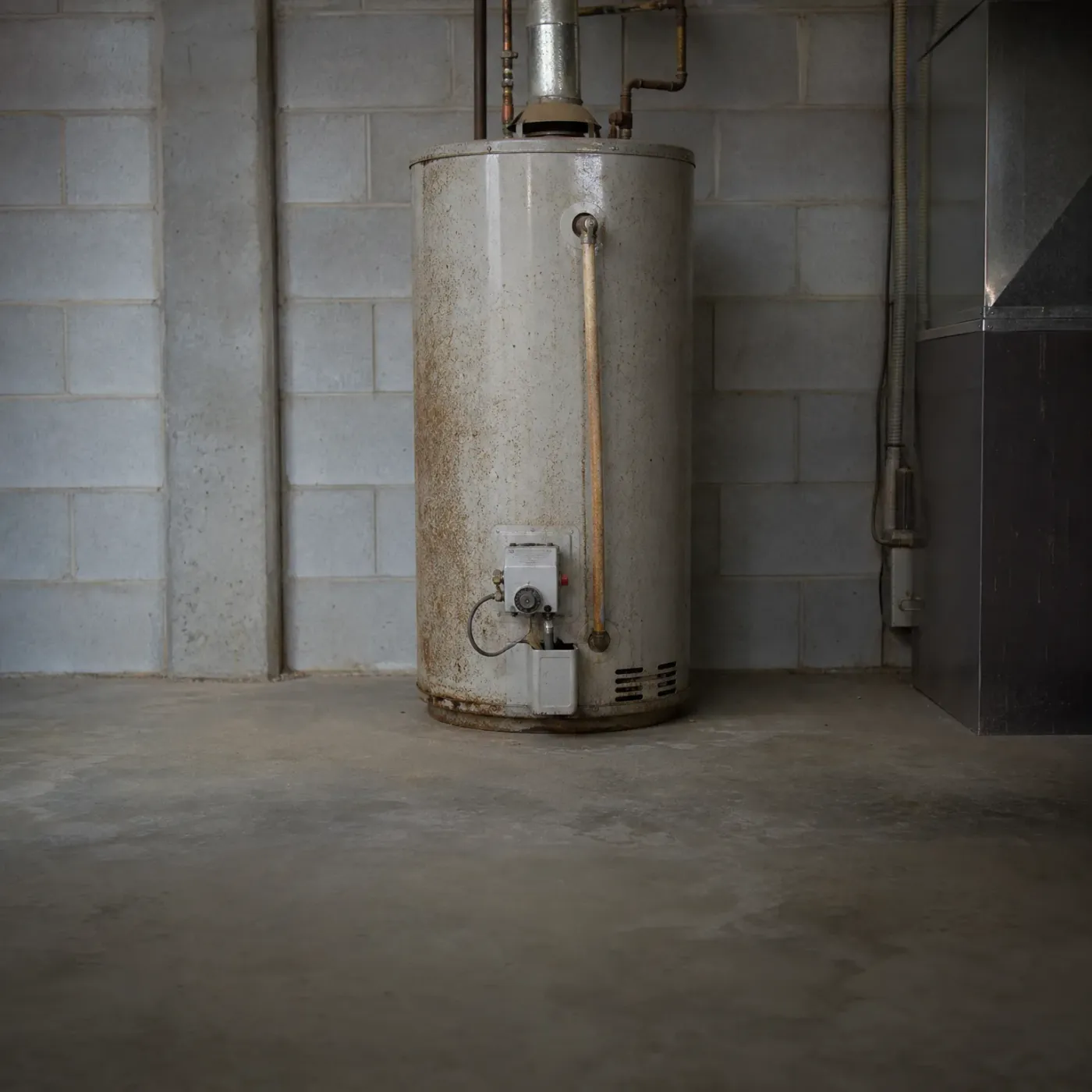
Bare concrete, an old gas tank, and a flue vent that's seen better days. The pressure relief valve and gas control still look intact, but once a tank's been in service this long, the question isn't if the lining has failed inside, it's how far the rust has already spread.

A tank at 8 to 12 years old, or one already showing rust in the water or a damp spot on the floor, is done. Repair what you can when the tank is young and the problem is one part. Replace it once the tank itself is going.
You don't have to find out who does good work in Johnson County on your own. That usually means calling a few plumbers, explaining the same thing to each one, and lining up quotes to see who's honest about it. Here you check the data plate, look for rust, and get matched with one local plumber who installs these year-round and knows which tanks in this area fail first and why.

The pro who gets in touch is licensed in Iowa and works in Johnson County.