Tell us about the job
Takes about a minute. No obligation.
A water heater in Cedar County has been running against weather that pushes equipment hard, and that history shows up in specific parts when a contractor opens the job. 149 severe weather events were recorded in Cedar County, Iowa between 2015 and 2024. Anode rods corrode faster under repeated stress cycles, pressure relief valves get exercised in ways a stable climate never demands, and sediment shifts with temperature swings that come with severe conditions. A contractor quoting a repair here checks those components first, because what looks like a straightforward element failure can sit on top of wear that changes the repair entirely.
Half the homes in Cedar County, Iowa were built in 1965 or earlier (2020-2024 ACS 5-year). A house that old has been through multiple water heaters since it was built, and each replacement left its own decisions behind: venting paths chosen for convenience, supply connections that were patched rather than replaced, anode rods that never got pulled. When a contractor opens the system on a repair call here, what they find is usually the product of those accumulated choices rather than anything about the current unit alone. A part that fits the heater's model number may go in fine; the corroded nipple behind it may not.
The Parts of a Water Heater a Contractor Checks During a Repair
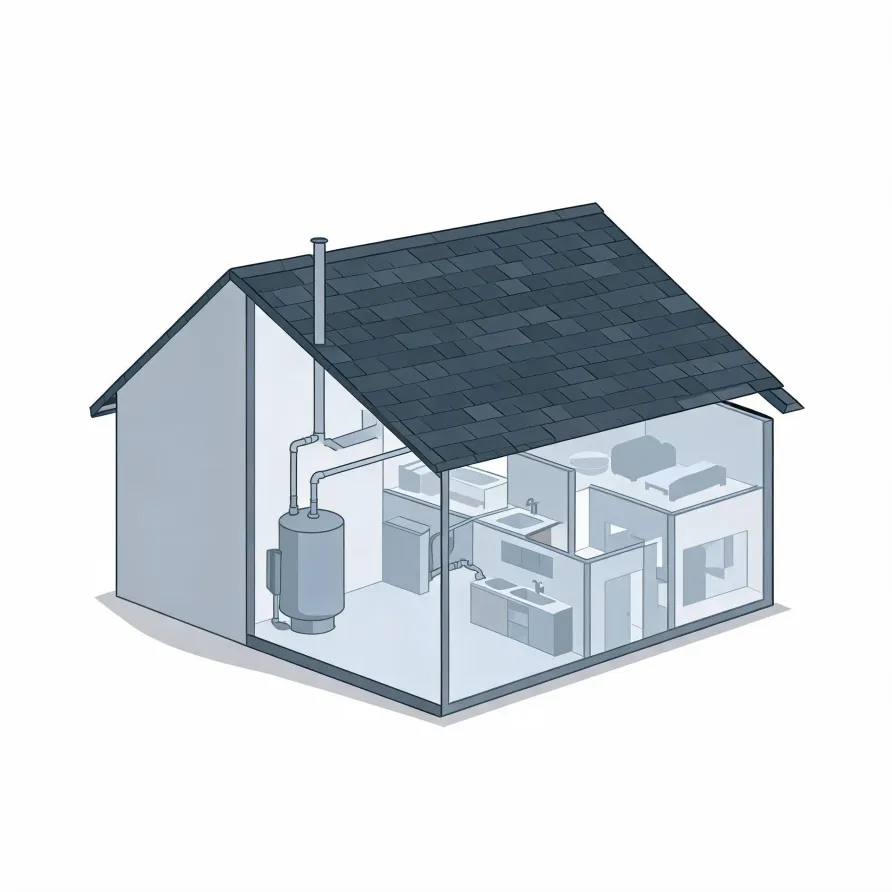
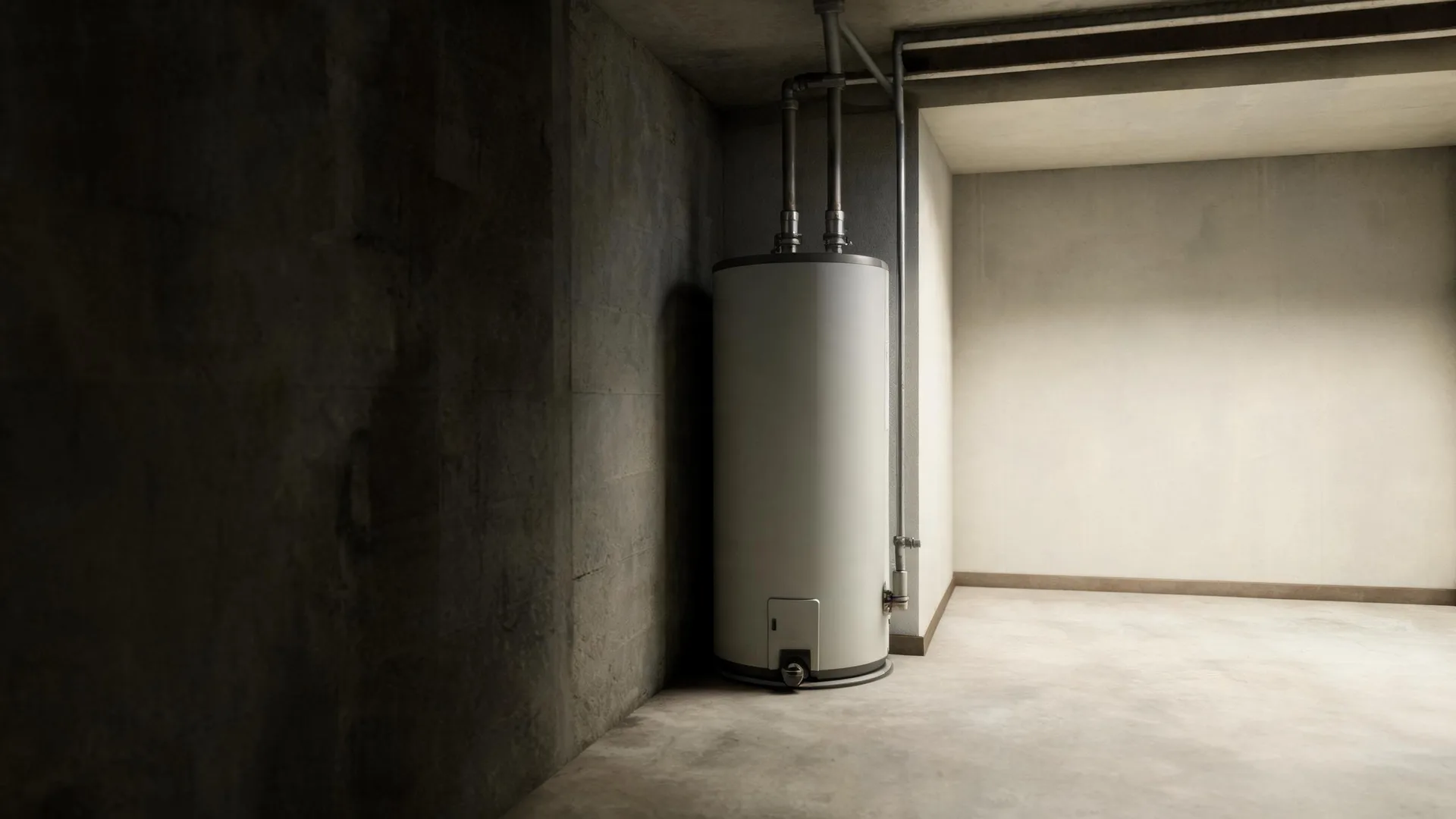
The tank is the piece most homeowners recognize, a large insulated cylinder that sits in a utility room, basement, or garage and holds water at a set temperature. The burner assembly or heating element sits at the base or inside the tank and is the first place a contractor looks when the water runs cold or the unit stops responding.
The thermostat controls the target temperature and, when it fails, produces water that is scalding or barely warm. The pressure relief valve mounts on the side of the tank and opens if pressure builds beyond a safe point. The anode rod runs through the interior and slows corrosion; a depleted one often explains rust-colored water or a rotten-egg smell.
The drawing shows the general layout of a water heater system, and a licensed contractor determines which parts apply to the specific unit and setup in your home.
Get matched in Cedar CountyCedar County, Iowa, by the numbers
149 severe weather events were recorded in Cedar County, Iowa between 2015 and 2024.
NOAA National Centers for Environmental Information, Storm Events Database, bulk CSV export, events 2015-01-01 through 2024-12-31.Half the homes in Cedar County, Iowa were built in 1965 or earlier (2020-2024 ACS 5-year).
U.S. Census Bureau, 2020-2024 American Community Survey 5-Year EstimatesCedar County, Iowa holds 8,300 housing units (2020-2024 ACS 5-year).
U.S. Census Bureau, 2020-2024 American Community Survey 5-Year EstimatesOwners occupy 81.5% of the occupied homes in Cedar County, Iowa (2020-2024 ACS 5-year).
U.S. Census Bureau, 2020-2024 American Community Survey 5-Year EstimatesCodes & Standards Governing Water Heater Repair in Cedar County, Iowa1 sourced rules and standards
What Cedar County, Iowa Requires for HVAC Repair
Iowa requires a state licence to install or repair HVAC, refrigeration, mechanical or plumbing systems, and to operate as a contractor, with exceptions listed in section 105.11.
Severe Weather Events in Cedar County
Extreme weather puts real stress on water heaters, pushing them to work harder and fail sooner. How much of that pressure a unit faces depends on where it sits, which makes local conditions a practical part of any repair conversation in Cedar County.
149 severe weather events, 2015–2024. Source: NOAA National Centers for Environmental Information, Storm Events Database.