Tell us about the job
Takes about a minute. No obligation.
A contractor quoting a water heater repair in Plymouth County works out what the system has actually been through before settling on a diagnosis. 136 severe weather events were recorded in Plymouth County, Iowa between 2015 and 2024. At that rate, severe weather is a real part of the operating environment, but not so constant that it accounts for most failures on its own. Sediment buildup, anode rod condition, and the age of the heating element are what a contractor checks first, because those are what fail here. The weather record is context, not cause.
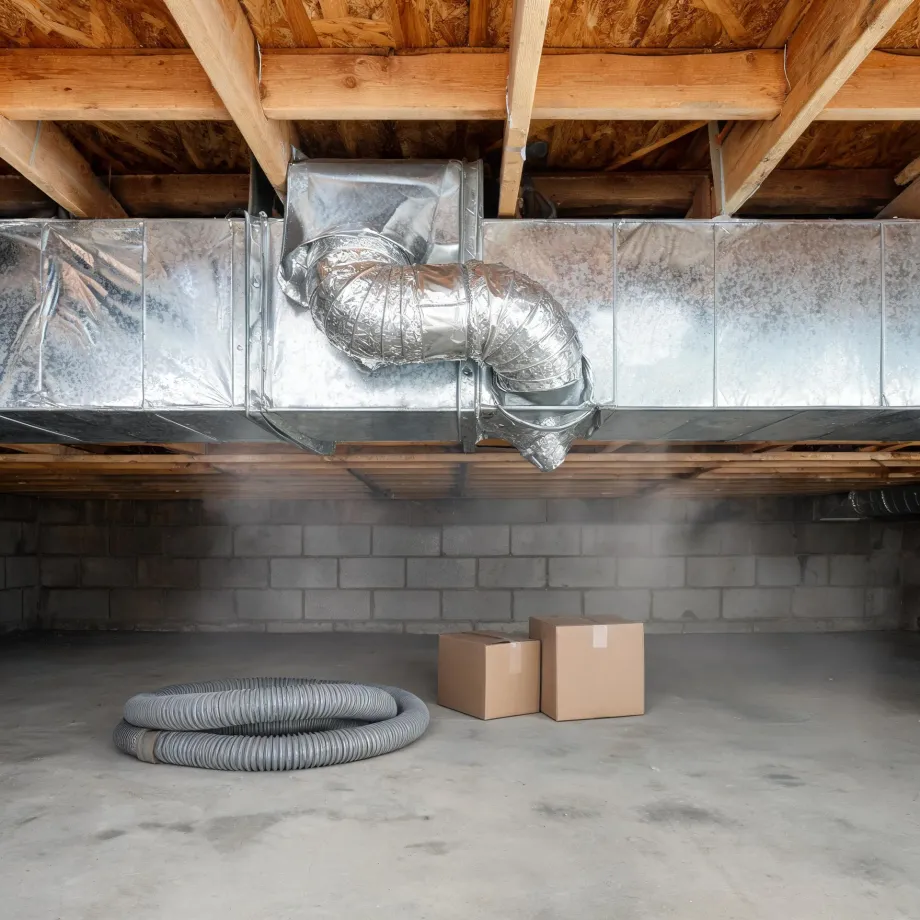
Plumbing chases and supply lines in a house built for one era of water heater carry the wear of every system that came after. Half the homes in Plymouth County, Iowa were built in 1971 or earlier (2020-2024 ACS 5-year). When a contractor opens a unit in a house like that, what they find in the connections, the anode rod, and the sediment layer is shaped by how long those surrounding lines have been working around adapted infrastructure. A straightforward valve or element replacement can turn into a broader job once the fittings come off and show what the supply side has been doing.
The Parts of a Water Heater a Contractor Checks During a Repair
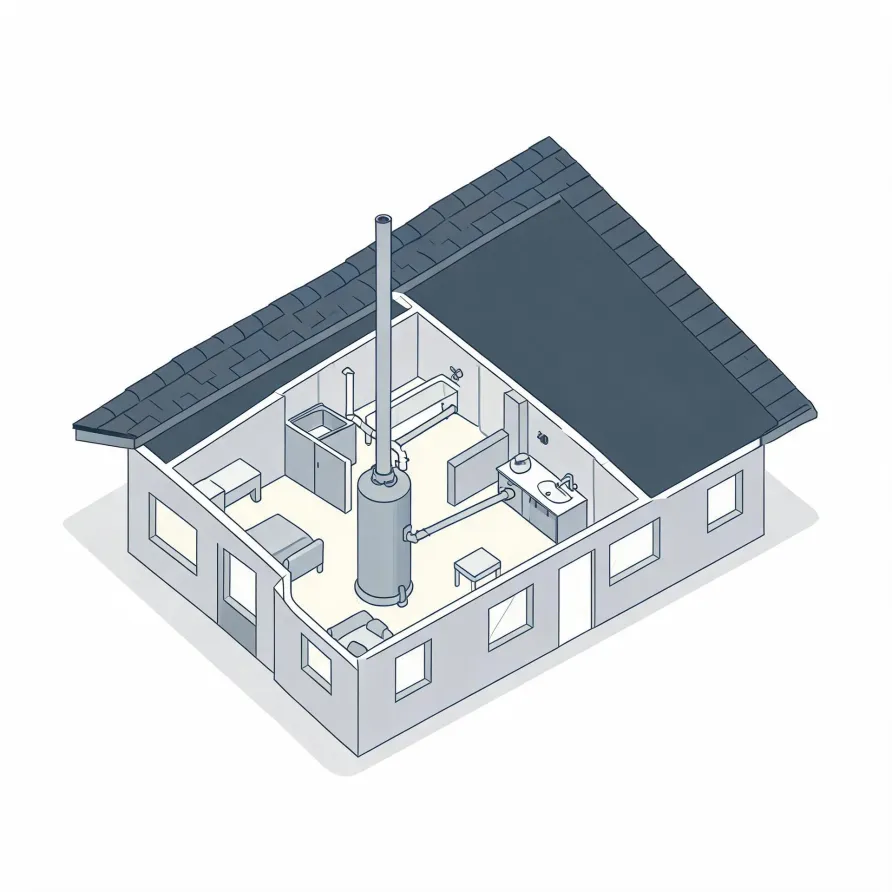
The tank is what most homeowners notice first, a large insulated cylinder that sits in a utility closet, basement, or garage and holds water at a set temperature. Attached to its top or side is the pressure relief valve, a safety device that opens if pressure inside the tank climbs too high. The thermostat and heating elements, mounted through the tank wall on electric models, or the burner assembly and gas valve sitting beneath the tank on gas models, are where a contractor looks when the water runs cold or inconsistently hot.
The anode rod hangs inside the tank and draws corrosion to itself to protect the tank lining. The dip tube runs down through the top of the tank and directs cold incoming water to the bottom, keeping cold and hot water from mixing at the outlet. The flue or exhaust vent, on gas units, exits through the top and routes combustion gases out of the house.
The drawing shows a typical layout, and a licensed contractor will determine which components apply to the specific unit and installation in your home.
Get matched in Plymouth CountyPlymouth County, Iowa, by the numbers
136 severe weather events were recorded in Plymouth County, Iowa between 2015 and 2024.
NOAA National Centers for Environmental Information, Storm Events Database, bulk CSV export, events 2015-01-01 through 2024-12-31.Half the homes in Plymouth County, Iowa were built in 1971 or earlier (2020-2024 ACS 5-year).
U.S. Census Bureau, 2020-2024 American Community Survey 5-Year EstimatesPlymouth County, Iowa holds 10,891 housing units (2020-2024 ACS 5-year).
U.S. Census Bureau, 2020-2024 American Community Survey 5-Year EstimatesOwners occupy 73.6% of the occupied homes in Plymouth County, Iowa (2020-2024 ACS 5-year).
U.S. Census Bureau, 2020-2024 American Community Survey 5-Year EstimatesCodes & Standards Covering Water Heater Repair in Plymouth County, Iowa1 sourced rules and standards
Licensing and Legal Requirements in Plymouth County, Iowa
Iowa requires a state licence to install or repair HVAC, refrigeration, mechanical or plumbing systems, and to operate as a contractor, with exceptions listed in section 105.11.
Severe Weather Events in Plymouth County
Extreme weather puts real stress on water heaters, pushing them to cycle harder and wear faster than they would under mild conditions. How often that pressure hits in Plymouth County shapes what local water heaters actually go through over their service lives.
136 severe weather events, 2015–2024. Source: NOAA National Centers for Environmental Information, Storm Events Database.