Tell us about the job
Takes about a minute. No obligation.
A contractor quoting a water heater repair in Wright County starts by looking at the unit itself: how old it is, how it was installed, and whether sediment or corrosion has been building quietly for years. 93 severe weather events were recorded in Wright County, Iowa between 2015 and 2024. That puts this county near the middle of the national distribution, which means severe weather is a real but ordinary part of life here. It is not so relentless that it overrides every other variable. A failing anode rod, a worn heating element, or a tank that never got flushed regularly will account for most of what contractors find, and the weather record alone does not change that diagnosis.
Half the homes in Wright County, Iowa were built in 1960 or earlier (2020-2024 ACS 5-year). A water heater running in a house that old has almost certainly been replaced at least once, which means what a contractor opens is not necessarily old equipment in an old house. What it is, is equipment of unknown age in a structure whose plumbing and venting were configured for something that came before. The repair question that decides the job is whether the parts the current unit takes are still in production, and what the venting arrangement will accept as a fix.
The Parts of a Water Heater a Contractor Checks During a Repair
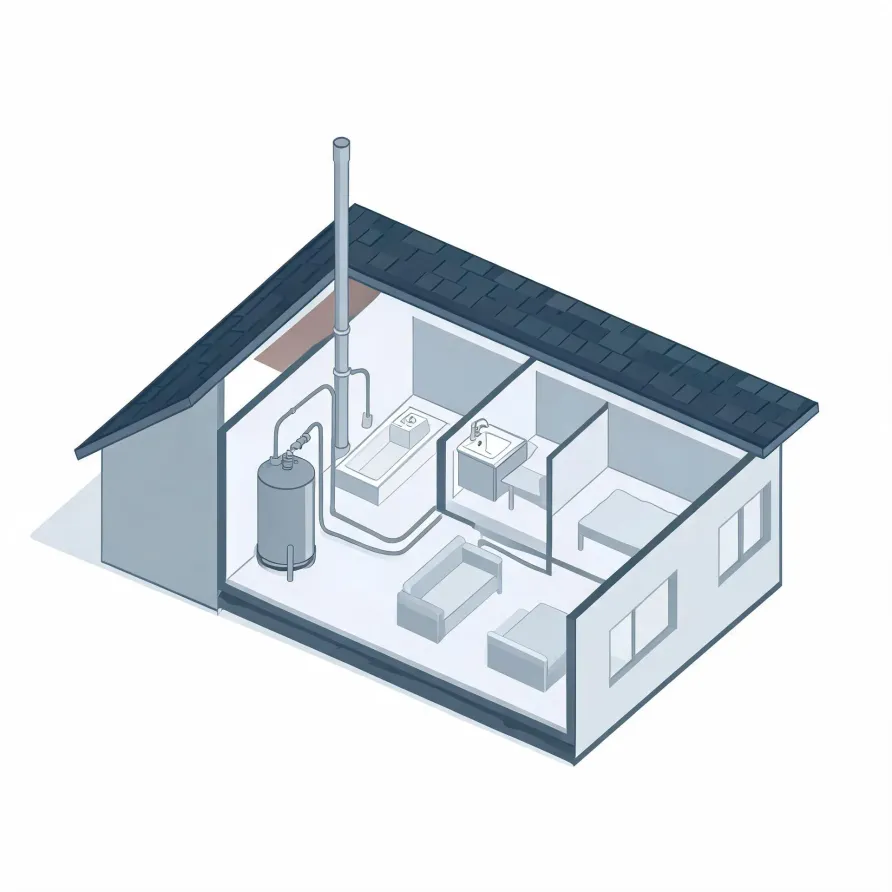
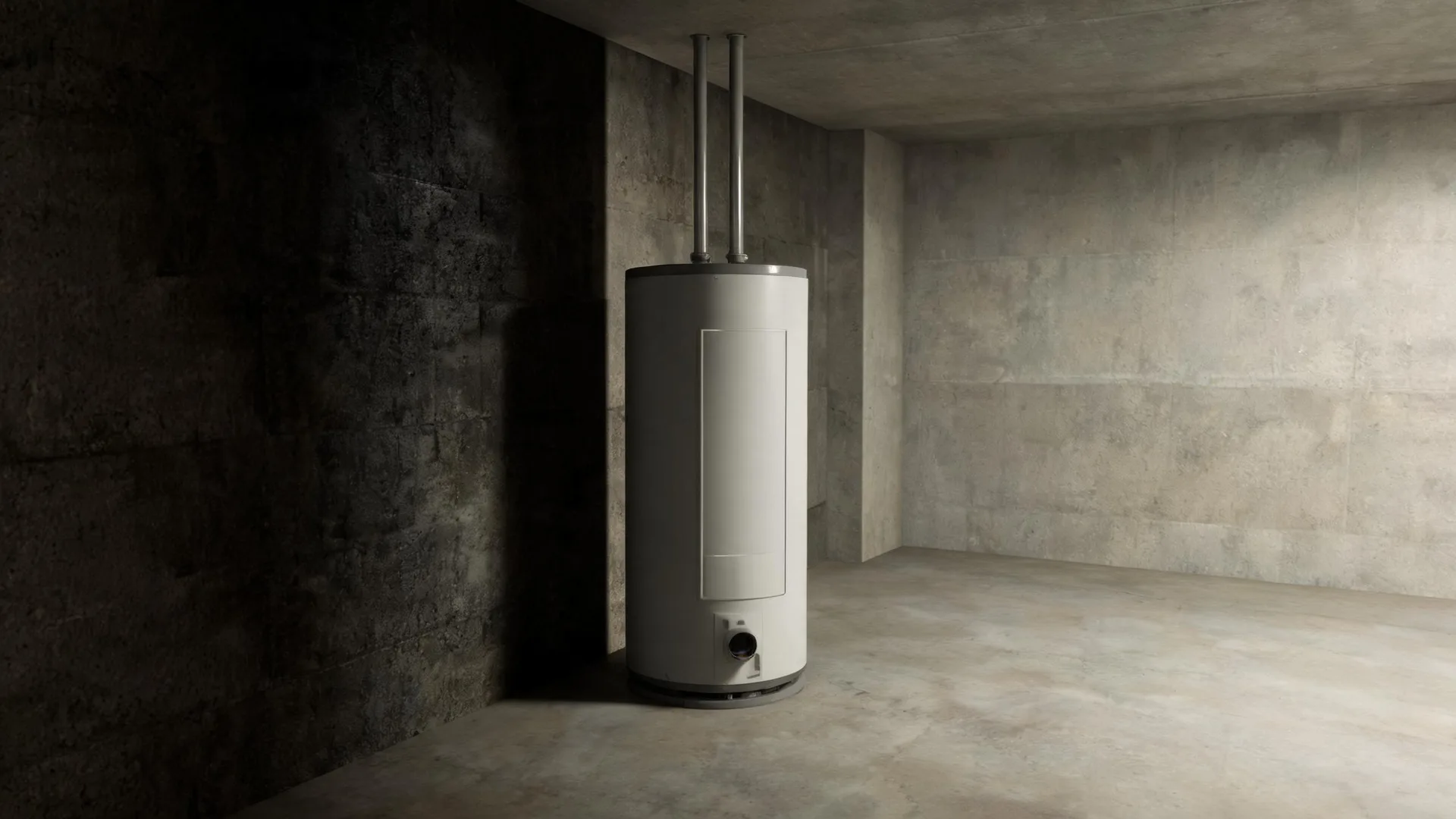
The tank is the piece a homeowner notices first, a large insulated cylinder that sits in a utility room, basement, or garage and holds a standing supply of hot water. Attached to it are the heating elements or burner assembly, which apply heat to the stored water, and the thermostat, which tells them when to run. When water runs cold or the tank makes noise, these are the pieces a contractor looks at first.
The pressure relief valve mounts directly to the tank and releases pressure if the system builds too much of it. The anode rod hangs inside the tank and slows corrosion of the tank walls. Supply and return lines connect the tank to the rest of the house's plumbing, and the drain valve at the base of the tank is what a contractor uses to flush sediment that has settled inside.
The drawing shows a general layout of these parts, and a licensed contractor determines what applies to the specific unit and installation in your home.
Get matched in Wright CountyWright County, Iowa, by the numbers
93 severe weather events were recorded in Wright County, Iowa between 2015 and 2024.
NOAA National Centers for Environmental Information, Storm Events Database, bulk CSV export, events 2015-01-01 through 2024-12-31.Half the homes in Wright County, Iowa were built in 1960 or earlier (2020-2024 ACS 5-year).
U.S. Census Bureau, 2020-2024 American Community Survey 5-Year EstimatesWright County, Iowa holds 6,278 housing units (2020-2024 ACS 5-year).
U.S. Census Bureau, 2020-2024 American Community Survey 5-Year EstimatesOwners occupy 77.0% of the occupied homes in Wright County, Iowa (2020-2024 ACS 5-year).
U.S. Census Bureau, 2020-2024 American Community Survey 5-Year EstimatesCodes & Standards Covering Water Heater Repair in Wright County, Iowa1 sourced rules and standards
What Wright County, Iowa Requires for HVAC Repair
Iowa requires a state licence to install or repair HVAC, refrigeration, mechanical or plumbing systems, and to operate as a contractor, with exceptions listed in section 105.11.
Severe Weather Events in Wright County
Extreme weather puts real stress on water heaters, forcing them to work harder and wear faster. How much of that pressure your equipment faces depends on where it sits, which makes local storm history a practical part of the repair picture.
93 severe weather events, 2015–2024. Source: NOAA National Centers for Environmental Information, Storm Events Database.