




Profile view of a bearded man wearing a dark baseball cap and a dark gray T-shirt against a plain off-white background.

Water heater leaking in Des Moines, IA

Step 1 of 3: Equipment

Why is my water heater leaking?

A puddle under the tank or a drip from a fitting is unsettling, especially when you don't know yet if it's a quick fix or a sign the tank itself is failing. You want to know what's actually causing it before you decide what to do next, and whether it's safe to leave it overnight.

Most leaks come from a loose fitting, a worn valve, or a tank that's rusted through

A leak at the top of the tank is usually a loose connection or a fitting that's worked itself loose over time, and that's often a simple repair. A leak from the pressure relief valve means it's doing its job and releasing pressure it shouldn't have to, which points to a problem inside the tank. A leak from the bottom, or water pooling underneath, usually means the tank itself has rusted through, and at that point the water heater needs to be replaced, not repaired. With winters as hard as they are in Polk County, a water heater works harder for more months of the year, and that extra strain is often what pushes an aging tank past the point where it can hold water.

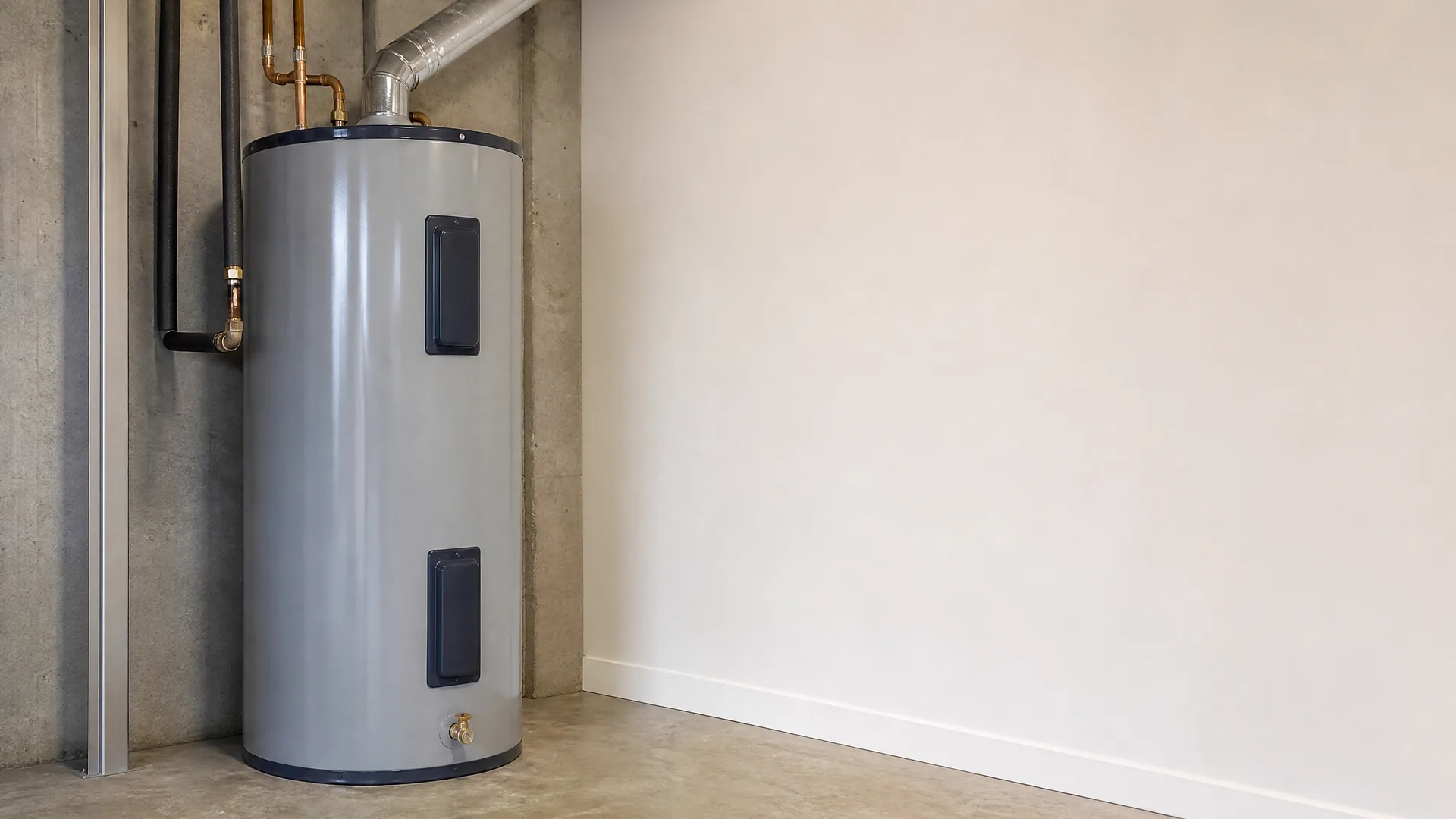
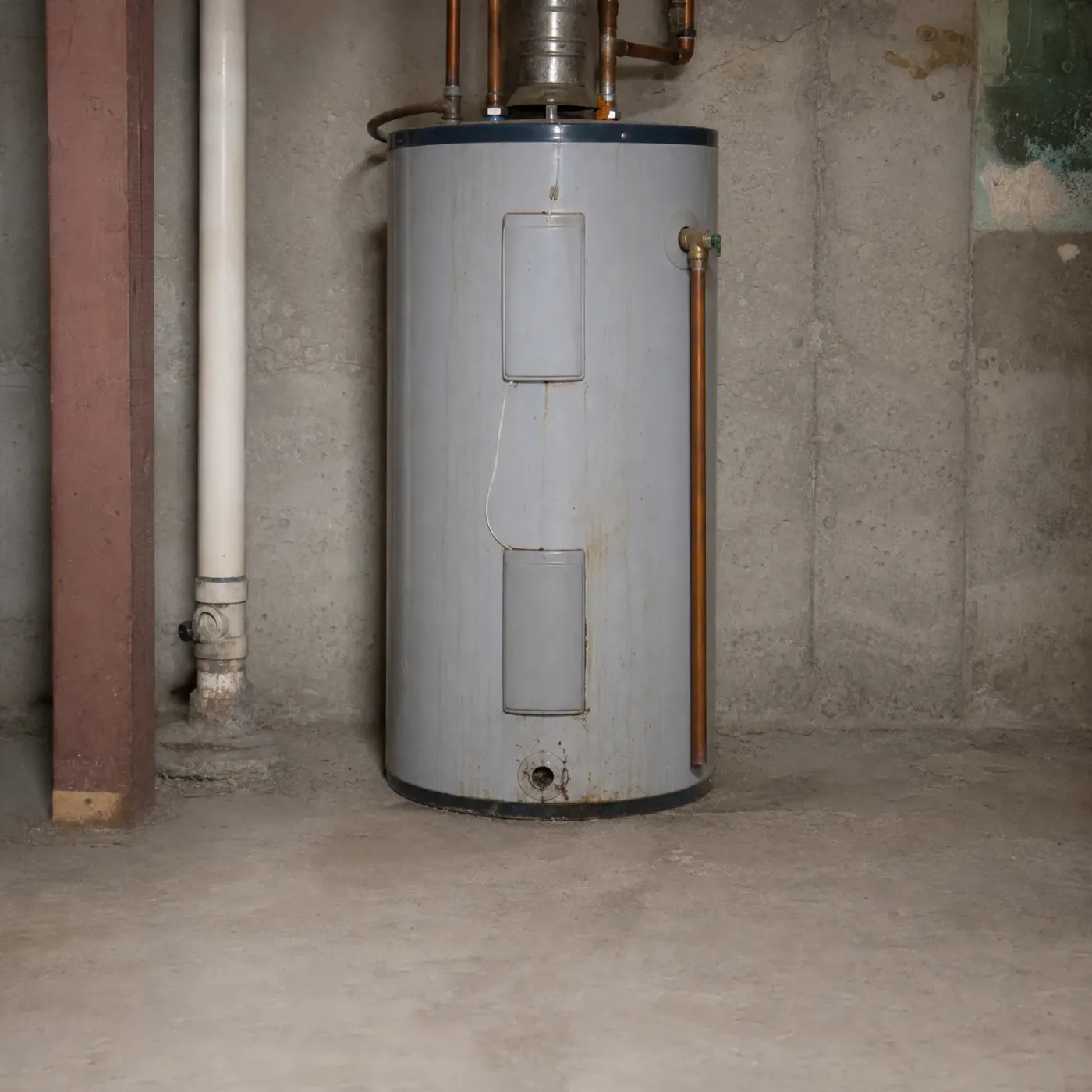
A gray cylindrical electric water heater with two access panels stands against a concrete wall beside copper and black pipes, next to a plain white wall and concrete floor.

Where the water is coming from

A leak at the top of the tank is usually a loose fitting, the cold water inlet, or the pressure relief valve. Water pooling at the bottom points to the tank itself, and once the steel tank has rusted through, there is no sealing it. A puddle near the drain valve can simply mean that valve was never closed all the way, which costs nothing to fix.

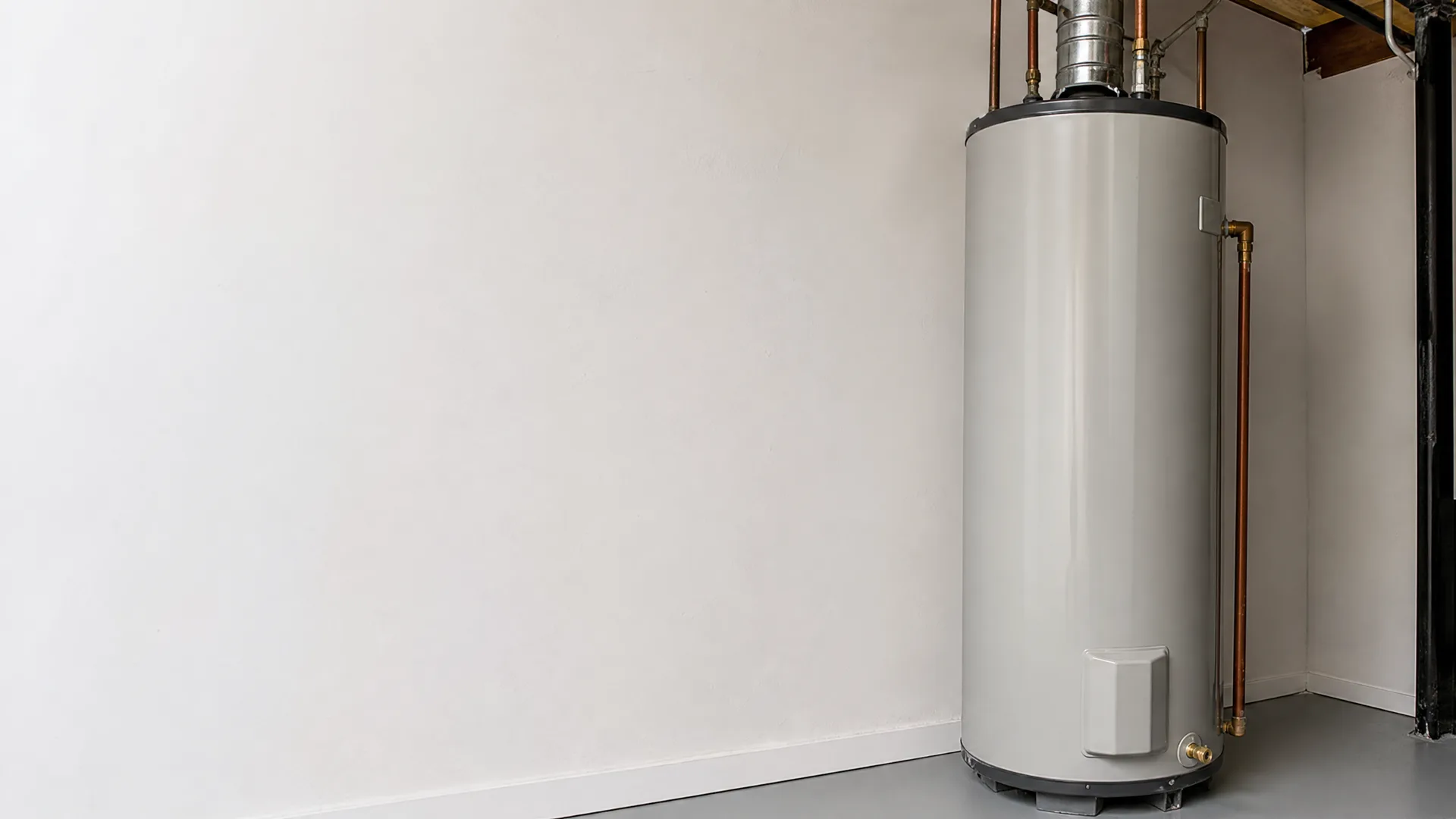
A tall gray cylindrical gas water heater with copper pipes and a metal flue stands in the corner of a room with plain white walls and a gray floor.

What a standing pilot tells you

If your water heater runs on gas with a standing pilot, it does not need power to keep heating, so a leak is not tied to an outage. Most gas water heaters in Polk County are tank style, and the tank sits on a floor drain or pan for a reason. If that pan has water in it, the tank is the source, not a nearby pipe.

What does your water heater have to deal with here?

  • 2.41 people per household on average

    With 2.41 people in the average Polk County household, a leaking water heater usually means the whole house is short on hot water until it's fixed.

  • Half the homes here were built by 1982

    Half the homes in Polk County were built in 1982 or earlier. If yours is one of them, check when the water heater itself was last replaced.

  • 65.7% of homes heat with gas

    65.7% of homes here heat with gas, so most of these leaks involve a gas water heater, which needs the gas line checked along with the tank.

ACS 2020-2024

How a water heater actually fails

  • A leak at the cold water inlet or the pressure relief valve is often just a loose fitting, not a failing tank.
  • The pressure relief valve is designed to open and release water if pressure inside the tank climbs too high.
  • A drip from that valve's discharge pipe can mean the valve is doing its job or that it's stuck and needs replacing.
  • Water at the base of the tank usually means the steel tank has rusted through from the inside.
  • Once the tank itself is leaking, no fitting or valve replacement will stop it, since the steel can't be patched or sealed.
  • Sediment that settles at the bottom of the tank can trap heat against the steel and speed up that rusting process.

Most leaks start at a connection, not the tank. The cold water inlet, the hot water outlet, and the pressure relief valve are all threaded fittings, and threaded fittings loosen or corrode over years of heating and cooling. A plumber can check those in minutes and often tighten or replace a fitting without touching the tank at all. The pressure relief valve is a different story. It sits there to open on purpose, releasing water if pressure inside the tank builds past a safe point. A little water at its discharge pipe can mean the valve just did its job during a hot cycle. But if it drips constantly, the valve itself may be stuck open and needs to be swapped out before it wastes water or fails to do its job when pressure actually spikes. The leak that matters most is water pooling at the base of the tank. Inside every steel tank, sediment settles to the bottom over time, and that layer traps heat against the steel instead of letting it transfer into the water. The steel underneath corrodes faster where sediment sits, and eventually it rusts all the way through. Once that happens, no fitting, no valve, no patch will stop the leak. Steel that's rusted through can't be sealed from the outside. At that point, the tank is done, and the only real fix is a new one.

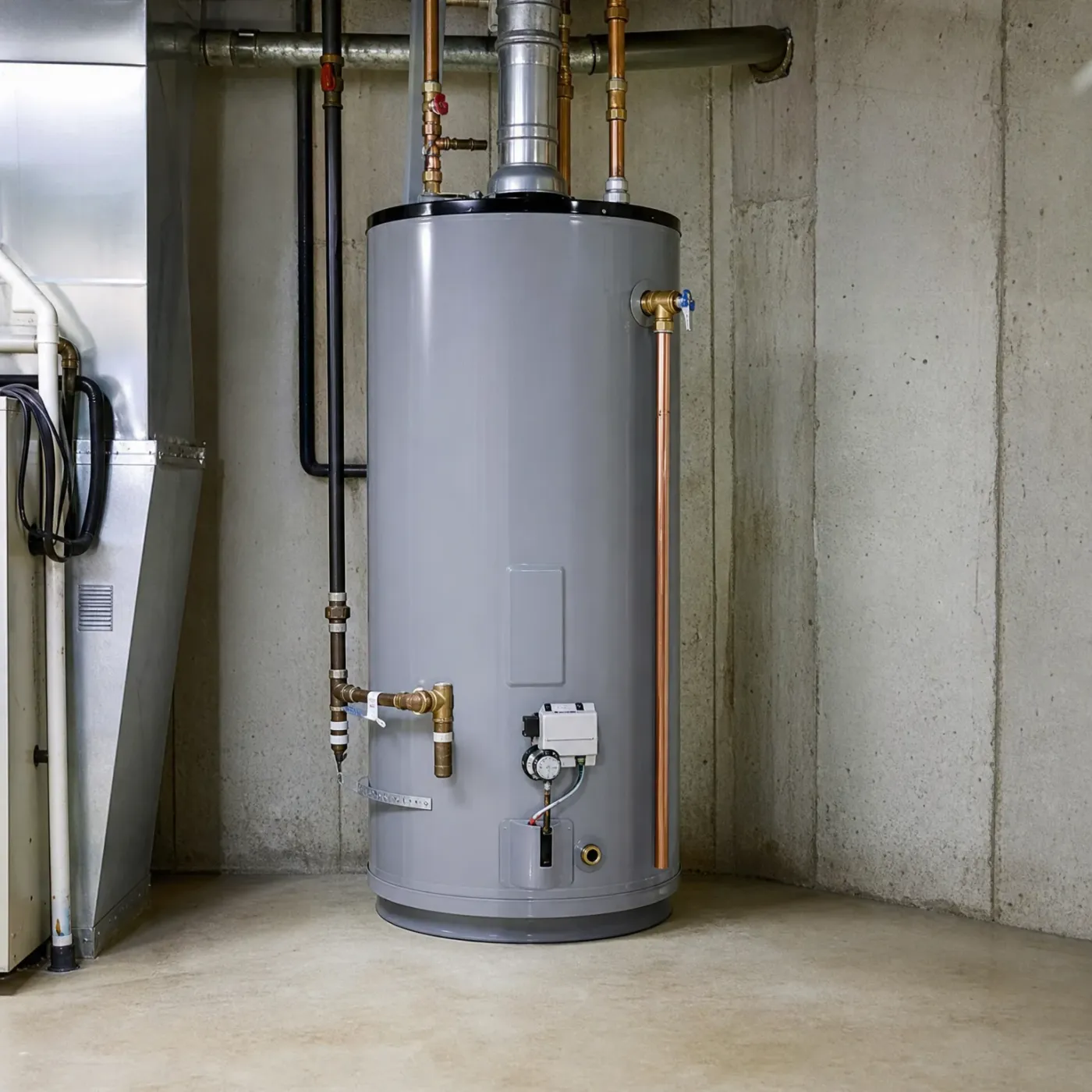
A large gray cylindrical gas water heater stands in a concrete-walled basement corner, connected to copper and black pipes and a metal flue, with ductwork at left.
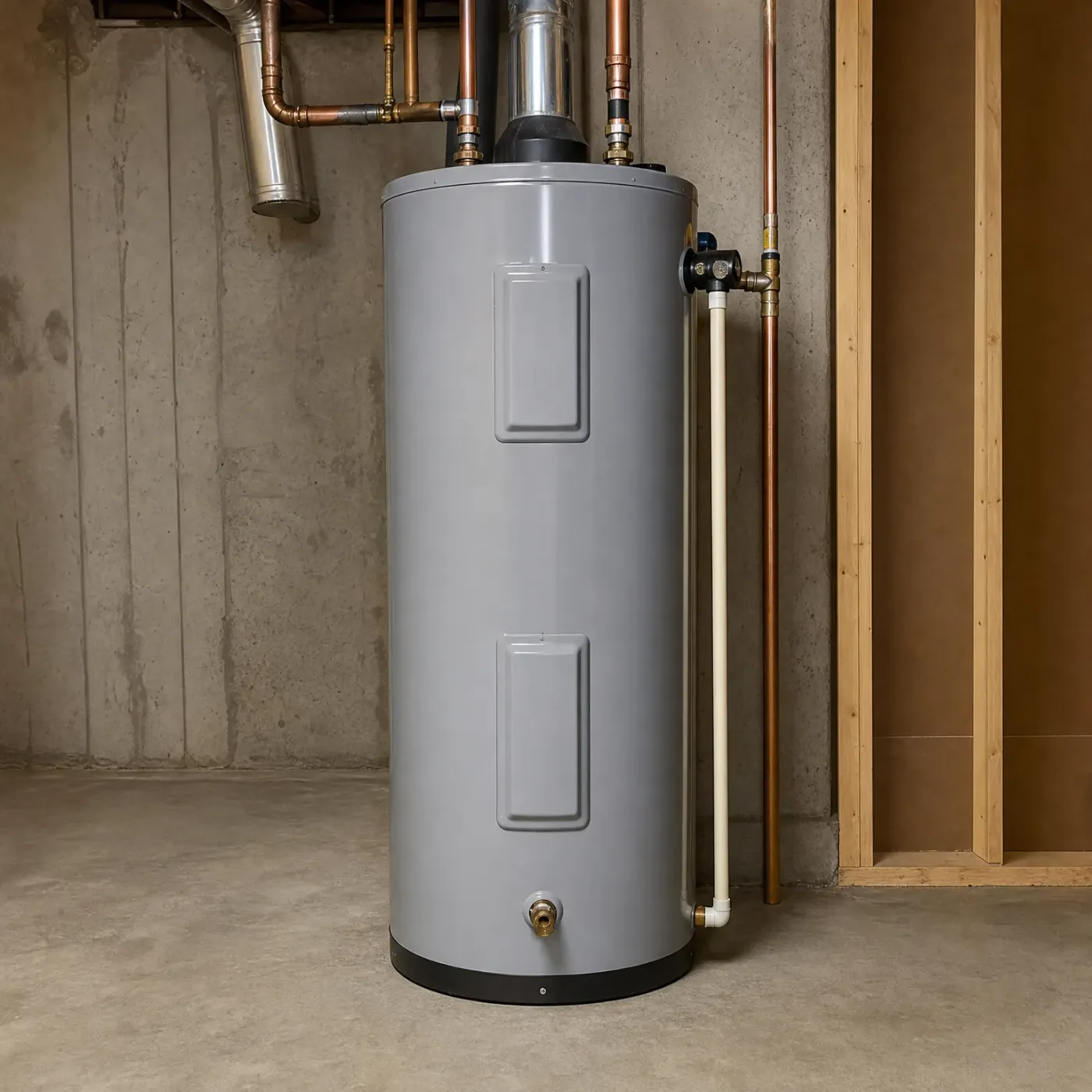
A water heater that's working right stays dry on the outside, tank, fittings and all, with no staining on the floor around it.
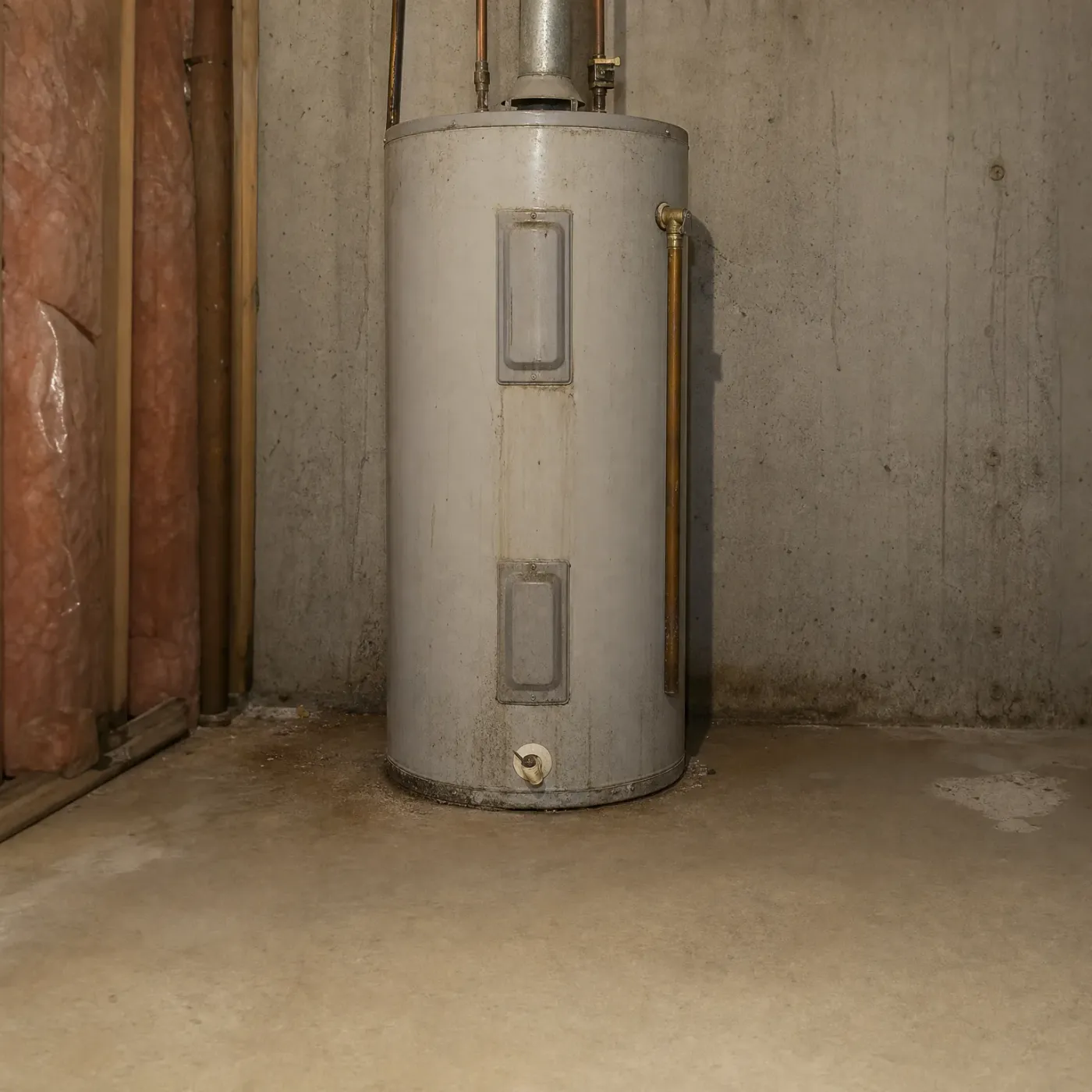
A gray cylindrical water heater with two access panels and copper piping stands in the corner of a concrete-walled basement next to exposed pink insulation.
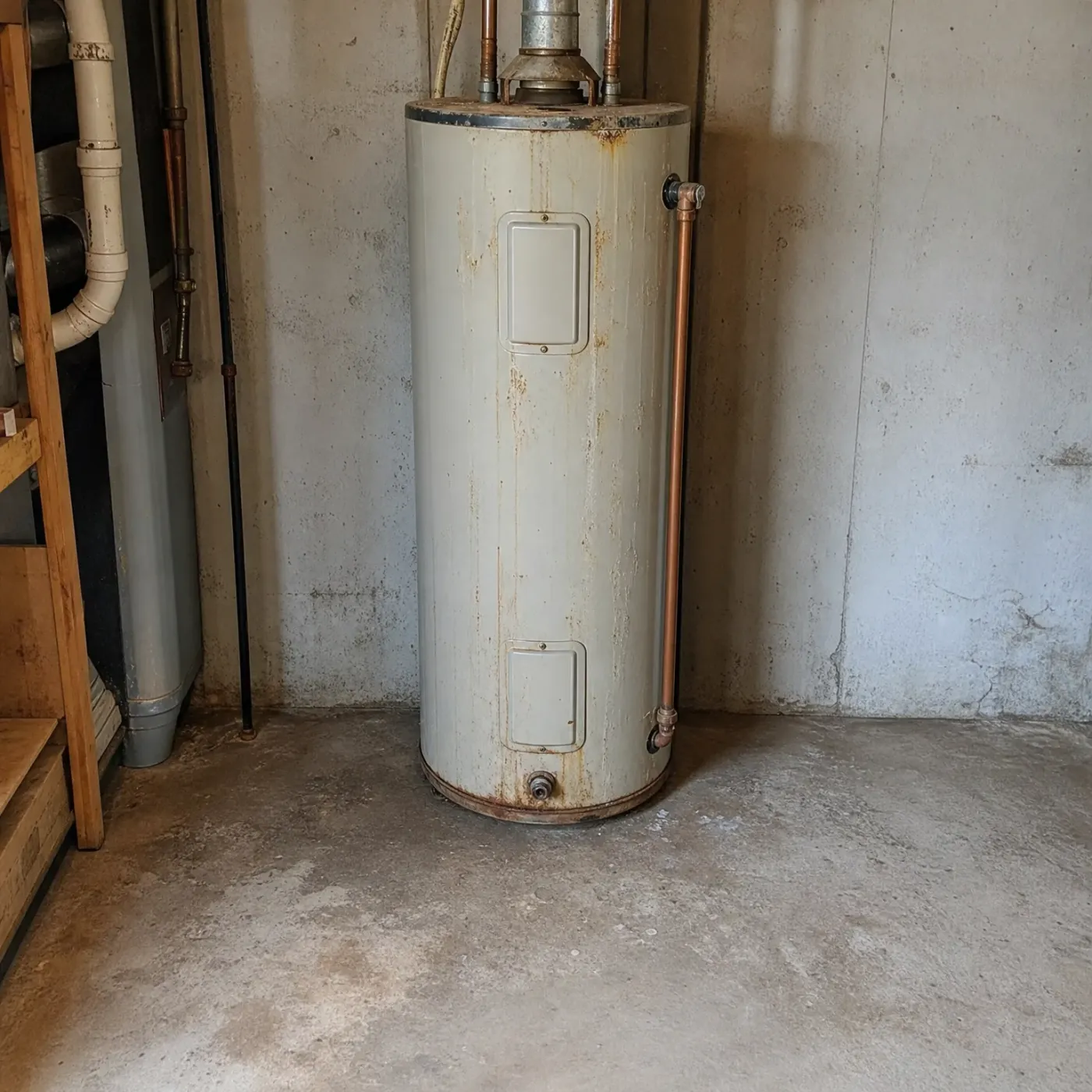
Rust stains down the side of the tank and water pooling at the base mean the steel inside has already given way.

A leaking water heater in your house means no hot water until it's dealt with, and that shows up fast with a household this size. Showers get cut short, dishes pile up, and laundry waits. If the leak is coming from the bottom of the tank, that water is going somewhere: onto a basement floor, into a crawlspace, or across a utility closet floor that sits near drywall and framing. Left alone, that kind of leak doesn't stay small. The puddle spreads, the rust at the base gets worse, and what started as a drip can end up soaking the subfloor underneath it. If your house still has the water heater it came with, it's worth checking the age on the tank's label, since a tank that old leaking at the bottom is usually done, not fixable. A leak from a fitting or valve near the top is a different story, and worth knowing which one you're dealing with before water damage makes the decision for you.

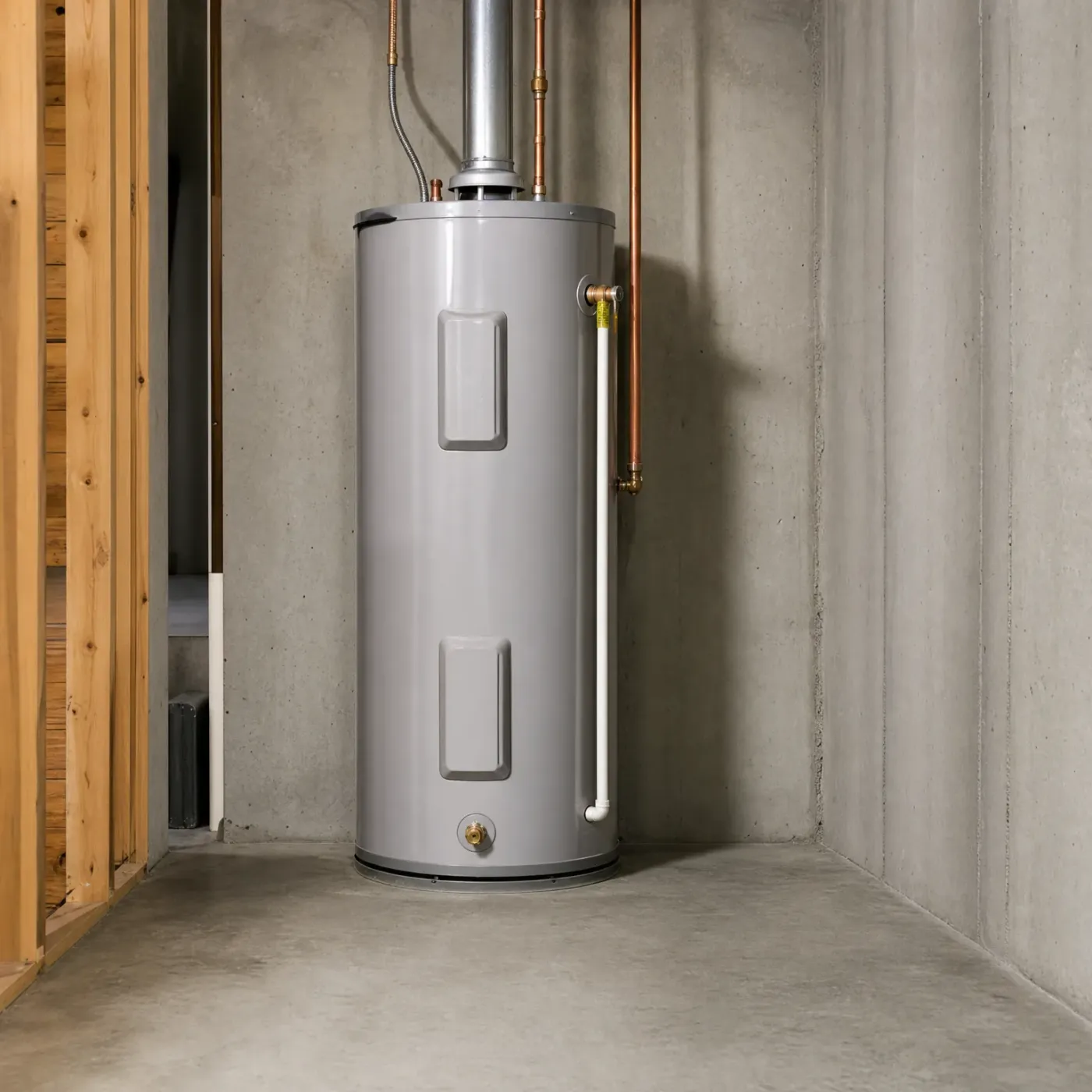
A gray cylindrical water heater with copper piping stands against a concrete basement wall beside a white vertical pipe and a wooden post.
Before you get your water heater repair
A gray cylindrical water heater stands against a concrete basement wall, connected to copper pipes and a metal flue overhead, with a white discharge pipe running down its right side and exposed wood framing to the right.
After you get your water heater repair
  1. Water pools at the base or drips from a fitting

  2. A contractor checks whether the leak is a fitting or the tank

  3. Loose fittings get tightened or the valve gets replaced

  4. A rusted-through tank gets replaced, not patched

A smiling man in a blue denim shirt over a white tee sits at a light stone kitchen counter with a grey mug and a bowl of oranges and bananas, with pendant lights and shelving behind him.
A smiling bearded man in a grey long-sleeved shirt sits at a kitchen counter with a dark mug, with a dining table, pendant light and glass doors onto greenery behind him.
A bearded man in a dark green knit sweater smiles and looks off to the side while standing at a kitchen counter with a white mug of coffee, with open shelving, a potted tree, and a dining table near large windows behind him.
A man with dark curly hair in a dark green sweater stands smiling and looking to the side in a kitchen with white cabinets, a potted plant, a stone countertop with a ceramic mug, and a dining area with framed art in the background.

Hand off the search today

A leak under the water heater does not wait for a convenient week. Once that tank is rusted through or a fitting lets go, water keeps finding the floor, and in a Polk County house with a couple of people counting on it, that means no hot water until someone fixes it. You could start calling plumbers around Des Moines, explaining the same leak over and over, waiting on callbacks, trying to tell which quote is fair. That work is what this page takes off your plate. Send the request and you stop being the one chasing it down. One contractor gets your situation, not five people guessing at it over the phone. You still have standing water and a decision to make about that tank, but finding someone qualified to look at it stops being something you have to manage yourself.

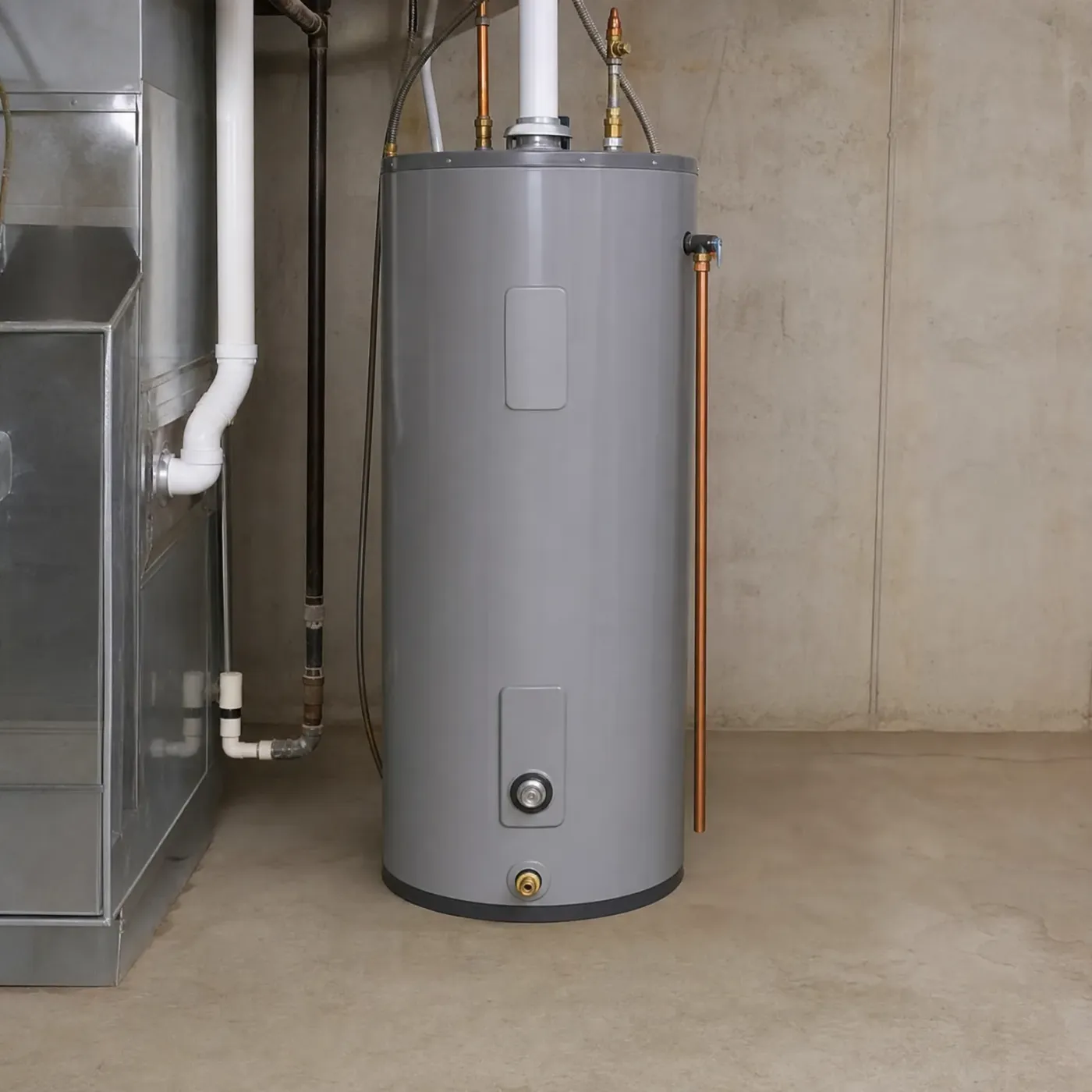
A gray cylindrical water heater stands on a concrete floor against a concrete wall, with copper and white pipes above it and a metal ductwork unit to the left.

Working normally

A water heater that's in good shape stays dry at every connection. The pipes running in and out are tight, the drain valve at the base is closed and dry, and there's no staining on the concrete beneath the tank. It sits there doing its job without announcing itself.
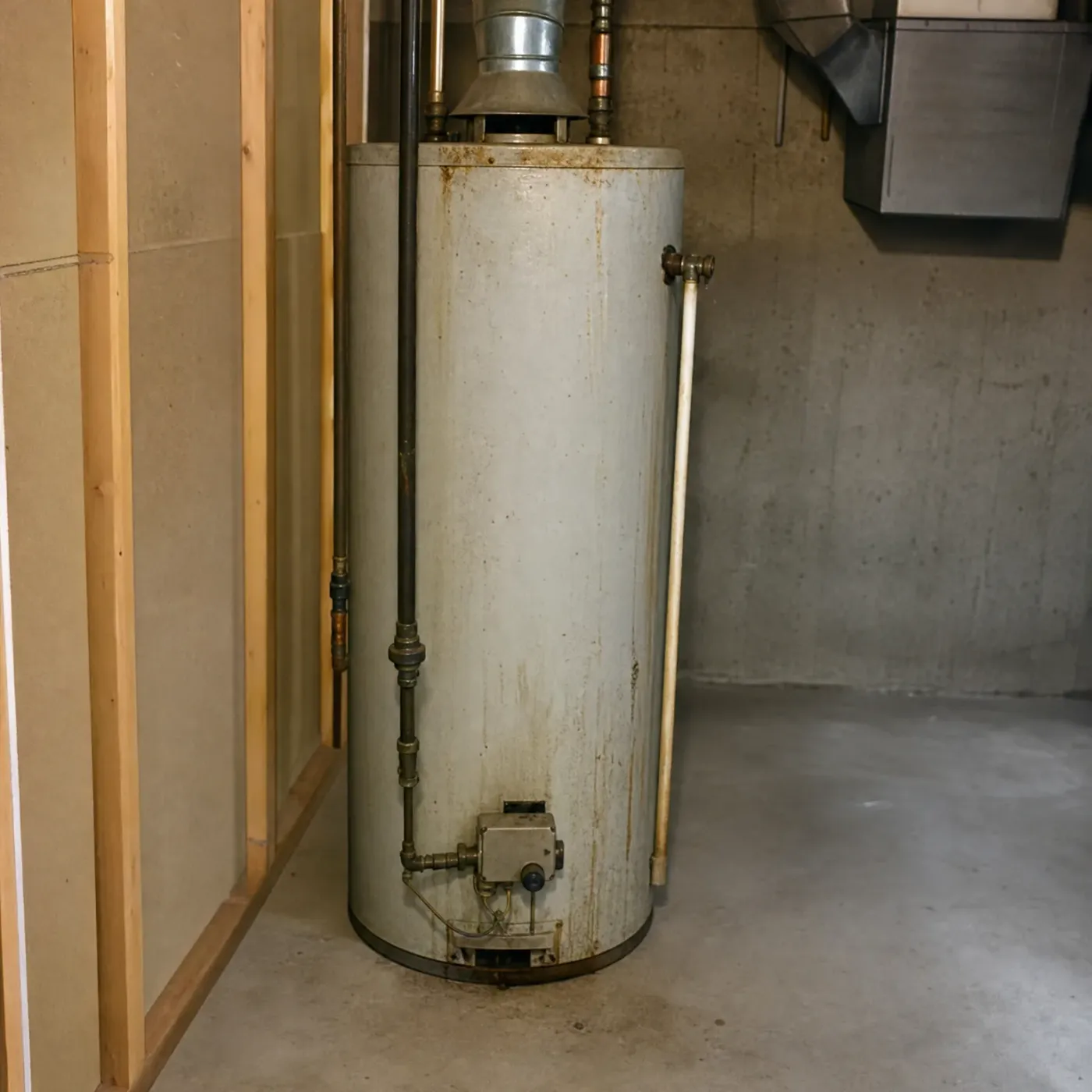

An old rusting gas water heater with flue pipe and connected plumbing stands on a concrete floor in a basement corner beside an unfinished wood-framed wall and a metal duct.

Tank failing

Rust creeping down the outside of an old tank means the steel has already started going from the inside out. Once it reaches the point of pooling water at the base, patching a fitting won't help. The gas line, the flue and the valve assembly all outlast the tank itself.

A bearded man in a navy T-shirt sits on a light-colored couch indoors, smiling while looking down at a laptop screen in the foreground, with a framed picture and a potted plant blurred behind him.
A bearded man in a plaid flannel shirt sits indoors looking out a window at snow-covered trees, with a steaming mug on the sill and wooden kitchen shelves behind him.

What am I going to find when I walk down there

You'll probably spot it before you think about it: a puddle on the floor near the tank, or water tracking toward the drain. Sometimes it's a damp patch on the carpet or a baseboard that's swollen near the water heater closet. Look closer and you might see rust streaks running down the side of the tank, or water beading at a fitting on top. There may be a faint metallic smell if the tank itself is rusting through. None of this gets better left alone. A small drip today can mean a wet floor or warped flooring by next week, and if the tank has actually failed, you're looking at a basement or utility room with standing water instead of a damp spot.

A gray cylindrical water heater standing in a concrete-walled basement corner, with copper and white pipes and a metal flue running up to the ceiling, next to exposed wood framing on the left.

Doing its job

The tank sits dry against the concrete, with the copper lines and the flue vent running straight up out of the top. The relief valve discharge pipe runs down the side, empty. Nothing is staining the floor underneath it.

A rusted cream-colored water heater with copper piping and a flue stands in the corner of a concrete-walled basement next to wooden shelving and ductwork.

Tank's given out

Rust has spread across the whole shell, not just a spot near a fitting. That kind of corrosion means the steel itself is failing, not a loose connection you can tighten. A tank in this shape needs replacing, not patching.

Power here costs 11.37 cents per kilowatt-hour

At 11.37 cents per kilowatt-hour, running an electric water heater here costs less than in most places. That's worth knowing once yours is fixed and heating a full tank again, but it doesn't change what a leak means now. A loose fitting or a failing tank still needs a look before power or gas comes into it.

EIA-861 2025

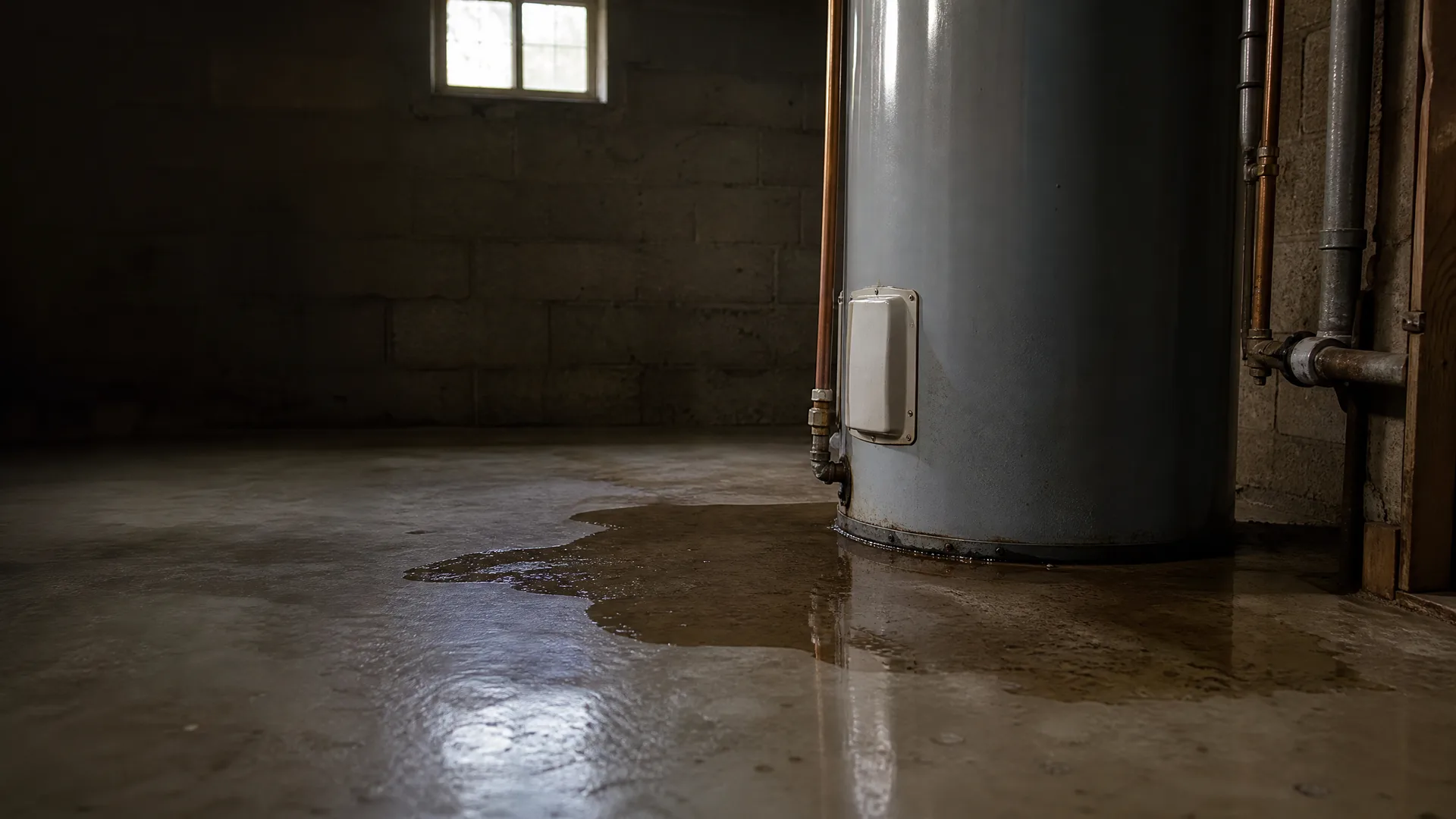
A gray cylindrical water heater stands in a dim basement with concrete block walls, copper and metal pipes along the wall, and a pool of water spreading across the concrete floor.

It's Saturday morning and you're down in the basement with a load of laundry when you see it, a thin ring of water spreading out from the base of the tank toward the drain. You set the basket down and crouch to look closer. The concrete around the tank is dark and wet, maybe two feet out from the base. No hissing, no dripping that you can hear, just water that's already there and still coming. You press a hand to the side of the tank and feel a damp streak running down toward the floor. The laundry can wait. You stand there a second, trying to remember how old this water heater actually is.

A wooden table in the foreground holds a closed laptop and a ceramic mug of coffee, with a spindle-back wooden chair behind it, a beige wall with paneled wainscoting, a window at left, and a kitchen counter with a cutting board, bowl of fruit and greenery at right.

Where that leaves you

A loose fitting gets tightened. A failed valve gets replaced. A tank that's rusted through gets replaced too, because there's no fixing steel once it's given way. Which one you've got is the whole question, and it's not one you can answer by looking at a puddle on the floor.

What a leak actually costs you is the search that usually follows it: finding a contractor who's licensed for this, calling around to see who can come look at it, explaining the same puddle and the same guess three or four times, then sitting with quotes trying to compare one against another. Send the form instead and that part is off your plate. Someone qualified gets word of what's going on at your house, and the only thing left for you to do is point them to the basement.

A gray upholstered sofa with a beige cushion and knit blanket beside a curtained window, with a white mug and a book on a dark wooden table in the foreground and a lit lamp in the background.
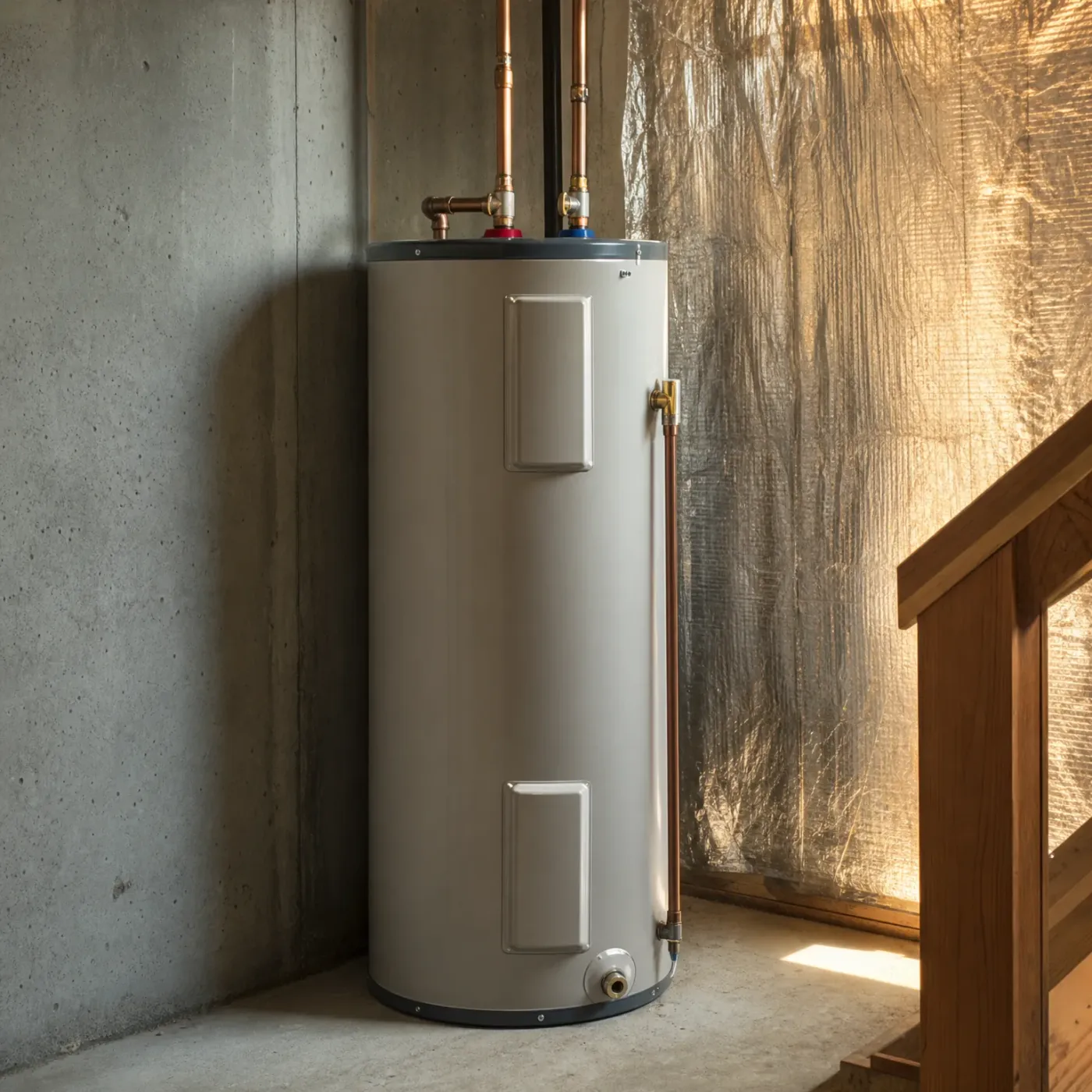
A cylindrical electric water heater with copper inlet and outlet pipes stands in a concrete basement corner beside a foil-faced insulation wall and wooden stair railing.

Hand off the water heater problem

Describe it once

Skip calling shops to ask who repairs water heaters in Polk County.

No charge to send it. You decide if you hire them.