Tell us about the job
Takes about a minute. No obligation.
A contractor quoting a water heater replacement in Hancock County has to work out what the unit has actually been running against before they can say whether it wore out too soon. 110 severe weather events were recorded in Hancock County, Iowa between 2015 and 2024. That puts this area in roughly the middle of the national picture for severe weather load, which means the weather alone is not what explains a premature failure. What decides whether a water heater holds up here is how well it was sized for the household, how cleanly it was installed, and whether it was serviced. A contractor who skips those questions and blames the conditions is guessing.
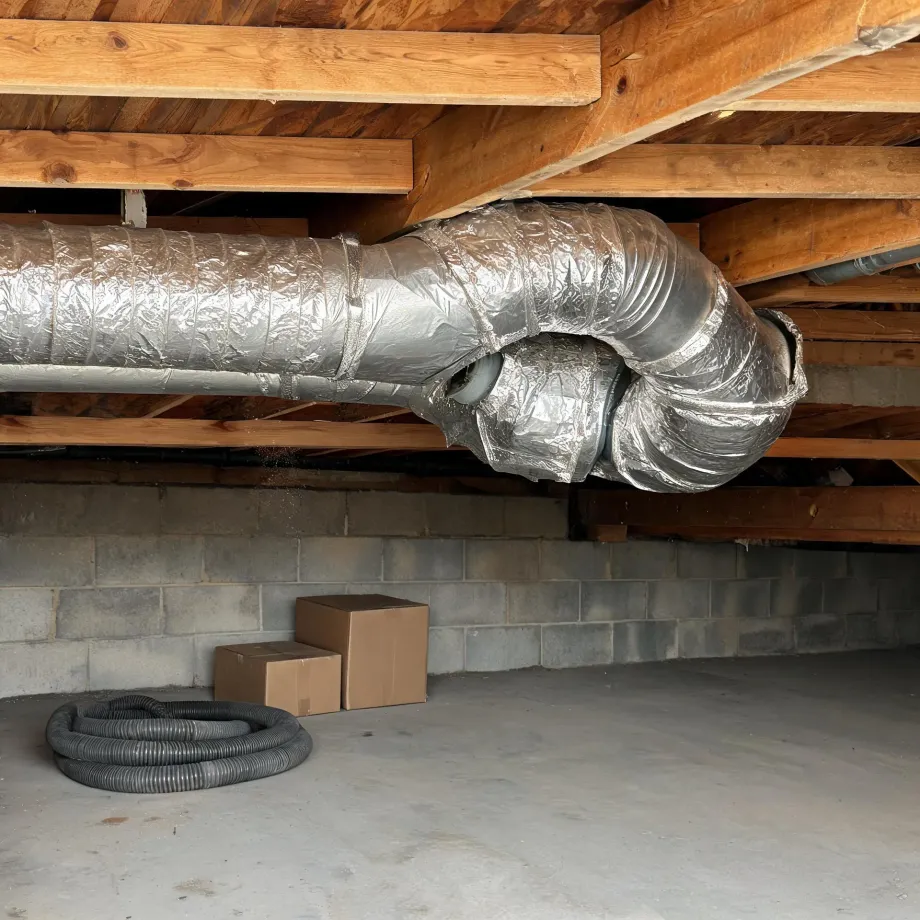
Ductwork and electrical service installed for mid-century life were sized for mid-century equipment, and a water heater swap in a house like that runs on what the existing infrastructure will or will not carry. Half the homes in Hancock County, Iowa were built in 1961 or earlier (2020-2024 ACS 5-year). That puts a contractor's first real question at the walls and the panel, not the unit on the floor. If the venting path is too long, too narrow, or routed through unheated space, the new heater's efficiency rating on the box means little in practice. The electrical service is the same story: a heat pump water heater draws more than its predecessor, and the circuit has to support that draw.
The Parts of a Water Heater an HVAC Contractor Works Around
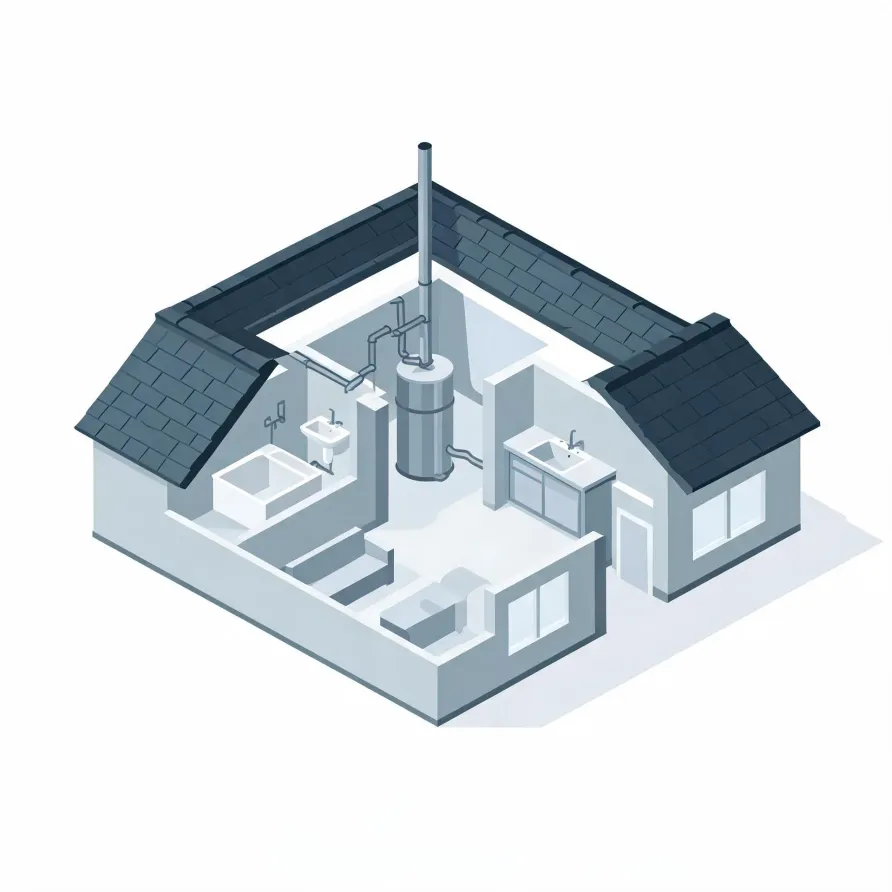
The tank is the piece a homeowner notices first. It sits in a utility space, basement, or closet and holds the water supply that the rest of the house draws from. Attached to it are the inlet and outlet connections, the pressure relief valve, and the drain valve at the base.
The flue or exhaust vent runs from the top of the tank up through the wall or ceiling and carries combustion gases out of the house. On gas units, the burner assembly sits beneath the tank alongside the thermostat and the gas supply line. An HVAC contractor working in the same space accounts for each of these components when routing new lines, venting, or equipment.
The drawing shows a general layout, and a licensed contractor determines what applies to this particular house.
Get matched in Hancock CountyHancock County, Iowa, by the numbers
110 severe weather events were recorded in Hancock County, Iowa between 2015 and 2024.
NOAA National Centers for Environmental Information, Storm Events Database, bulk CSV export, events 2015-01-01 through 2024-12-31.Half the homes in Hancock County, Iowa were built in 1961 or earlier (2020-2024 ACS 5-year).
U.S. Census Bureau, 2020-2024 American Community Survey 5-Year EstimatesHancock County, Iowa holds 5,116 housing units (2020-2024 ACS 5-year).
U.S. Census Bureau, 2020-2024 American Community Survey 5-Year EstimatesOwners occupy 82.5% of the occupied homes in Hancock County, Iowa (2020-2024 ACS 5-year).
U.S. Census Bureau, 2020-2024 American Community Survey 5-Year EstimatesWater Heater Installation Rules for Hancock County, Iowa1 codes and standards
Licensing and Legal Requirements in Hancock County, Iowa
Iowa requires a state licence to install or repair HVAC, refrigeration, mechanical or plumbing systems, and to operate as a contractor, with exceptions listed in section 105.11.
Severe Weather Events in Hancock County
Hancock County weather puts real demands on water heating equipment. How hard a unit works over its life is a local question, and storm activity is part of that picture.
110 severe weather events, 2015–2024. Source: NOAA National Centers for Environmental Information, Storm Events Database.