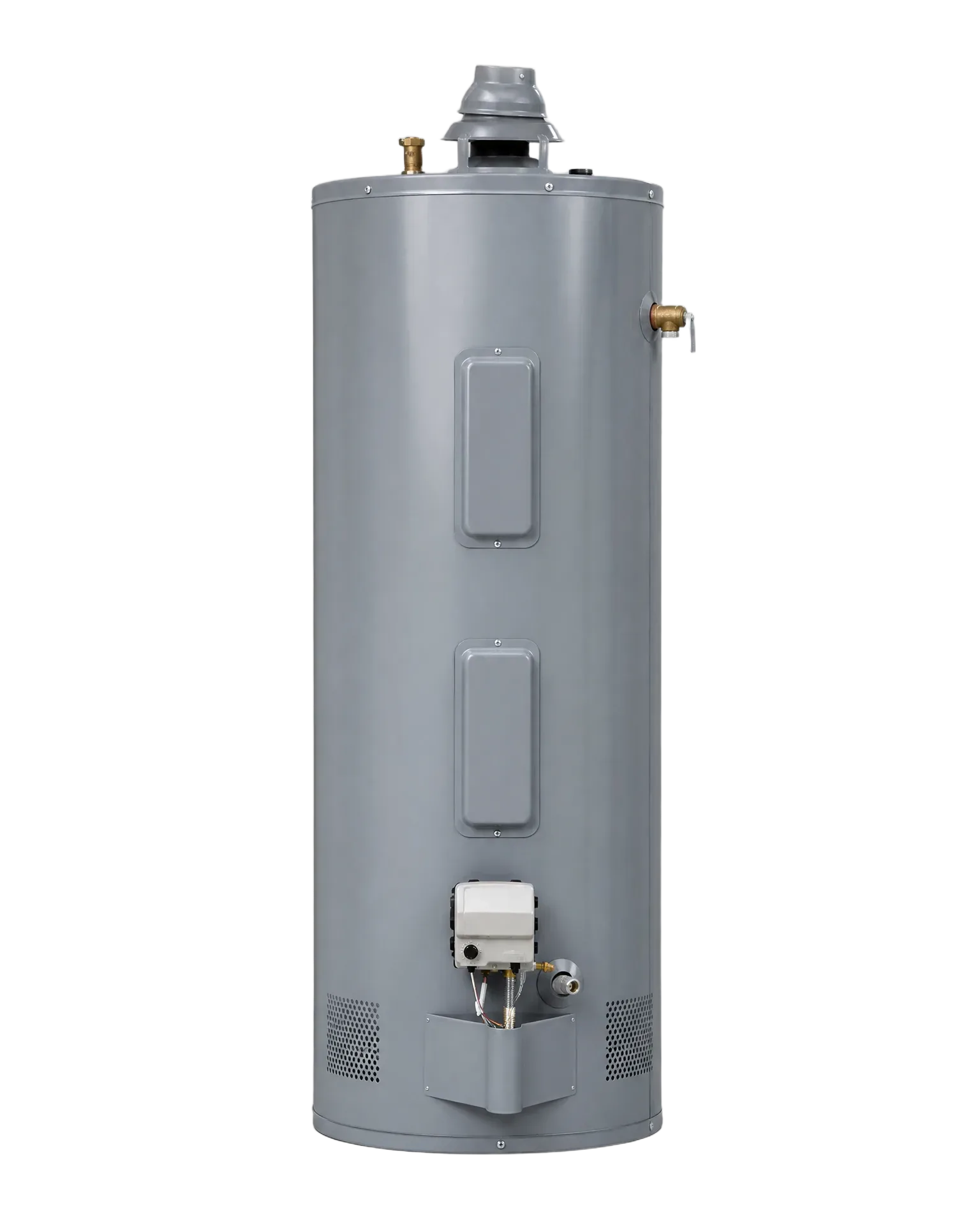
Should I get a tank or tankless water heater in Iowa?
Your old water heater is on its way out and you're trying to figure out whether to replace it with the same kind of tank or switch to tankless. With gas running most homes in Iowa and winter groundwater running cold, you want to know which one actually keeps the showers hot when the house is full of people who need them.
A gas tank water heater is the simpler choice for most Iowa homes
Tankless units can run out of hot water less often, but they have to work harder here. Groundwater coming into an Iowa home in January is much colder than it is in a southern state, so a tankless unit has to heat it further to hit the same temperature at the tap, which can mean a lower flow rate when two showers and a dishwasher run at once. A gas tank keeps a full reserve of hot water ready, so it doesn't depend on heating cold winter groundwater on demand. Tankless still works in Iowa, but it usually needs a larger unit sized for the winter groundwater temperature, not just the summer one.

Cold groundwater enters the tank or the tankless unit first.
A tank keeps 40 to 50 gallons hot around the clock.
A tankless unit fires up only when you open a tap.
Gas burners or an electric element bring the water to temperature.




60.2% of homes statewide heat with gas
Most Iowa homes run on gas, and if yours is one of them, that opens up both options. A gas tankless unit can keep up with a full house without the standby cost of a tank. If your water heater is electric, tankless gets harder to justify once you factor in what it takes to bring gas to it.
ACS 2020-2024 5-year B25040
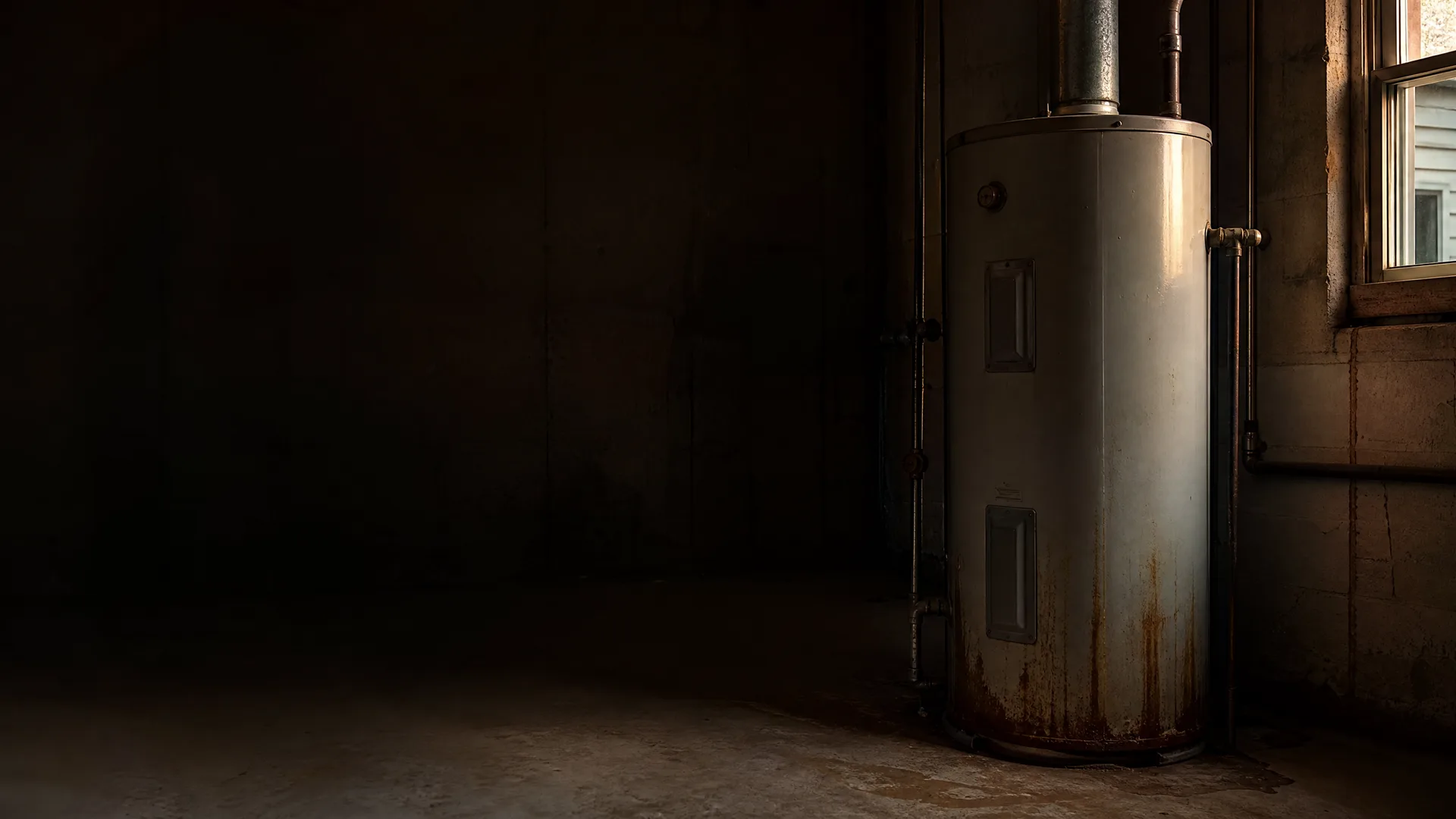
You go down to the utility room after dinner to grab something from the chest freezer, and the floor by the water heater is damp again. It's early evening, dark already outside, and the furnace kicks on somewhere above you while you crouch down to look. Rust streaks run down the side of the tank and pool at the base, right where the drain valve meets the floor. You've wiped that spot dry twice this week. The unit hums along like nothing's wrong, but you know a tank doesn't rust through overnight, and you know what's next if you wait much longer. You head back upstairs still thinking about it.
A local pro for your water heater installation

Answer a few questions instead of calling shop after shop.
Sending the form costs nothing.
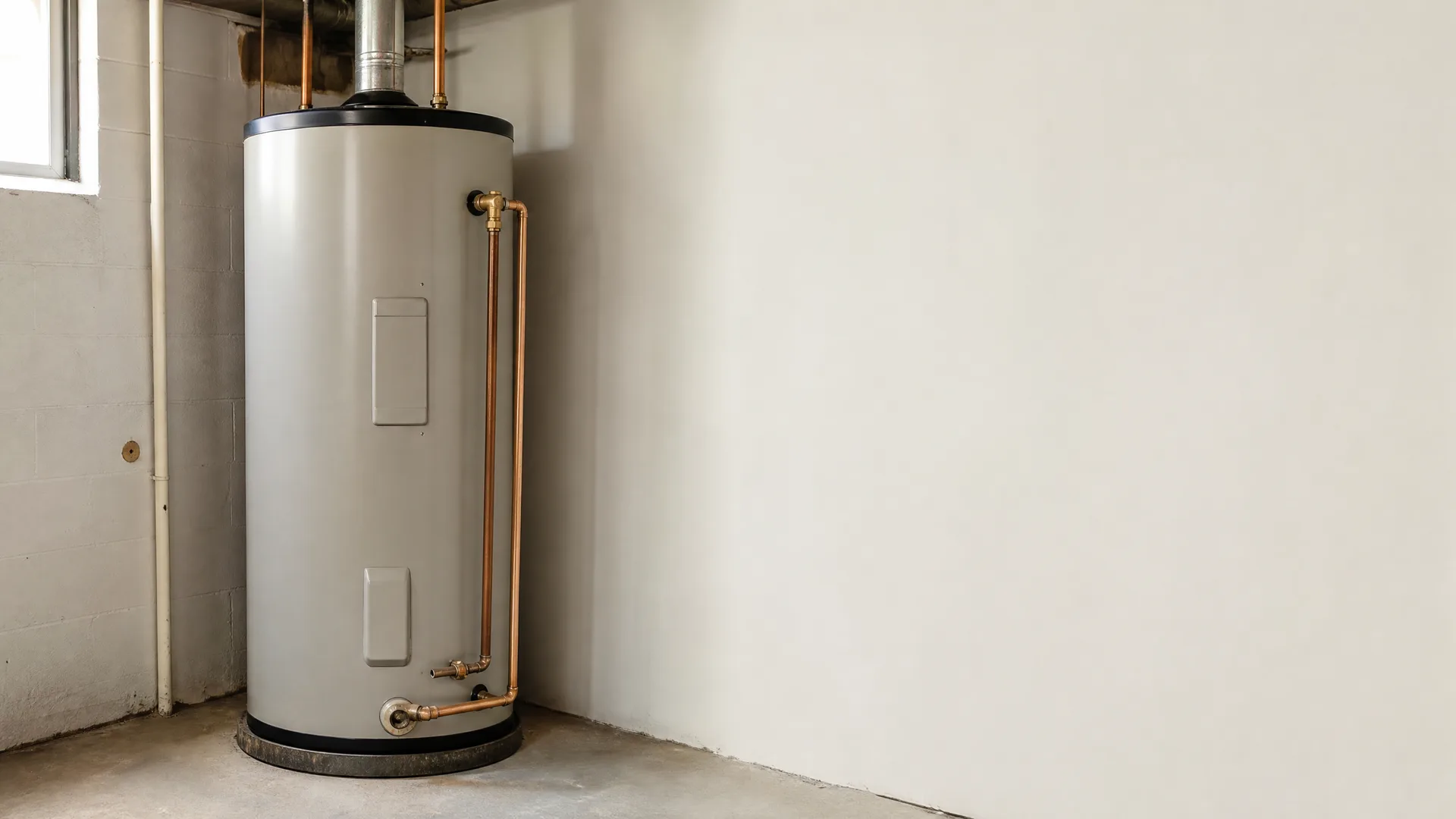
Why a tank still makes sense
A tank holds its reserve ready, so two showers back to back while the dishwasher runs doesn't push anyone into cold water. Installation is straightforward because it replaces what's already there, same gas line, same vent. If your groundwater runs cold into the house for months at a time, a tank's recovery time is a known quantity, not something a smaller unit has to stretch to cover.
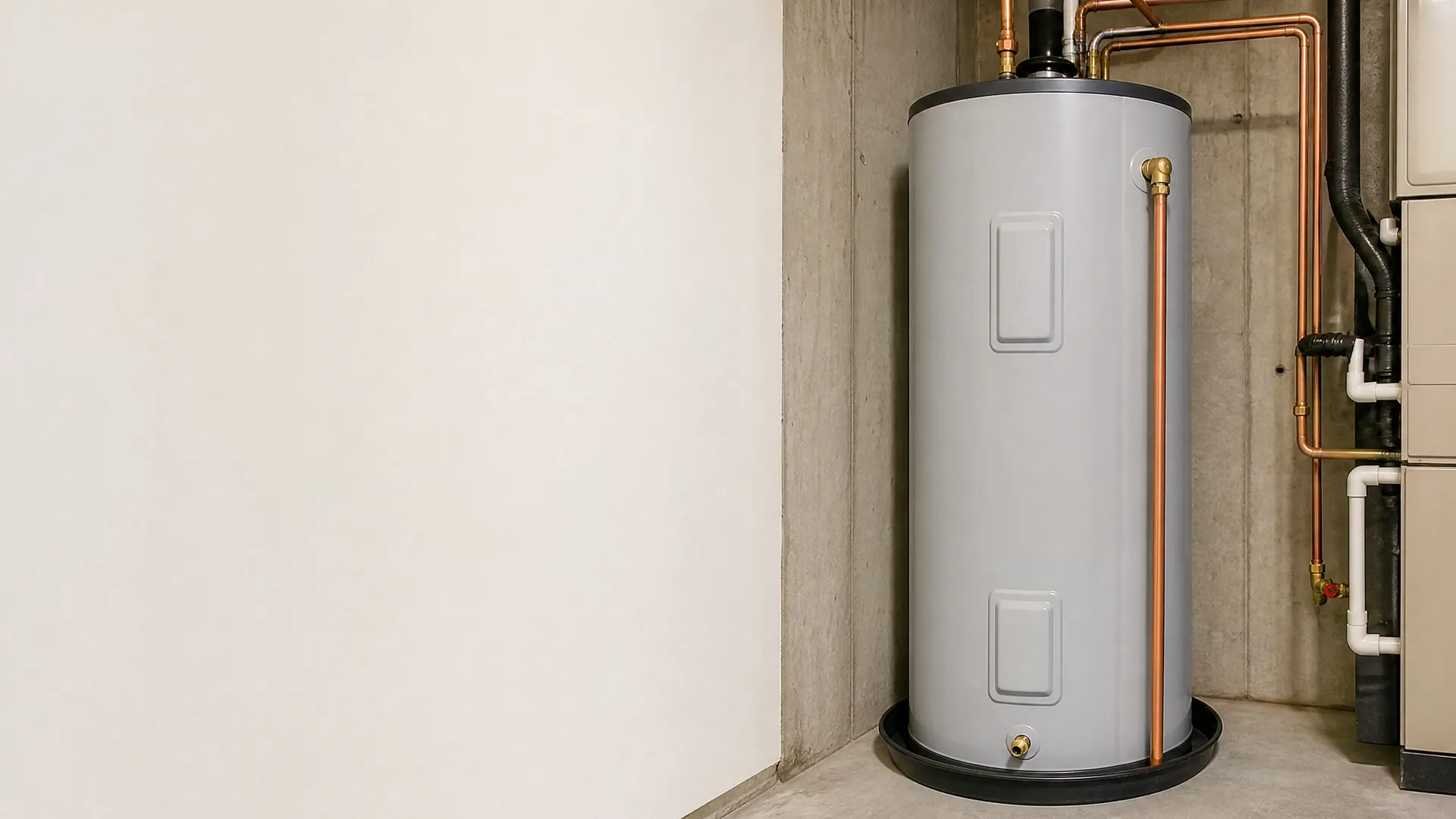
Why tankless pulls ahead
A tankless unit never runs out, which matters more in a house with a lot of people wanting hot water at the same hour, after practice, before school, back to back showers before bed. It takes up less space than a tank in the utility room. On gas, it can do this without holding 40 to 50 gallons hot all day waiting to be used. The tradeoff is it has to work harder when the water coming in is already cold.

Either one comes down to how your household uses hot water
A tank keeps a reserve ready for a full house and bolts in where the old one sat. A tankless unit costs more upfront and asks more of your gas line and venting, but it never runs out and it never sits there heating water you're not using. Gas makes both workable here. Groundwater running cold most of the year is the thing that decides how much a tankless unit struggles to keep up when two showers run at once.
You don't have to sort through installers to find out which one fits your house, your gas line, and what your family actually uses in a day. A contractor who works on water heaters in Iowa can look at what you have and tell you straight whether tank or tankless makes sense, then reach out to get it done.

Water Heater Installation
Get the right pro for your water heater

- A local pro who knows water heaters gets your details and gets in touch.
- Get in touch with a local installer about a new water heater.

- Once you send the form, finding a pro is off your list.
- After you send the request, you're done searching.

- Skip collecting and comparing quotes for the new water heater.
- Fill out one short form instead of calling around.

- Your request goes to one pro, not a list of companies.
- One installer gets your project, so there's no bidding war over it.