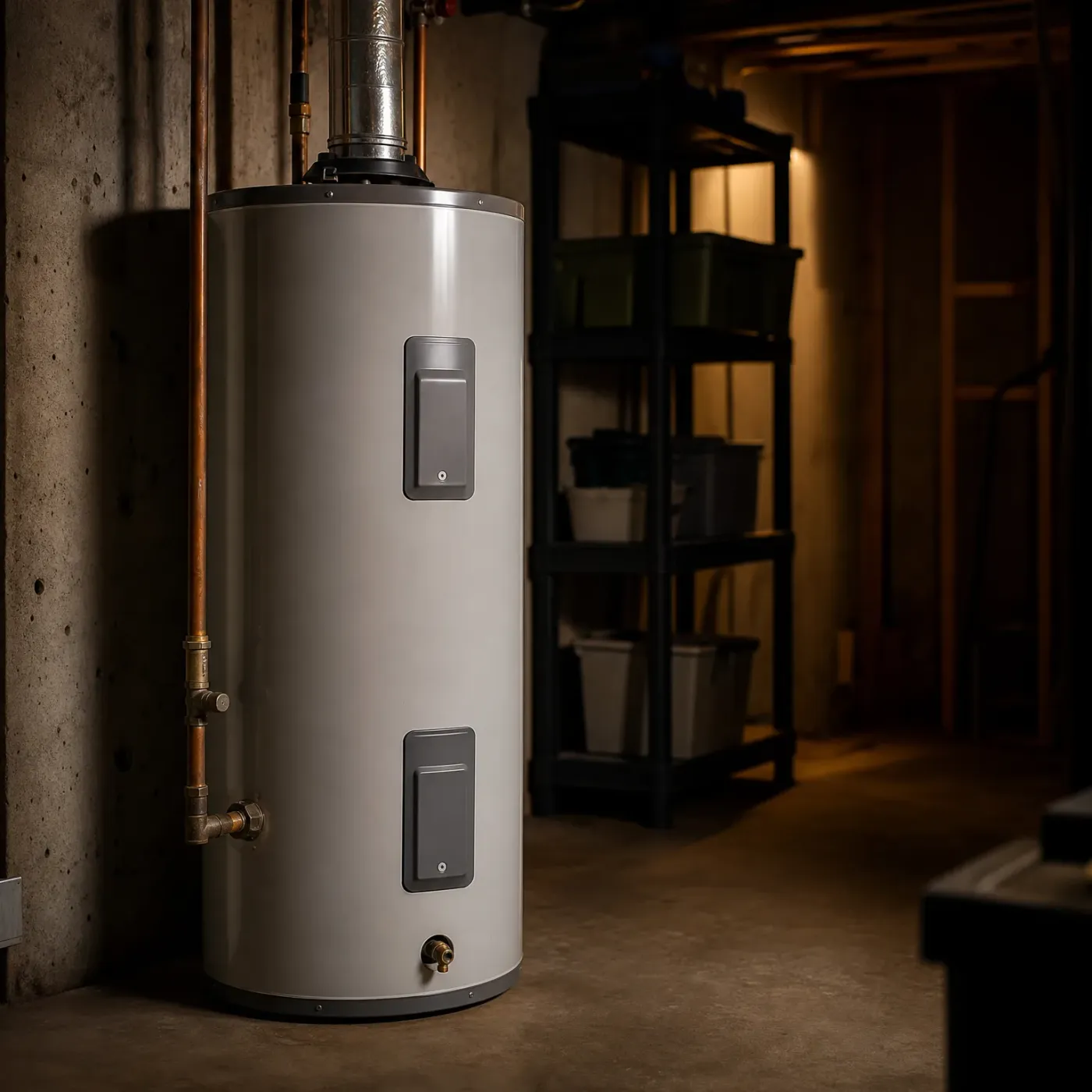
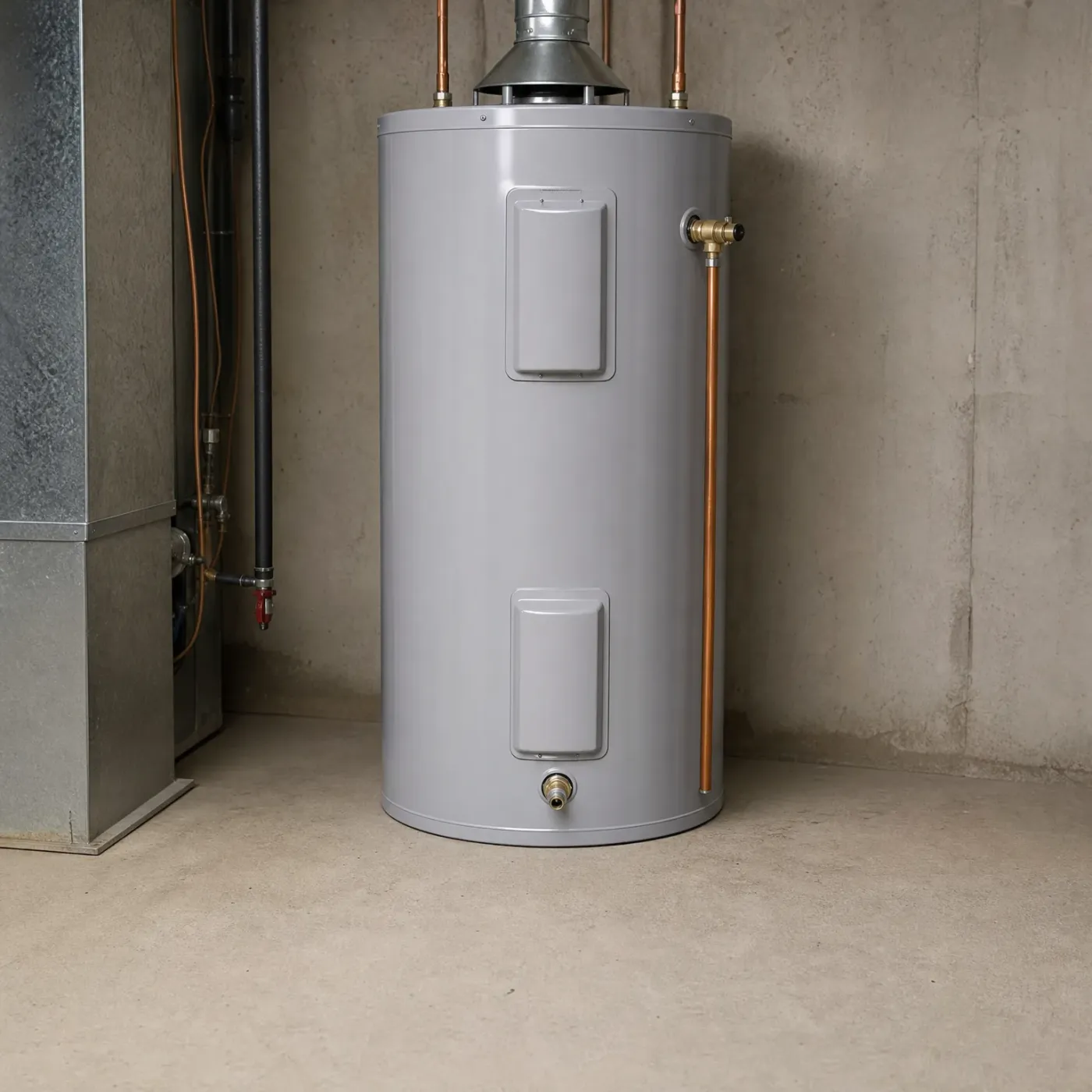




A tall cylindrical water heater with a metal flue pipe and copper plumbing stands against a concrete wall in a dim basement, with a black shelving unit holding plastic storage bins nearby.

No calling every shop in Black Hawk County

How often to flush a water heater in Waterloo, IA

Waterloo water sits hard, and that shortens the life of a tank if nobody ever drains it. This page gets into how often that should happen for a home in Black Hawk County and what skipping it tends to cost you down the road. Instead of calling around to find someone who'll actually show up for a job this small, you can get matched with a local contractor who flushes tanks all the time and knows what to check while they're at it.

Start one form

Most homes in Waterloo should flush the water heater once a year. Black Hawk County water runs hard, and the minerals in it settle out as sediment on the bottom of the tank every time the water heats up. Over months that layer thickens into a crust. A gas water heater has to burn longer to push heat through that crust to the water above it, and the burner can end up scorching the tank bottom where sediment piles up directly over the flame. An electric water heater buries its lower element in the same sediment, and the element works harder and fails sooner because of it. A yearly flush clears that layer out before it builds into a problem. Skip it for several years running and the sediment can harden to the point where flushing no longer removes it, and at that point the tank is running on borrowed time. One flush a year, done on a schedule, keeps the tank working the way it did when it was new.

What does your household actually need from its water heater?

  • 2.31 people per household on average

    Households here average 2.31 people, so most tanks run through a daily round of showers and laundry that gives sediment steady heat to bake onto.

  • Half the homes here were built by 1966

    Half the homes in Black Hawk County were built in 1966 or earlier. If yours is one of them, check when the water heater itself was last replaced.

  • 63.4% of homes heat with gas

    Gas heats 63.4% of homes here, more than any other fuel. A gas tank heats from the bottom, right where sediment collects, so the buildup wastes gas directly.

ACS 2020-2024

Flush it once a year on schedule and the sediment never gets the chance to build past a thin layer on the bottom of the tank. The element or burner stays in contact with water instead of crust, and the tank runs the way it was built to run.

Skip it for a few years and that layer turns hard. A gas water heater starts popping and rumbling as water boils under the crust, a electric one burns through elements faster, and either way the tank is working harder to heat the same amount of water.

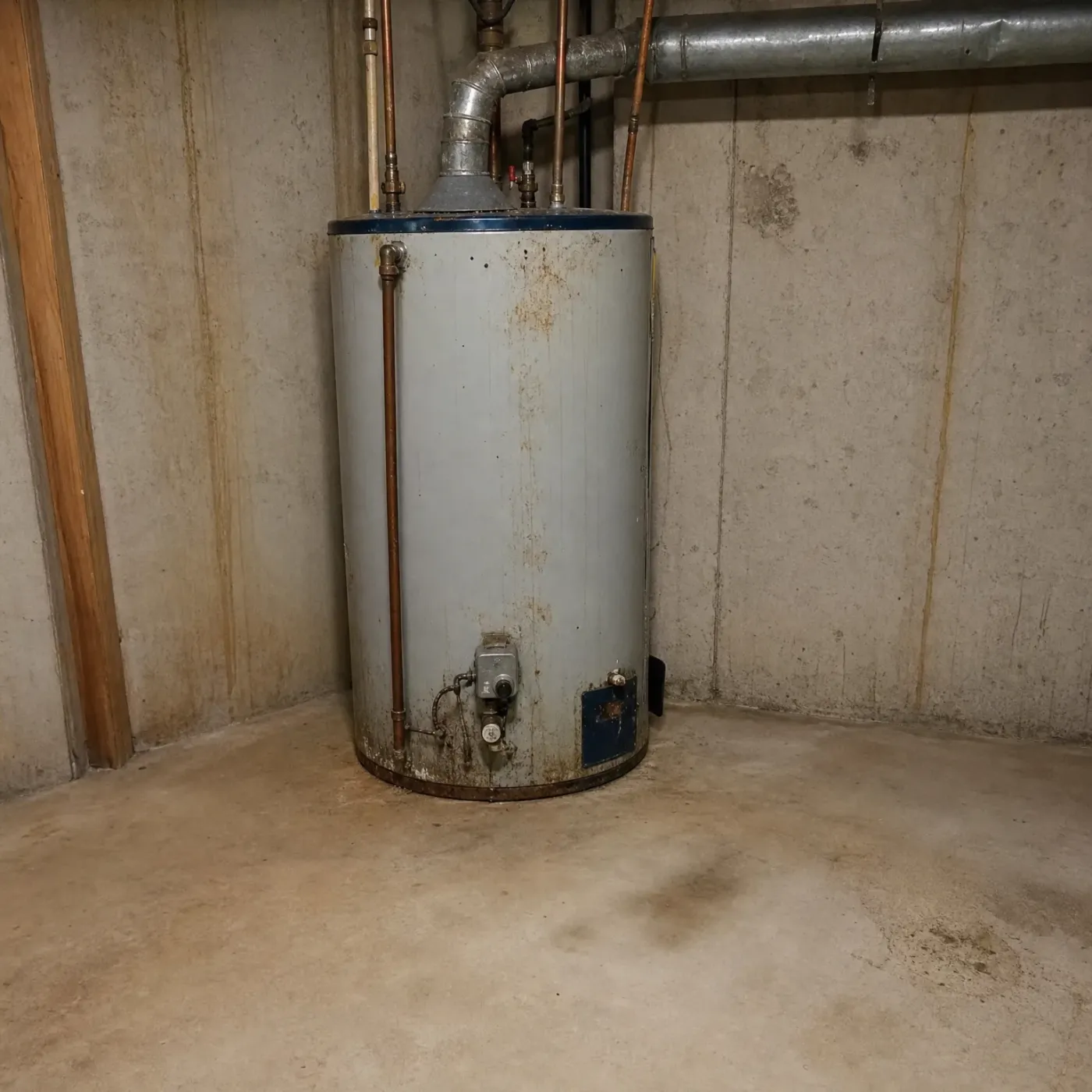
An aging gas water heater with rust streaks stands in the corner of a concrete-walled basement, with copper pipes and a metal flue duct running overhead.
Before you get your water heater maintenance
A gray cylindrical water heater with copper piping and a flue stands on a concrete floor in a basement corner beside ductwork and metal equipment.
After you get your water heater maintenance

A water heater is simple inside, which is why the sediment matters so much. On a gas model, the burner sits under the tank, and anything caked on the bottom forces it to run longer to get the same water hot. Cold water comes in through the dip tube and lands at the bottom too, so it's constantly moving through whatever has settled there. On an electric unit, the lower element sits down in that same layer, and if sediment packs in around it, the element can burn out well before it should. A tank that pops or rumbles while it's heating isn't failing yet. That sound is water trapped under the sediment, boiling and hitting the tank wall. Flushing clears that layer out through the drain valve at the bottom, using a hose and the cold inlet shut off, until the water running out turns clear. If you want to check where things stand before scheduling anything, draining even a few gallons and watching the color tells you how far along the buildup already is.

What's Happening Inside the Tank

  • A gas water heater draws its intake air from the room, and a thick sediment layer at the bottom makes the burner run longer to heat the same water.
  • The dip tube feeds cold water to the bottom of the tank, so fresh water passes straight through the sediment layer every time the tap runs.
  • Flushing means closing the cold inlet, hooking a hose to the drain valve at the bottom of the tank, and running water out until it comes clear.
  • On an electric water heater the lower heating element sits inside the tank, and sediment packed around it can make the element burn out early.
  • A tank that rumbles or pops when it heats is sediment trapped under the water, boiling and knocking against the tank wall.
  • Draining a few gallons first and checking that the water runs clear tells you whether the sediment layer has already built up past a thin coating.
A smiling woman with dark shoulder-length hair in a cream V-neck sweater sits at a marble counter with a glass of red wine, with a kitchen and softly lit living room behind her.
A woman in a dark green sweater laughs while seated at a marble kitchen island with a glass of red wine, with open shelving, cabinets and a living room visible behind her.
A woman with long dark hair in a cream knit sweater laughs while looking off to the side, seated at a counter with a glass of red wine, in a dimly lit living room with a sofa, lamp, framed pictures and houseplant behind her.
A smiling woman with long dark hair in a beige sweater sits at a marble kitchen counter with a glass of red wine, with a dimly lit living room behind her.
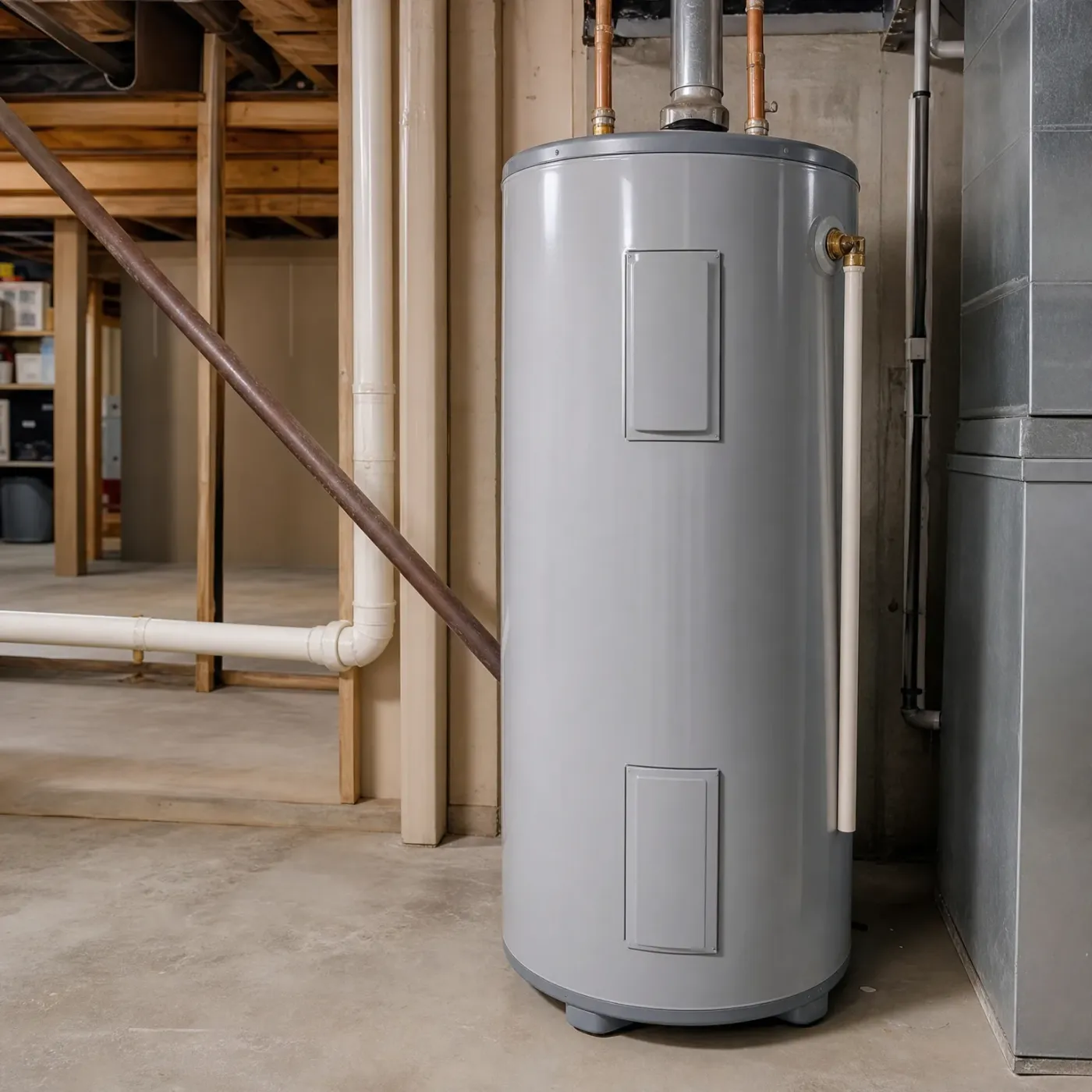
A gray cylindrical water heater with copper and white pipes stands on a concrete basement floor beside a metal duct and wooden framing.

Skip the calls to every shop

The pro who gets in touch is licensed in Iowa and works in Black Hawk County.

One form instead of hunting for a pro who does water heater tune-ups.

Skip calling around

There's no charge for the request.

Flush It Yourself or Call a Pro

Flush it yourself

  • You need to find the cold water shutoff and the drain valve before you start, and on some tanks the drain valve is plastic and strips easily.
  • The tank has to cool for a few hours first, or the water coming out of the drain valve can scald you.
  • A gas unit means working around the pilot and burner assembly, and relighting it afterward if it goes out.
  • If sediment has caked hard on the bottom, a garden hose running off the drain valve often cannot break it loose.
  • You're on your own if the valve seizes, the tank leaks once drained, or the pilot won't relight after.

Have a contractor flush it

  • A local contractor who services tanks all year knows which valves on which brands tend to stick or strip before they touch yours.
  • They carry what it takes to break up hardened sediment that a garden hose alone won't move.
  • You get one contractor out to the house, not a string of companies calling back about the same job.
  • If the drain valve or an anode rod needs replacing while the tank's already open, that gets handled in the same visit.
  • Skip the research into how your specific water heater comes apart and goes back together.
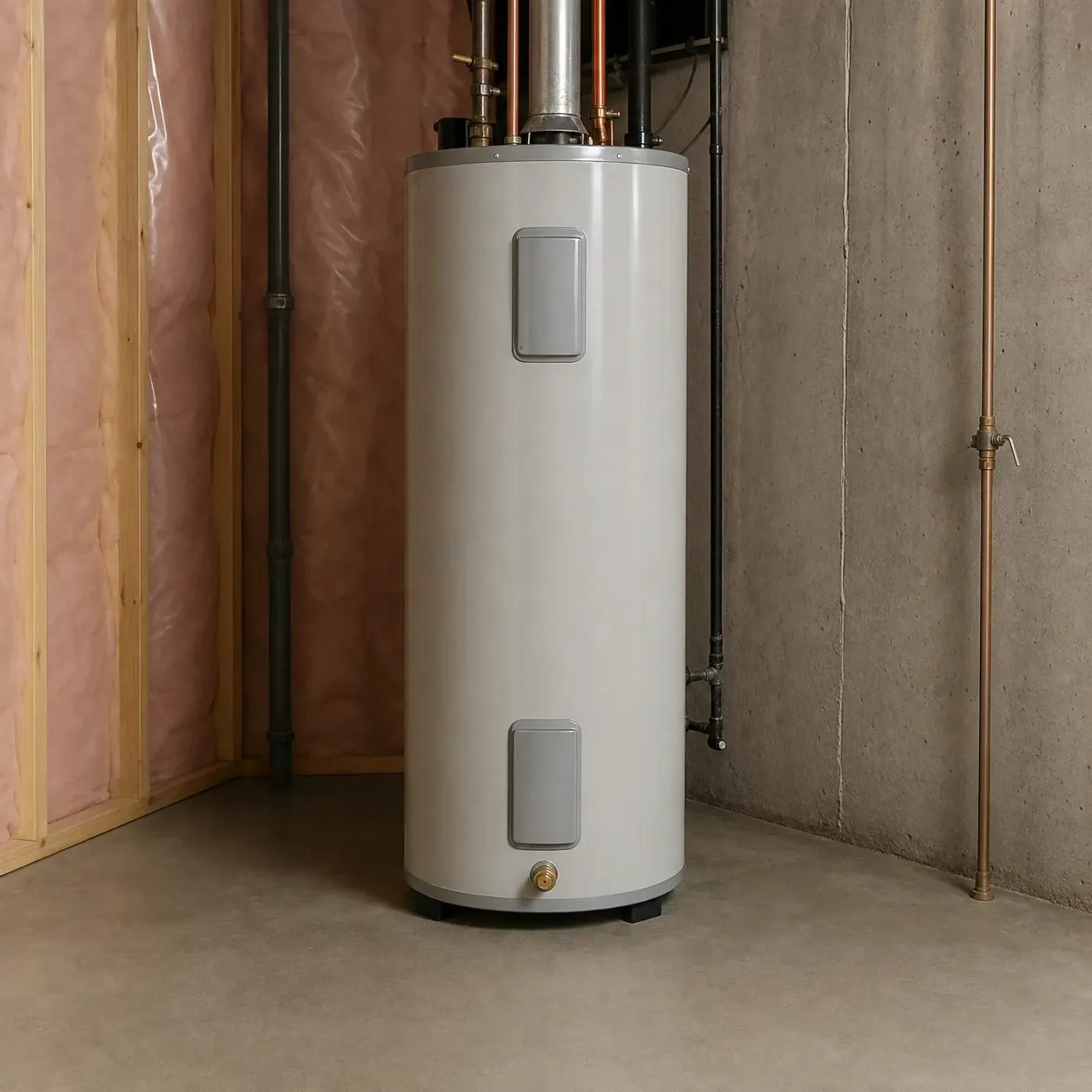
A white cylindrical water heater with two access panels and a brass drain valve stands on a concrete floor in a basement corner, beside a pink-insulated stud wall and a concrete wall with copper and black pipes.

Tank flushed on schedule

This is what a flushed tank looks like: clean lines, a dry floor, no rust creeping up from the base. The fittings stay tight because nothing is eating at the metal from the inside. A tank kept clear of sediment like this holds its heat and lasts out the years it was built for.
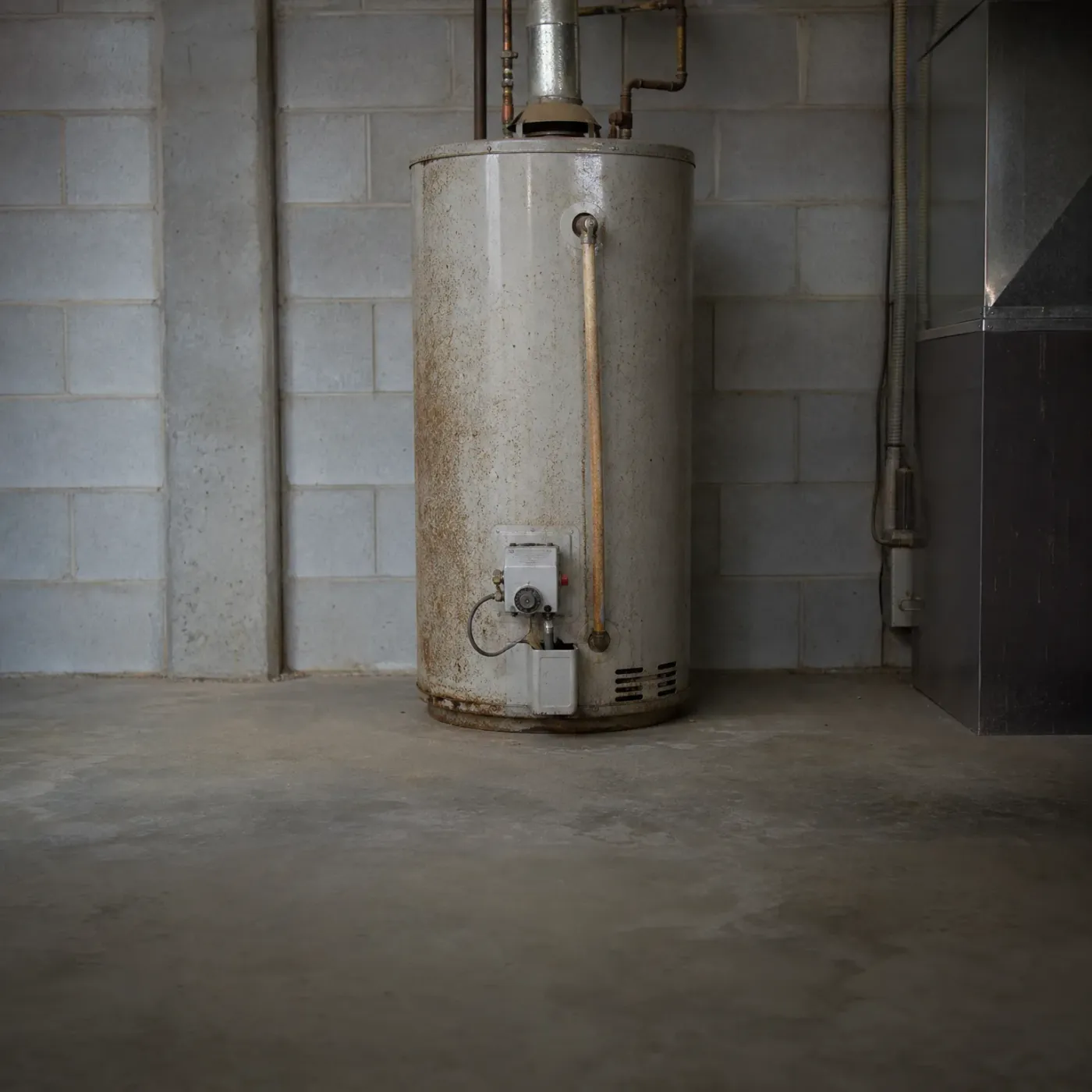
A rusted gas water heater with a flue pipe stands against a concrete block wall on a bare concrete floor, next to a dark metal duct or furnace cabinet at right.

Tank left alone too long

Rust like this starts on the inside and works its way out. Sediment sits against the steel for years and wears through it, and galvanized pipe corrodes faster once that happens. By the time rust shows on the outside, the tank underneath is usually already failing.

Is your water heater trying to tell you something

A tank that's gone too long without a flush usually makes noise first. Listen for a rumbling or popping sound when the burner kicks on, that's water boiling underneath the sediment layer instead of moving freely through it. You might notice the hot water running out faster than it used to, or taking longer to heat back up. Some households see rusty or cloudy water at the tap, or a faint metallic smell. None of this fixes itself. Left alone, that sediment layer keeps the burner working harder than it should, and it's what wears through the bottom of a tank years before it should've failed.

A gray cylindrical water heater with two access panels stands in a corner against a concrete wall, with copper and black pipes running up beside it on a bare concrete floor.

Sediment sits on the heating source

A gas tank heats water through the bottom, where the burner sits. An electric tank usually has its lower element down there too. Sediment settles on that same spot because it's the lowest point in the tank. Once it builds up, the burner or element is heating through a layer of mineral deposit instead of water, and that layer insulates rather than conducts. The tank takes longer to recover after a shower or a load of laundry, and the metal underneath the crust runs hotter than it should.

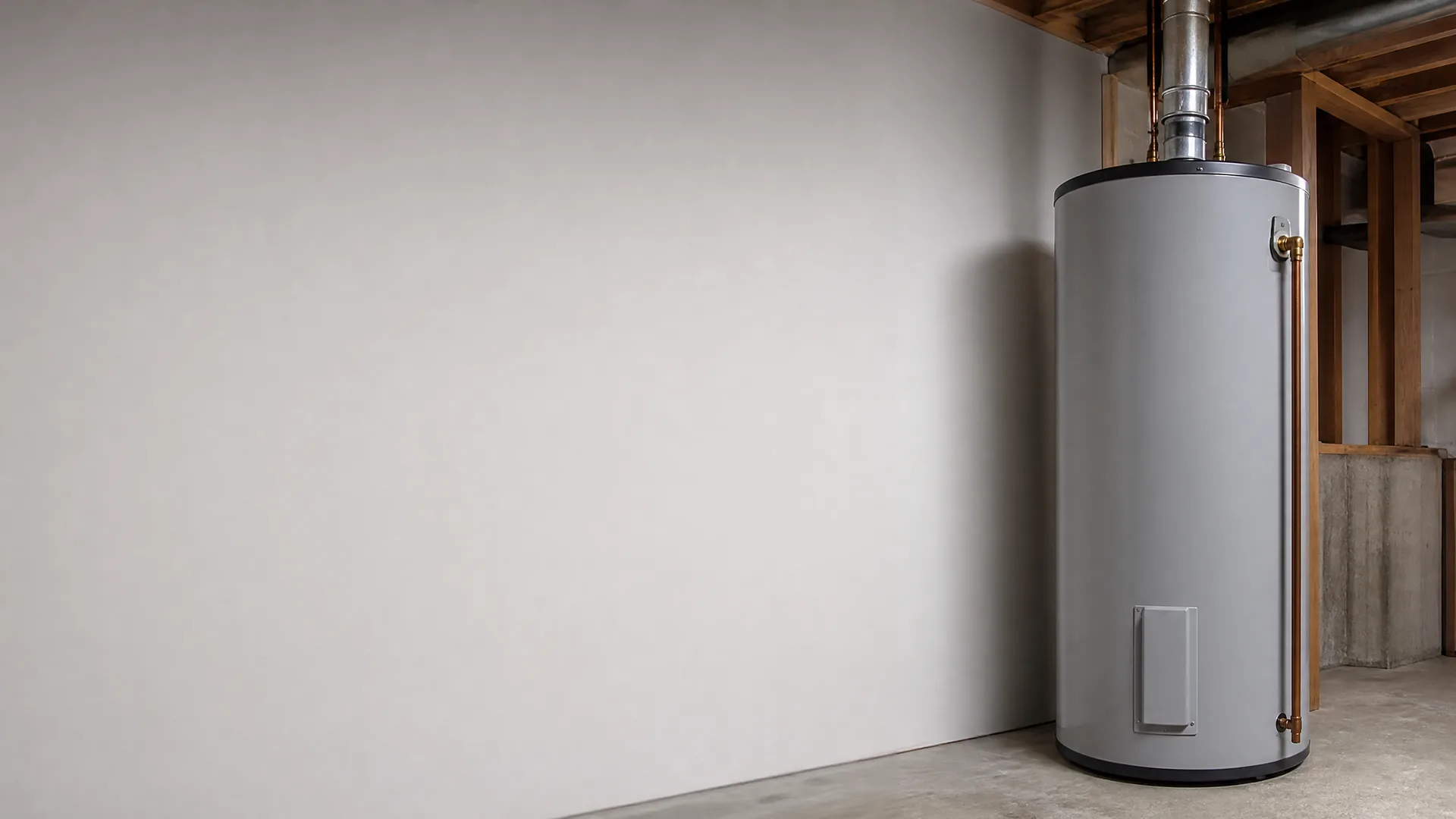
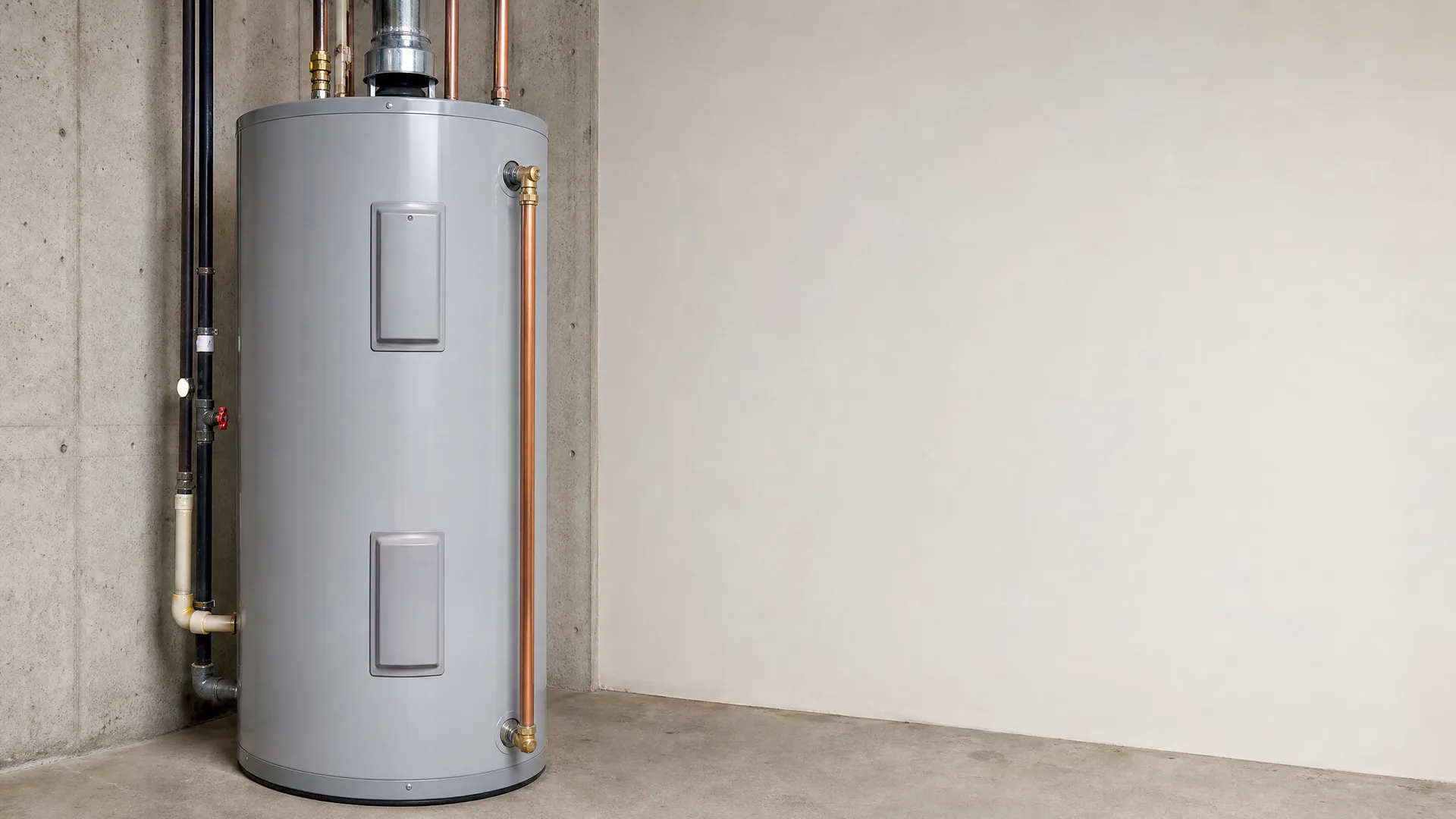
A gray cylindrical water heater with a metal flue pipe and copper piping stands in the corner of a bare room with light walls, a concrete floor, and exposed wood framing.

The anode rod wears down regardless

Inside the tank, a rod of magnesium or aluminum corrodes on purpose so the steel tank doesn't have to. It wears away over years whether or not sediment builds up. But a tank already stressed by heat trapped under sediment gives that rod less to work with over time, and a thick layer at the bottom can bury part of it entirely. A flush doesn't replace the rod's job, but it keeps the bottom of the tank clear so the rod and the steel underneath it stay in contact with water, not crust.

Power here costs 11.96 cents per kilowatt-hour

Most homes here still heat water with gas, but if yours is electric, 11.96 cents a kilowatt-hour is a decent rate. Sediment makes an electric tank's lower element work through a layer of crust to heat the same water, so it draws more of those kilowatt-hours than a clean tank would.

EIA-861 2025

Once a year, with someone who knows tanks

  • Once a year keeps the sediment layer thin enough that it never gets between the burner and the water it's supposed to heat.
  • Skip a few years running and that crust turns into a repair bill or a tank replaced well before its time.
  • A local contractor who flushes tanks all over Black Hawk County every week knows which brands and ages of tank tend to have a stuck drain valve before they ever touch yours.
  • You give your address and your tank's age once, and one licensed local contractor takes it from there instead of a handful of companies working your phone.
  • Waterloo's hard water doesn't let up, so this isn't a one-time fix, it's a yearly habit that keeps paying off.

A yearly flush is the whole answer. Black Hawk County water is hard enough that sediment never really stops building, so the job doesn't end after one visit, it becomes something that happens every year the tank is in service. Done on that schedule, the burner or element stays in contact with water instead of crust, and the tank gets the years it was built for. Skip it and the crust thickens until it shows up as a knocking sound, a slow recovery, or a tank that fails early.

Finding someone to do this every year is its own chore if you start from scratch each time, looking up contractors, explaining the same tank and the same address, waiting on callbacks. That goes away here. You give your address and your tank's age once, and it goes to one licensed contractor working in Waterloo, not a handful of companies competing for the job. Someone who flushes tanks across Black Hawk County every week has already seen how your model and age of tank tend to behave, which drain valves stick and which ones don't, before they get to your water heater. That's the kind of knowledge that only comes from doing this work locally and often. The flush itself is a small job. Finding someone who already knows your kind of tank shouldn't be the hard part of it.

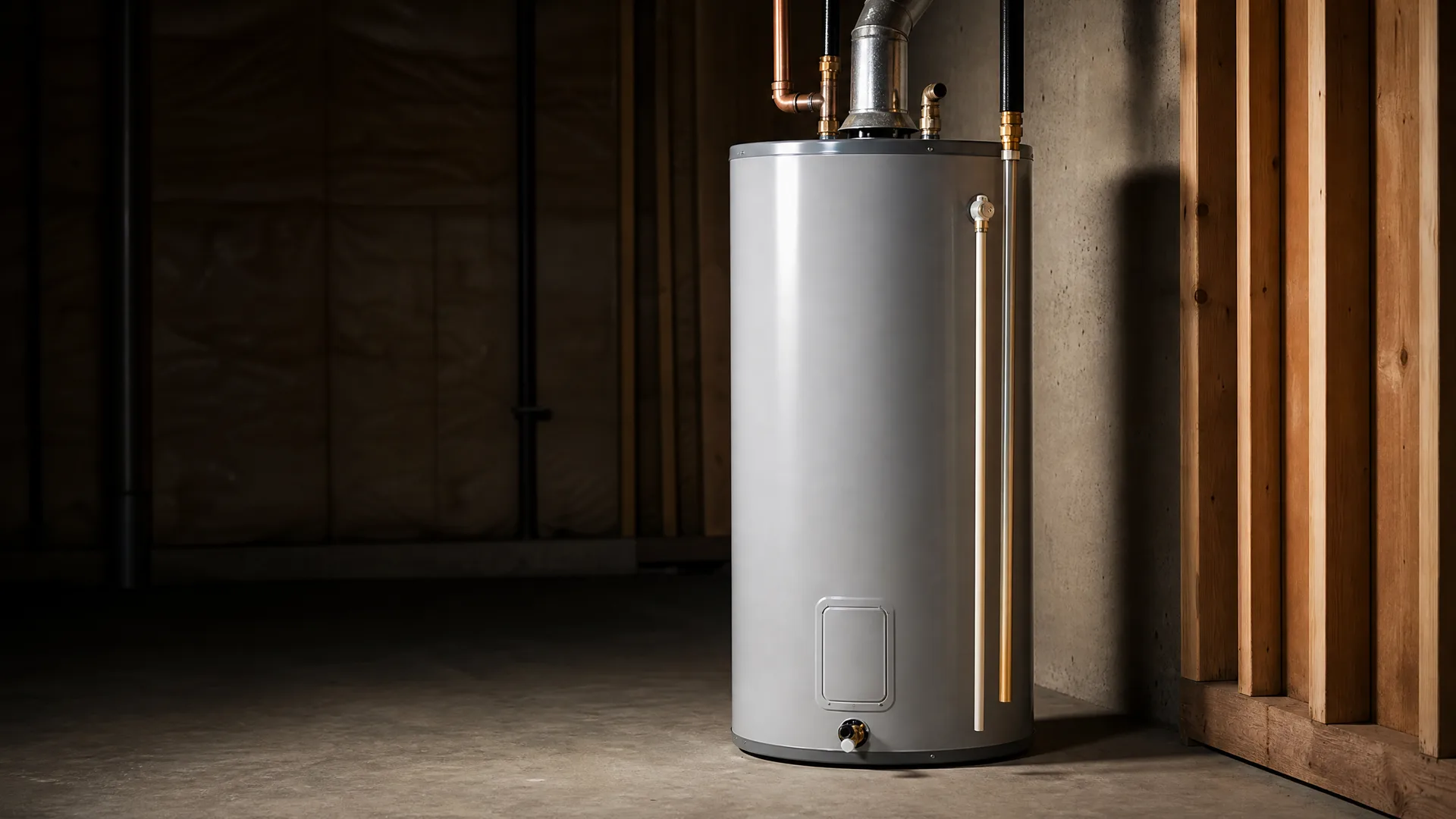
A gray cylindrical tank water heater with copper and metal pipes at its top stands on a concrete floor beside a concrete wall and wooden studs in a dim basement.

Skip calling around

Step 1 of 3: Equipment