
How long a water heater lasts in Iowa
A water heater in Iowa lasts about 8 to 12 years. Most homes here run gas water heaters, and the tank itself is usually what gives out first, since years of heating and cooling water wear at the glass lining inside and the steel underneath it eventually rusts through. Hard water in parts of the state speeds this along, building sediment at the bottom of the tank that makes the burner work harder to heat the same amount of water. You'll see signs before it fails outright: water that takes longer to heat, rusty color at the tap, or a puddle forming at the base of the tank. Once a tank starts leaking from the inside, it does not get repaired. It gets replaced. Knowing where your water heater falls in that 8 to 12 year range tells you whether you're planning ahead or already on borrowed time.




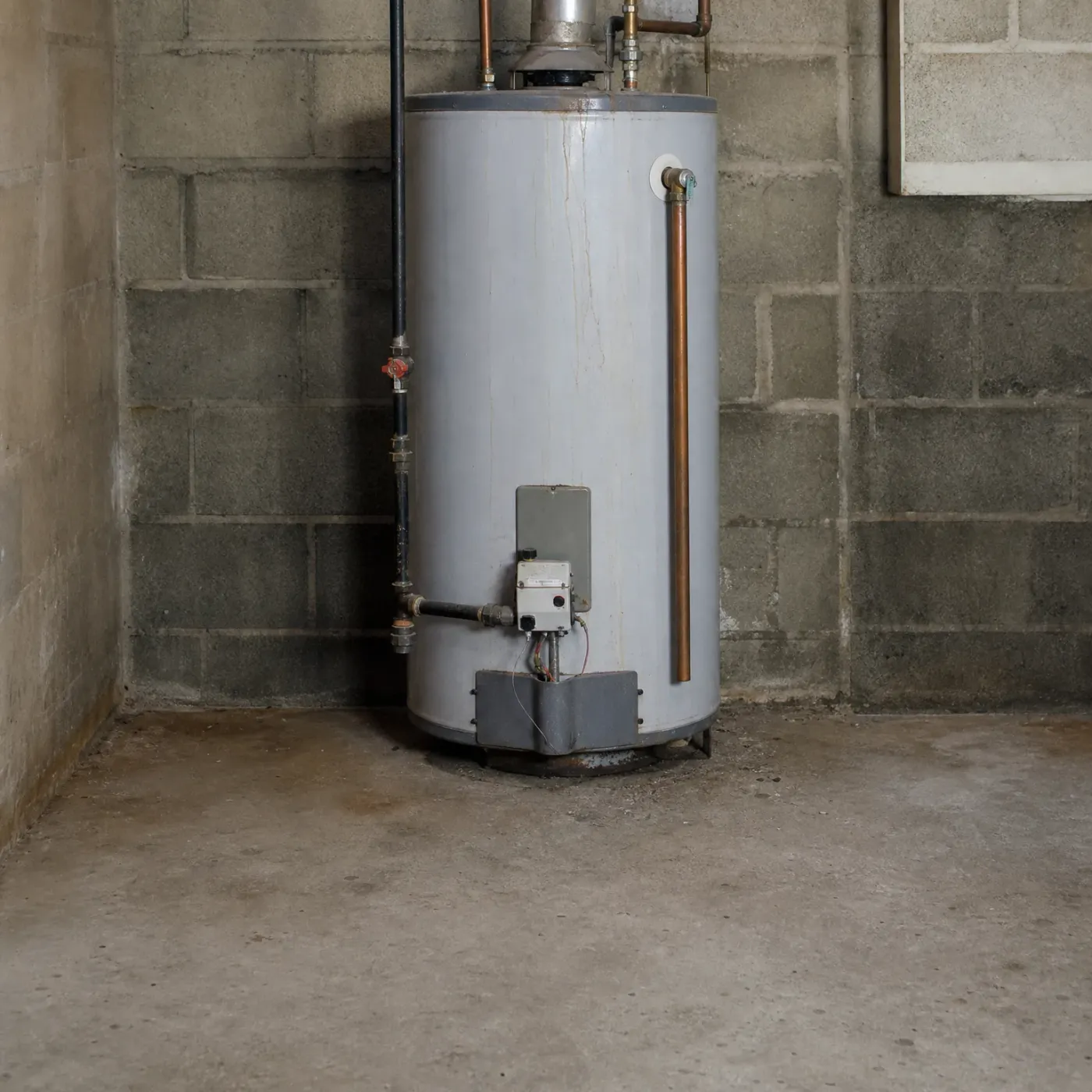
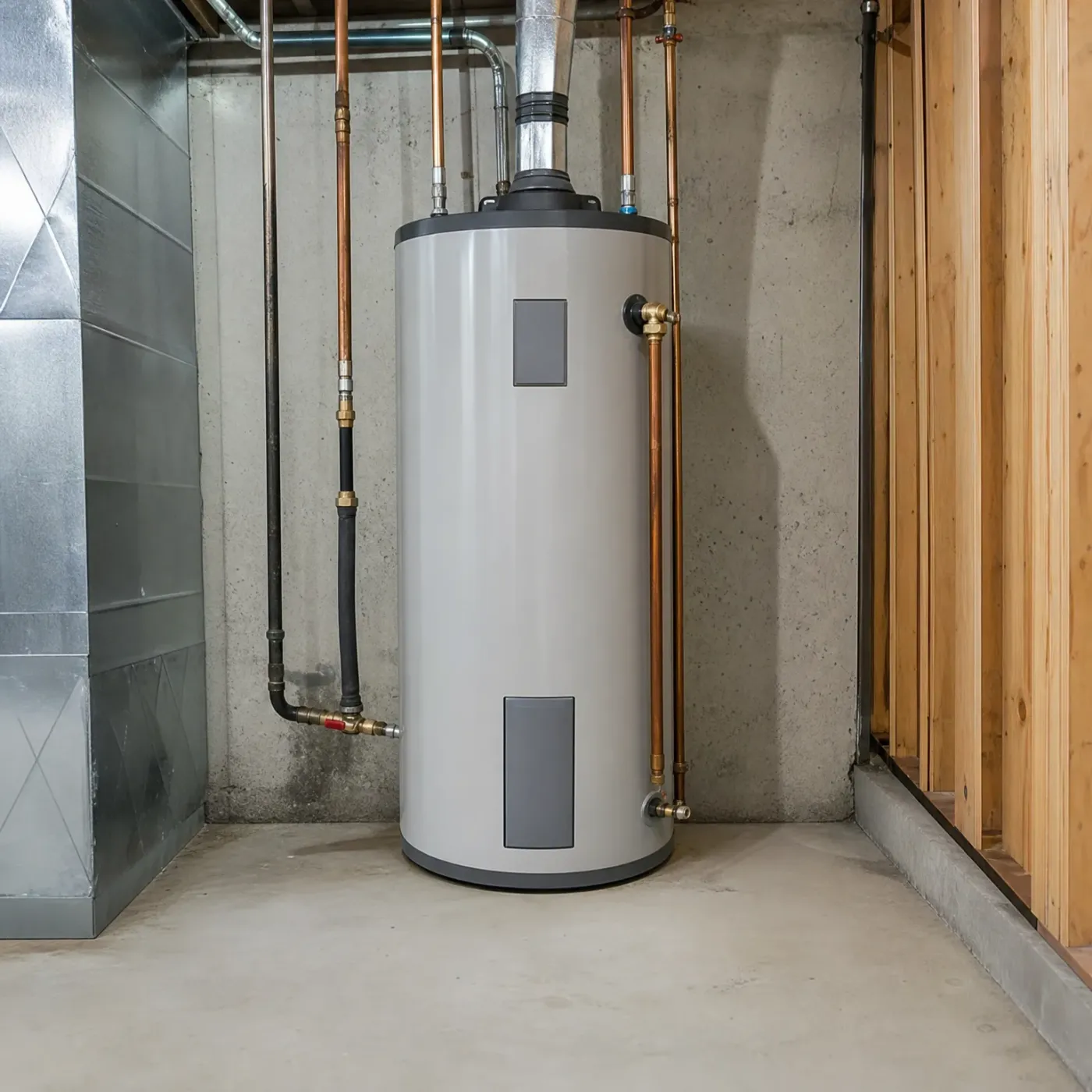
A new tank comes with a glass lining baked onto the steel, and an anode rod hanging inside it. The rod is the part doing the dying, not the tank. It is made of magnesium or aluminum, softer metals that attract the corrosion water would otherwise send after the steel. As long as that rod has material left, it keeps taking the damage. Once it is spent, the steel itself is what is left to corrode, and rust starts working through the tank wall from the inside out. Hard water, common here, adds another layer to this. Minerals drop out of the water and collect as sediment on the tank bottom, right over the gas burner. That layer makes the burner work longer for the same amount of hot water, since the heat has to pass through sediment before it reaches the water above it. None of this shows up from outside the tank. The first sign is usually water where it shouldn't be, pooling at the base, and by then the tank is done. A rusted-through tank gets drained, not patched.
How a tank wears out
- Inside the tank, a glass lining coats the steel to keep the water from rusting it from within.
- A rod of magnesium or aluminum, called the anode rod, sits in the tank and corrodes on purpose so the steel doesn't have to.
- Once that rod is used up, usually after several years, the steel tank starts taking the corrosion instead and rust begins working through it.
- Iowa water tends to run hard, and the minerals in it settle as sediment on the bottom of the tank over time.
- That sediment sits between the gas burner and the water, so the burner has to run longer to get the same heat through.
- A tank water heater fails once it starts leaking, since a rusted-through tank can be drained but not patched.
Get the right pro for your water heater

After you send the request, you're done searching.
No fee to send it, and nothing to sign.
Why hard water shortens the tank's life
Iowa's groundwater runs hard in most of the state, and that mineral content settles out as sediment once the water heats. That sediment collects at the bottom of the tank, between the burner and the water itself. It acts like a layer of insulation, so the burner has to run longer to get the same water hot. Over years, that extra heat on the tank's floor stresses the glass lining faster than it would in a home with softer water. A tank sitting in sediment is also harder to drain fully, so routine flushing does less good once buildup has settled in and hardened.
What the warranty tells you
Most gas water heaters sold for Iowa homes carry a warranty on the tank itself, typically 6 to 12 years depending on the model installed. That number is the manufacturer's own estimate of how long the glass lining should hold before it's likely to fail, and it lines up closely with the 8 to 12 year range homeowners actually see. A tank still under warranty that fails early points to something specific, often sediment buildup or a worn anode rod rather than bad luck. Once a tank is past its warranty years, a leak at the bottom is the tank itself, not a part that can be swapped out.



Cold water enters the tank and the thermostat calls for heat.
The gas burner fires beneath the tank or the element heats the water inside.
Heat passes through the glass-lined steel into the water above it.
Sediment in hard water settles to the bottom, insulating the tank from the burner.
60.2% of homes statewide heat with gas
With most Iowa homes running gas, your water heater has a burner and a flue to go along with the tank. When the tank itself is still sound, replacement at 8 to 12 years usually means swapping another gas unit in rather than switching fuel types.
ACS 2020-2024 5-year B25040
How Long Your Water Heater Lasts
- Most water heaters in Iowa last 8 to 12 years before the tank itself fails.
- Hard groundwater speeds up the sediment buildup that wears on the tank from inside.
- Once the anode rod is gone, the steel tank starts rusting with nothing left to protect it.
- A gas water heater that's still sound at 8 years can keep running past 12 with less sediment buildup.
- Replacing it now usually means another gas unit, since most Iowa homes already run on gas.
- Once you send the form, finding someone to install it is no longer something you have to handle.
Eight to twelve years is the honest range for a water heater in Iowa, and where yours falls in that range comes down to the water going into it and the rod working inside it. Hard groundwater piles sediment onto the tank floor faster than soft water would, and that sediment is what pushes some units toward the early end. The anode rod is the other half of the story. While it still has metal left to corrode, the steel tank stays protected. Once it's spent, the tank is next, and that's usually the point where a slow drip turns into a unit that needs replacing rather than repairing. None of this means you have to guess at where your own water heater stands. A contractor who looks at the tank, the rod, and how the water in your area has treated it can tell you whether you're looking at another year or two or whether it's time to plan the swap. Since most homes in Iowa already run gas, replacing a sound unit that's reached the end of its run usually means setting another gas water heater in its place, not rethinking how you heat water. Once you decide to move on it, sending the form is the last thing you need to do yourself. From there, getting matched with someone who installs water heaters for a living isn't your problem to solve anymore.





A pro who works on water heaters
Send the form and the search for an installer is over.
Sending the form costs nothing.