
Hot water smells like rotten eggs in Davenport, IA

Send it once and finding someone is no longer on you.

Hand it off

That smell is sulfur gas, and it almost always comes from the anode rod inside your water heater tank. The rod is there to attract corrosion so the tank steel doesn't rust out, and bacteria in the water can react with it to produce hydrogen sulfide gas, which smells like rotten eggs. It shows up most in homes on well water, but Davenport's city water can carry enough sulfate to feed the same reaction, especially once a tank has sat unused for a few days. If the smell only comes from the hot side, the tank is almost always the cause, not your plumbing. It won't hurt you to shower in it, but it won't go away on its own either. A plumber can flush the tank, replace the anode rod with one less reactive to the bacteria, or in some cases disinfect the tank outright. Left alone, the smell tends to come back stronger.

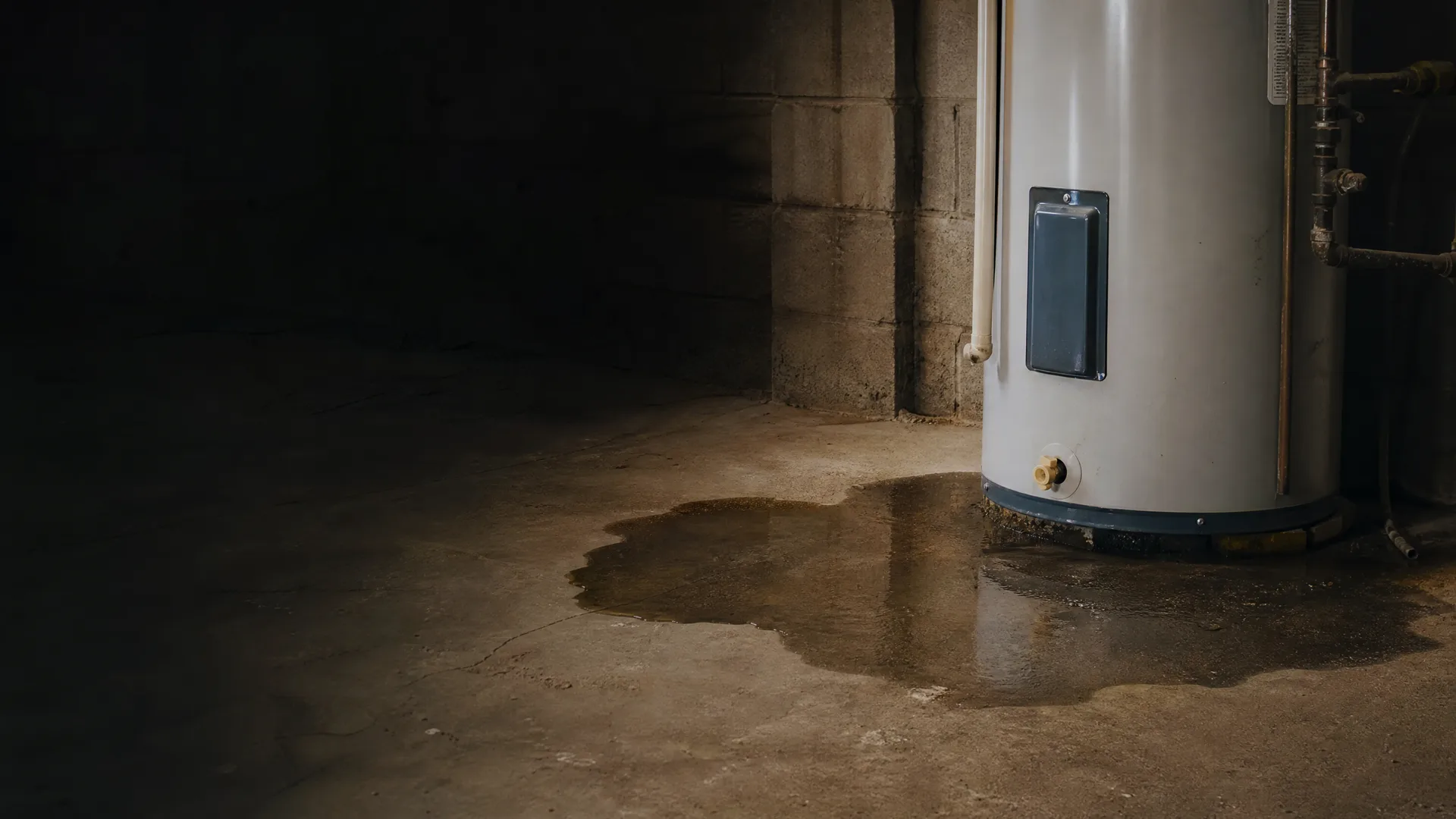
A water heater tank stands against a concrete block basement wall with a pool of water spread across the concrete floor around its base.

Saturday morning, and you're down in the basement looking for the breaker box when you see it: water spread out in a thin ring around the base of the tank. Not much. Enough to soak into the concrete and catch the light from the bare bulb overhead. You crouch down and the rotten egg smell is stronger here than it ever was upstairs in the shower. The tank's been making a faint ticking sound for weeks, and you'd been meaning to look into that. Now there's water on the floor too, and the Scott County water out of that spigot still carries that same sulfur edge it's had all month.

Why does this smell turn up in so many Scott County homes?

  • 2.34 people per household on average

    With 2.34 people in the average household here, most tanks are sized for a family, and a bigger tank means more water sitting around the rod long enough to react with it.

  • Half the homes here were built by 1972

    Half the homes in Scott County were built in 1972 or earlier, and a house that age has likely had more than one water heater since, each with its own anode rod wearing down on its own schedule.

  • 74% of homes heat with gas

    Utility gas heats 74% of homes here, and a gas water heater's rod corrodes the same way an electric one's does, so the fuel running your furnace won't tell you anything about this smell.

ACS 2020-2024

Only the hot water smells

If the smell is strong when you run hot water and gone when you run cold from the same tap, the anode rod and the tank are where to look. Hot water sitting in the tank gives the bacteria and the rod time to react, and that reaction is what you're smelling. Cold water comes straight from the supply line without passing through the tank, so it stays clean. This is the pattern most Scott County calls turn out to be, and it usually means a rod replacement or a tank treatment, not a bigger problem.


Both taps smell the same

If cold water smells the same as hot, the water heater probably isn't the cause. That points to the water supply itself, whether that's a private well or something upstream in the city line. A plumber can test for sulfur bacteria in the supply separately from the tank, which rules the heater in or out. Don't skip this check. Replacing a rod or draining a tank won't help if the smell is coming from the water before it ever reaches your house.

A smiling man in a dark green shirt over a white t-shirt sits at a kitchen counter with a dark mug, looking off to the side, with shelves, plants and a bright living area behind him.
A man in a gray long-sleeve waffle-knit shirt smiles and looks off to the side in a kitchen with open shelving, a refrigerator, a wooden sideboard with a potted plant, and a glass door to the right.
A man in a dark green ribbed sweater stands smiling and looking off to the side beside a stone kitchen counter with a ceramic mug, with a dining table, pendant lights, and large windows in the background.
A bearded man in a gray long-sleeve shirt stands smiling and looking off-camera beside a kitchen counter with a white mug, with a living room, fireplace and wall-mounted television behind him.

How the anode rod works

  • The anode rod is a steel core wrapped in magnesium or aluminum, bolted into the top of the tank.
  • Magnesium rods react faster with sulfate-reducing bacteria than aluminum ones, which is why a swap can clear the smell.
  • Softened water speeds up the reaction, so homes on a softener often notice the smell sooner than homes without one.
  • A contractor can pull the rod and tell from its condition whether it needs replacing or the tank needs a deeper flush.
  • Some tanks ship with a powered anode rod instead, which uses a small electrical current and doesn't produce the gas at all.
  • Replacing the rod with a different metal is usually simpler than replacing the whole tank.

The anode rod hangs from the top of the tank down through most of its height, a steel wire wrapped in a softer metal, usually magnesium or aluminum. That softer metal is the whole point. It corrodes before the tank's steel walls do, which is why a tank can sit full of water for years without rusting through. The trouble starts when sulfate-reducing bacteria in the water find that rod. They feed on the magnesium and give off hydrogen sulfide gas as a byproduct, and that gas is what you're smelling at the tap. Magnesium rods are the more reactive metal, so they tend to produce the smell faster and stronger than aluminum ones. That's also why swapping the magnesium rod for an aluminum one, or for an aluminum-zinc blend, often clears the problem without touching anything else on the tank. A softener in the house changes the chemistry of the water in a way that speeds up the same reaction, so the smell can show up sooner than it would otherwise. A contractor pulls the rod to see what's actually going on. A rod that's eaten down to the wire needs replacing. A rod that still has plenty of metal left but the water still smells may point to a tank that needs flushing instead. Some water heaters come from the factory with a powered anode rod, which runs a small current through the metal instead of letting it corrode, and that process doesn't make the gas at all. Switching a rod out is a smaller job than replacing the tank.

A smiling bearded man in a green t-shirt sits on a gray sofa, looking down toward a device at the bottom of the frame, with a bookshelf and a green plant blurred behind him.
A bearded man in a plaid flannel shirt stands indoors looking out a window at snow-covered conifers, with a ceramic mug on the wooden sill and wooden cabinets behind him.

2 rod materials

Magnesium rods throw off sulfur smell faster than aluminum ones. Swapping the rod for an aluminum or aluminum-zinc one often clears the smell without replacing the tank.

Hand off the search

Flush before you replace

Draining and flushing the tank clears out the sediment and water where the bacteria live, and sometimes settles the smell before any part gets swapped out.

Hand off the search
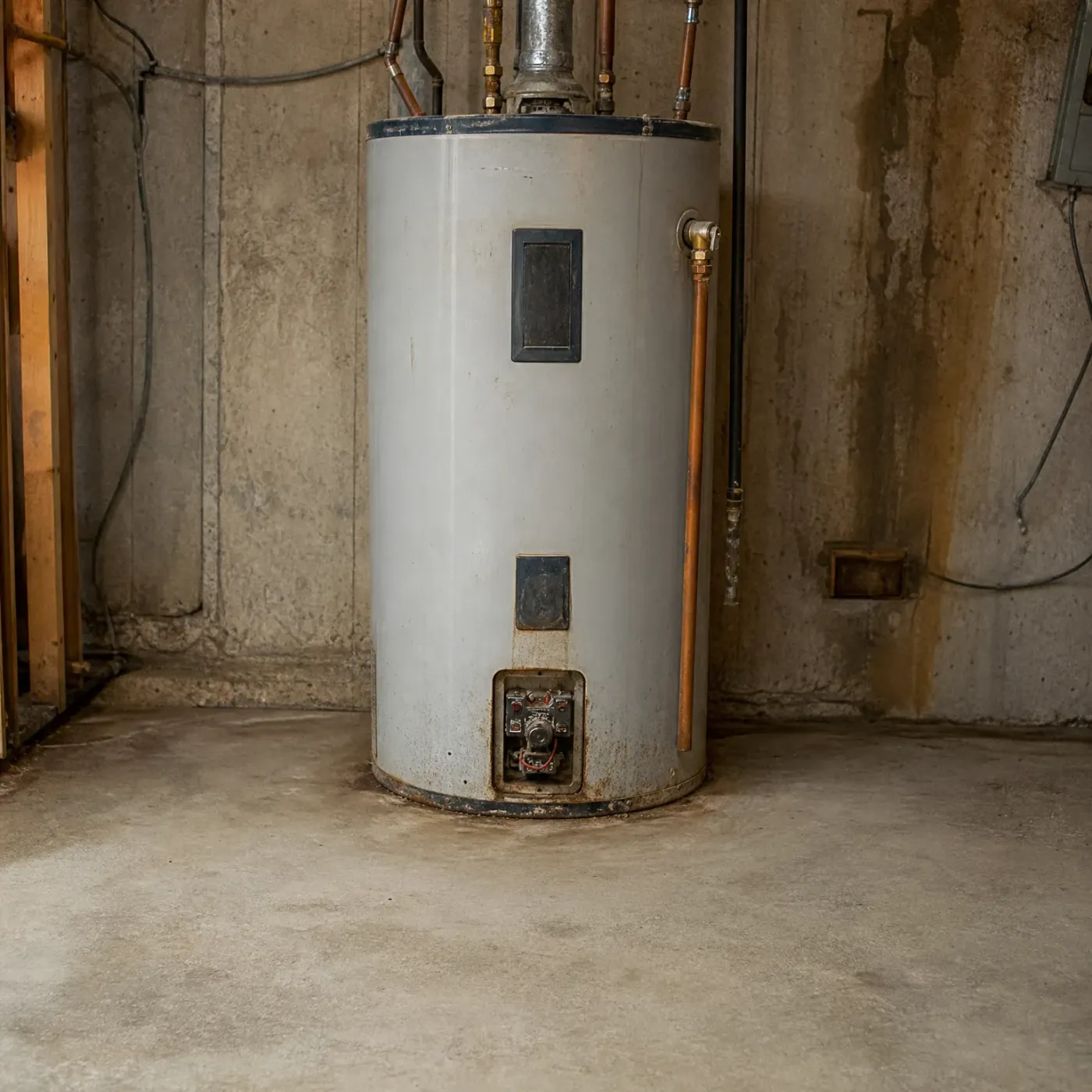
A white cylindrical water heater with copper piping and a gas control valve stands against a stained concrete basement wall on a bare concrete floor.
Before you get your water heater repair
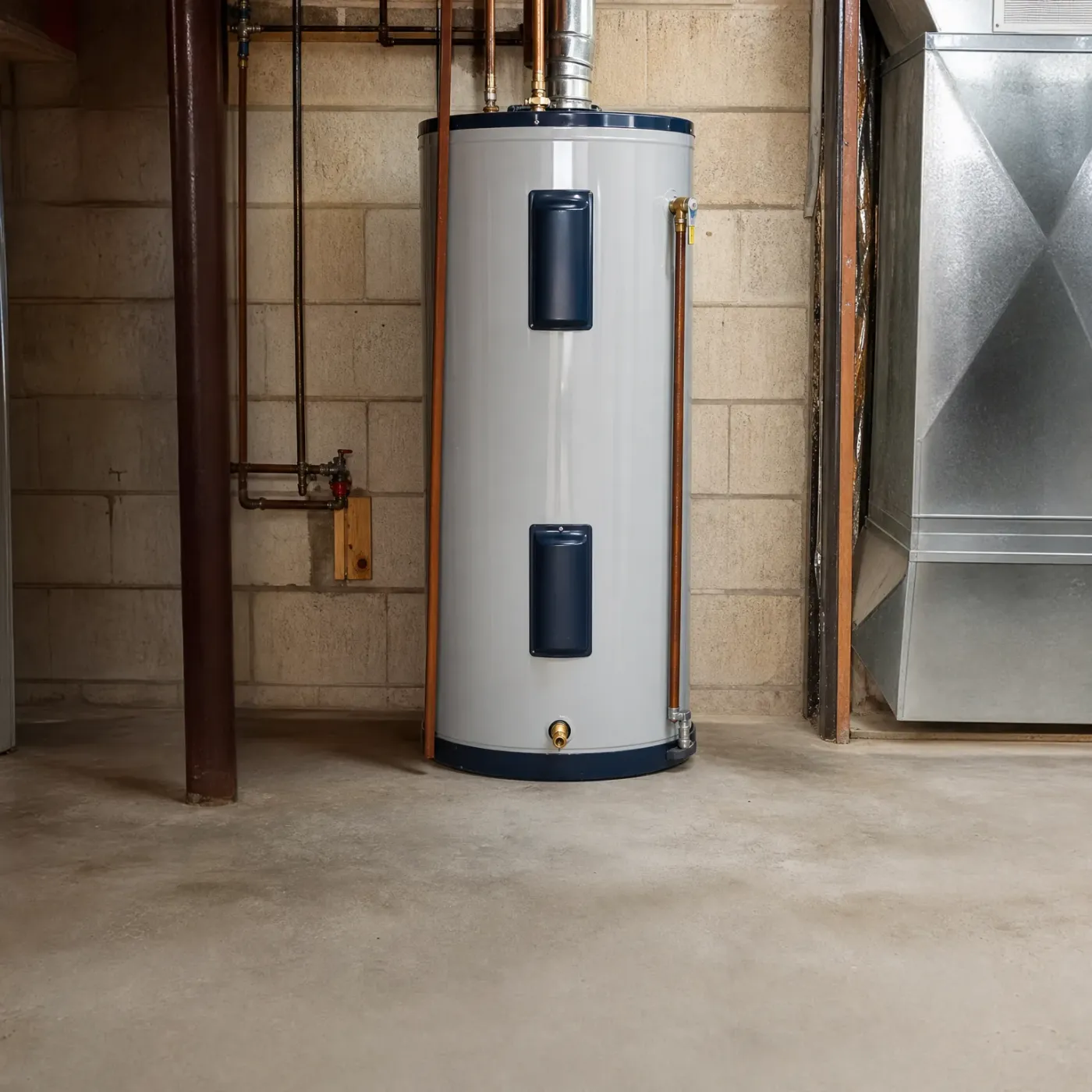
A white cylindrical water heater with two dark access panels stands on a concrete basement floor against a concrete block wall, with copper pipes, a flue duct above, and sheet metal ductwork at right.
After you get your water heater repair

One request and it's handed off

Explain the water heater problem once instead of to every shop in Scott County.

You're not committing to anything by asking.

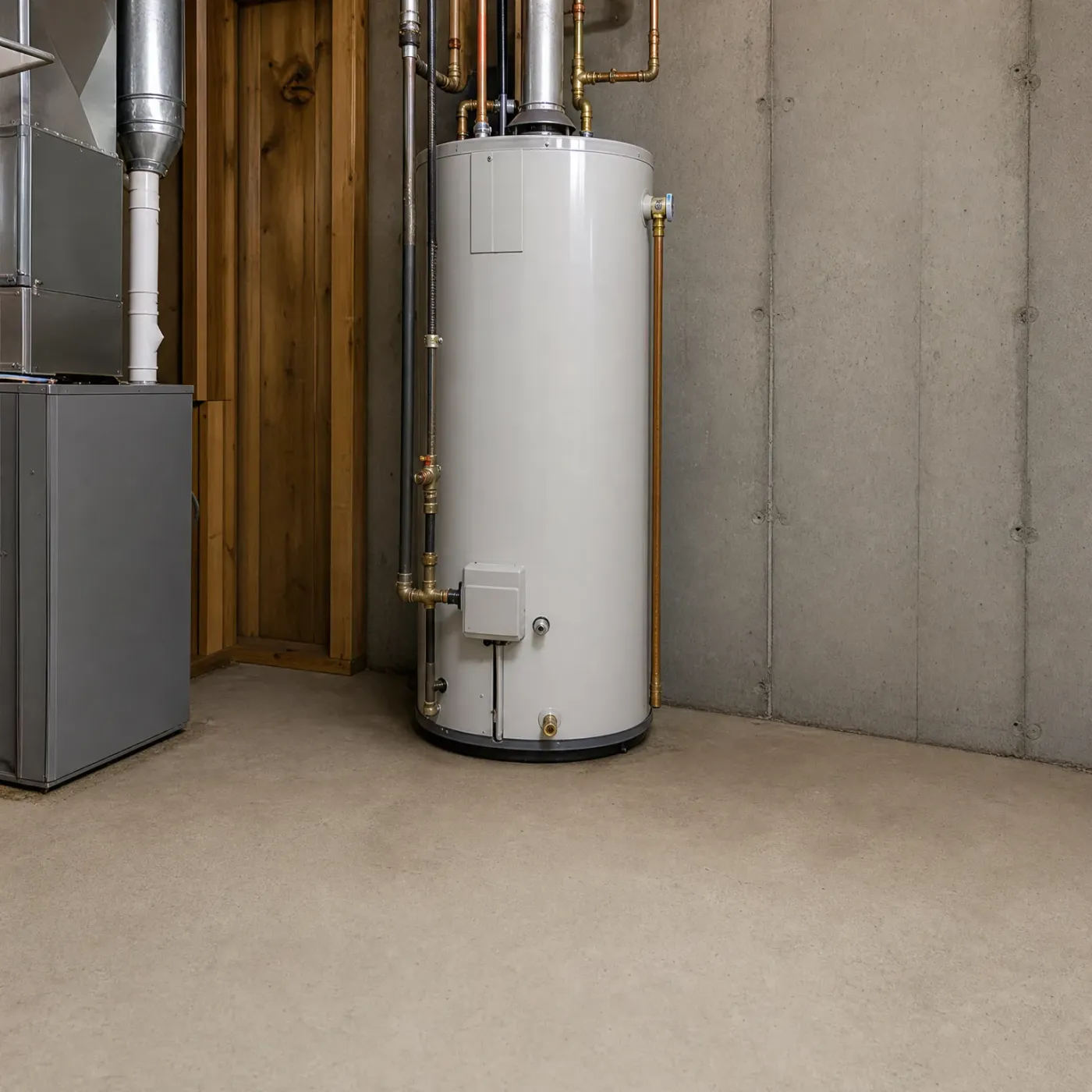
A white cylindrical gas water heater with copper and steel pipes stands against a concrete basement wall beside a gray furnace and wood-paneled wall.

Tank in good shape

This is what a healthy setup looks like: tank upright, copper and gas lines tight, no rust at the fittings. A water heater like this still needs the anode rod checked every so often, since that rod is what's reacting with your water in the first place.

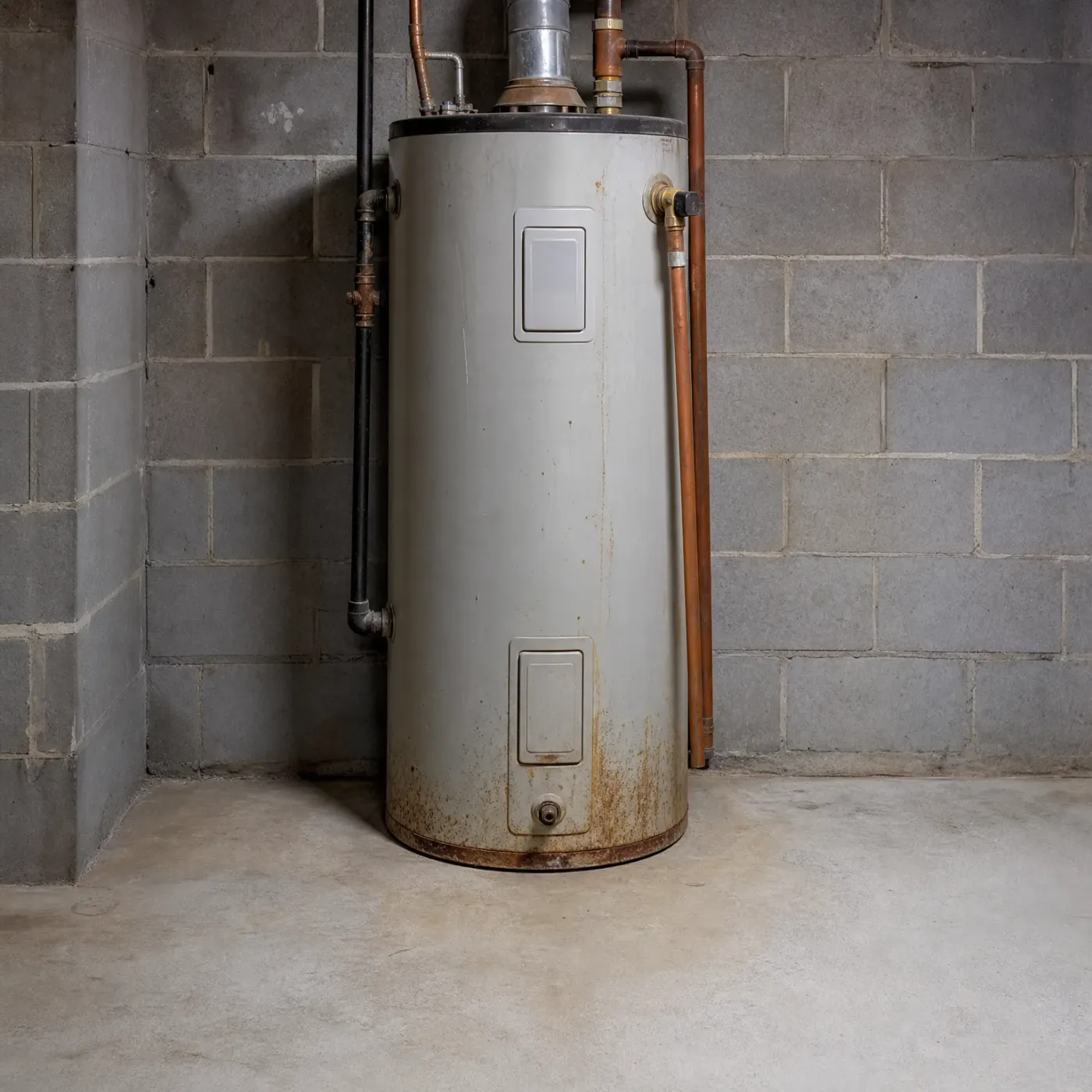
A rust-streaked cylindrical water heater with copper and black metal pipes stands in a concrete-block basement corner on a bare concrete floor.

Tank past its anode rod

Rust like this at the base and along the seams means the anode rod gave up a long time ago and the tank itself started corroding. At this point swapping the rod won't help. The smell is a symptom, but rust through the steel means the tank is the problem now.

What's that smell doing to your house

You probably notice it most in the shower, or when you run a hot tap in the kitchen. Laundry can pick it up too, especially towels and whites washed in hot water. Some households just stop using hot water as much, which isn't really a fix since the rod keeps reacting either way. Left alone, the smell doesn't go away on its own, and the corrosion the rod was meant to attract starts working on the tank steel instead once the rod is spent. That's how a smell turns into a tank that rusts through years earlier than it should have.

  1. Bacteria in the tank water reacts with the anode rod's metal coating.

  2. That reaction produces hydrogen sulfide gas inside the tank.

  3. The gas dissolves into the hot water sitting around the rod.

  4. Running a hot tap releases the gas and the smell hits the air.

Power here costs 12.22 cents per kilowatt-hour

At 12.22 cents a kilowatt-hour, running an electric water heater here costs less than in most places, so if a contractor says the fix is a new anode rod or an electric element rather than the whole tank, that's the cheaper problem to have twice over.

EIA-861 2025

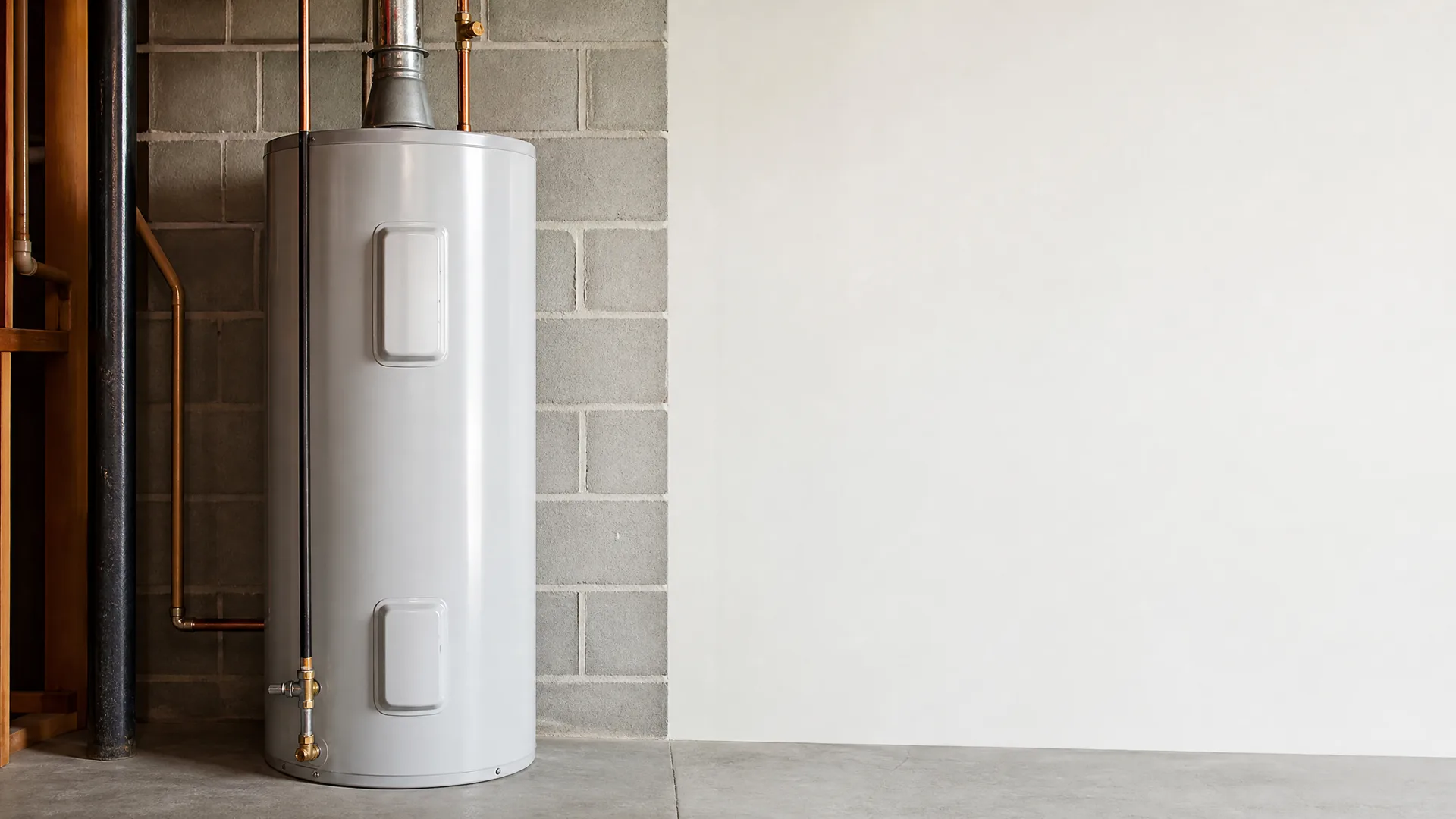
A white cylindrical water heater with two access panels stands against a concrete block wall with copper pipes and a vent, next to a plain light wall and concrete floor.

Leaving it alone

The smell doesn't go away on its own. Bacteria in the tank keep feeding on the rod, and the gas keeps forming every time water sits long enough to heat. Some households just stop using the hot side, washing dishes and showering cold, or they run a fan and hope it fades. It doesn't. The rod keeps reacting until someone pulls it, flushes the tank, or swaps it for a different metal. Waiting just means more loads of towels that smell like sulfur.

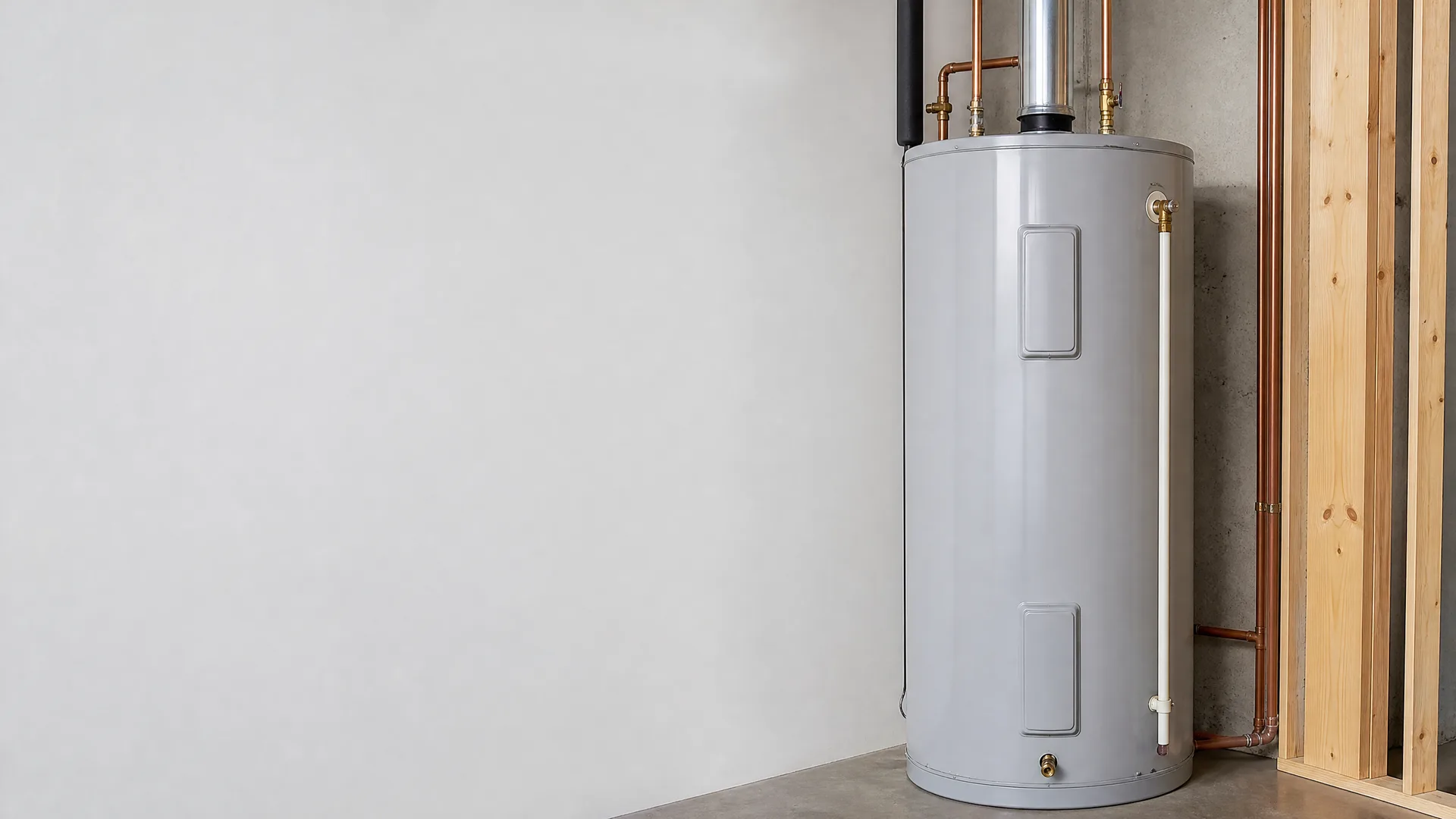
A gray cylindrical water heater stands in a corner against a plain light wall, with copper and black pipes above it and exposed wood framing to the right.

Having it looked at

A contractor can tell in a few minutes whether this is the rod, the water, or something else in the tank. They'll check what the rod is made of, flush out what's settled at the bottom, and swap it for a type that won't react the same way with your water. Once that's done you stop smelling it every time you run a hot tap. You don't have to track down who does this kind of repair or call around comparing quotes. That part is off your plate once you send the form.

A closed laptop and a ceramic mug of dark coffee sit on a wooden table, with a blurred kitchen counter, potted plant, wooden utensils and cutting boards, and a large window in the background.

The smell has an answer, and so does fixing it

The rotten egg smell comes from the anode rod reacting with bacteria in your tank water. A rod swap clears it most of the time, and a flush often takes care of what's left. That's the whole problem, even though it doesn't feel that way standing in your kitchen with the water running.

What's left is finding someone who can look at your tank and do it right, which usually means calling around, explaining what's coming out of your taps more than once, and sorting through quotes from people you've never dealt with before. Send the form once and that part is off your plate. You'll know where things stand without having to chase it yourself.

A shallow dark wooden bowl and a stack of books rest on a wooden table in front of a beige sofa with linen and green cushions, with a tall ceramic vase of thin branches beside a window in the background.
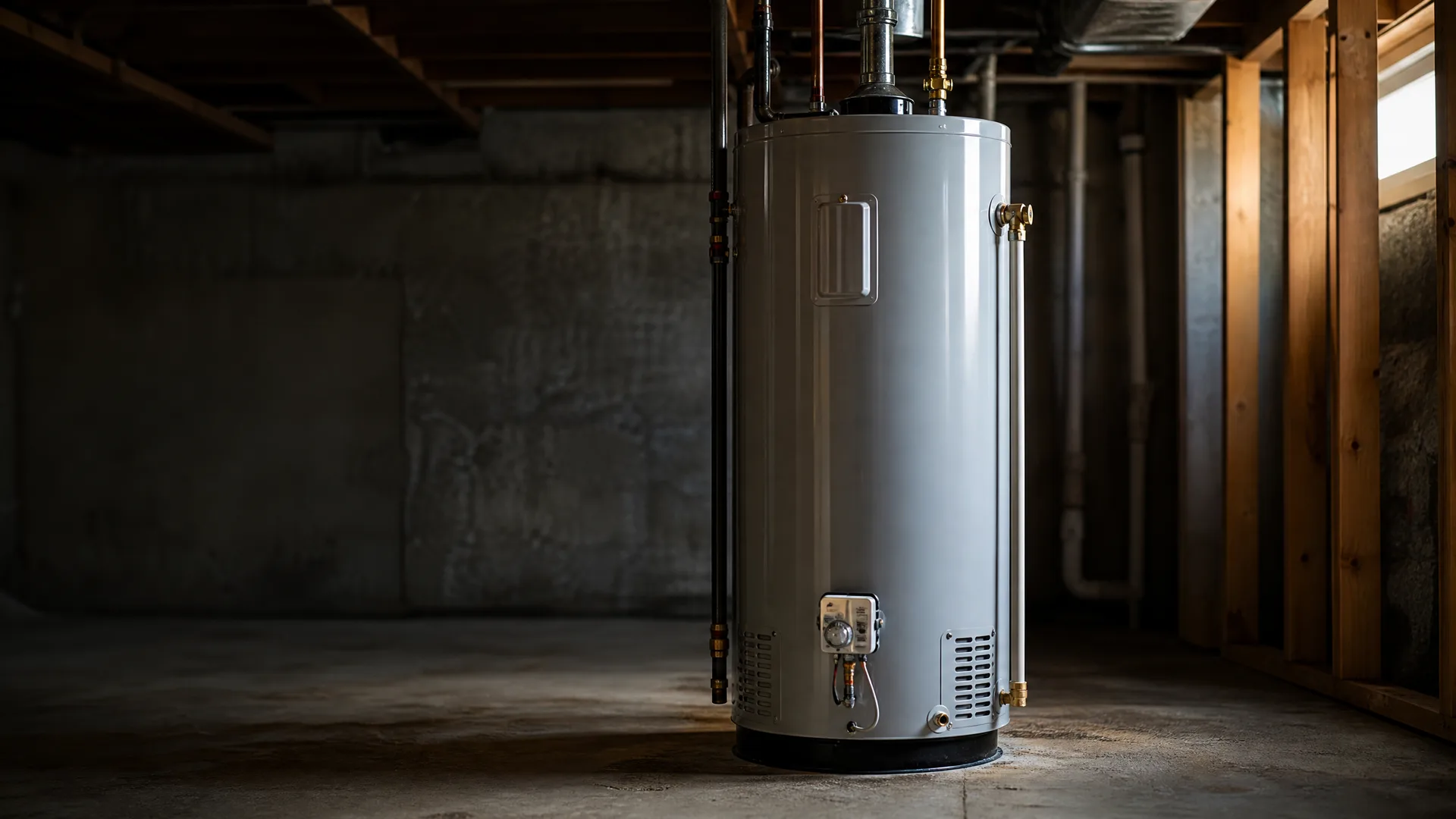
A white cylindrical gas water heater with copper and brass pipe connections stands on a concrete floor in a basement with exposed wooden joists and a concrete wall.

Done looking for a water heater pro

Step 1 of 3: Equipment