
Working the way it should
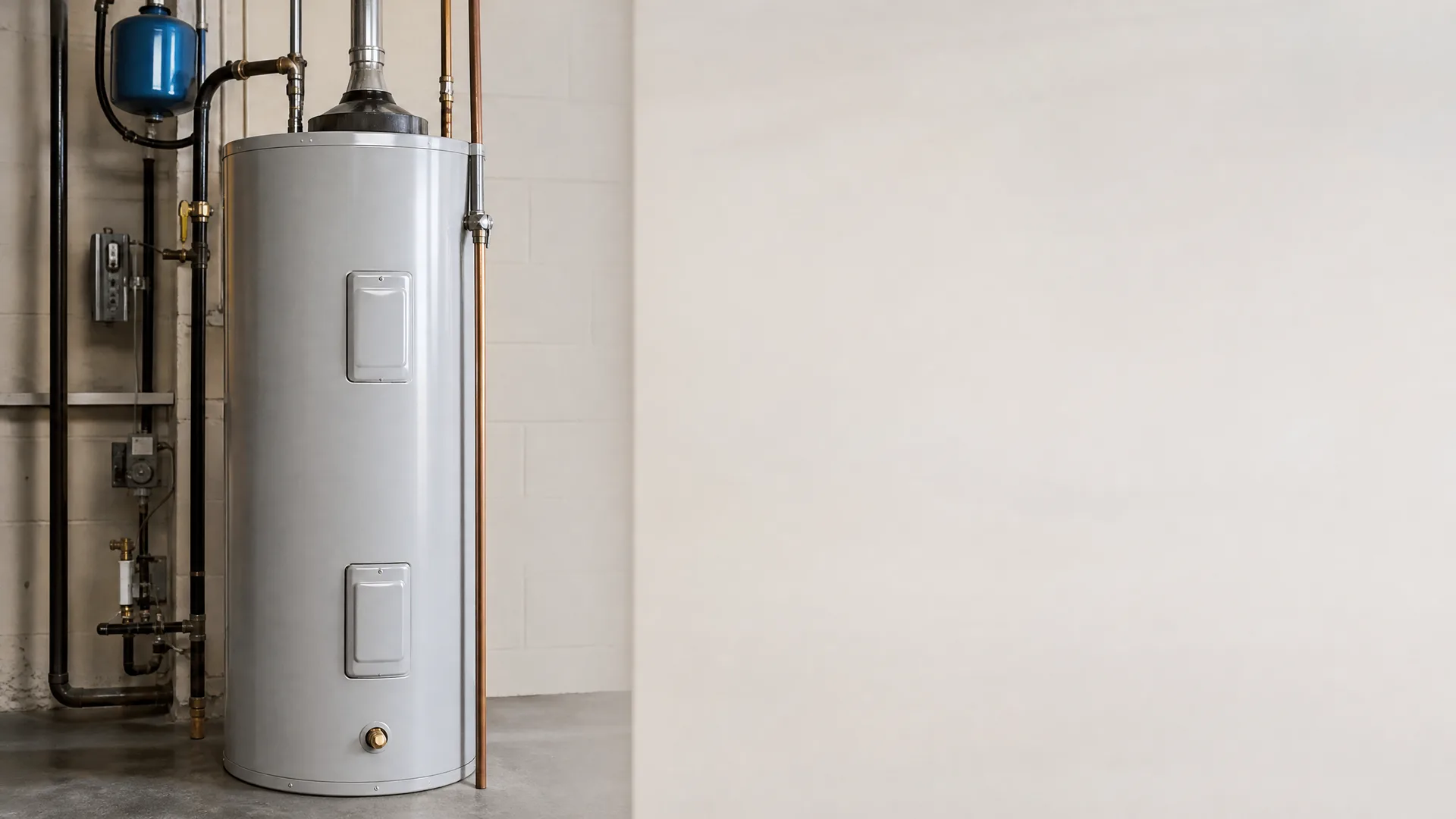
A tank like this heats water and holds it until you need it. The copper lines run hot water out to the house, and the expansion tank above it handles the pressure that builds as water heats up. No rust, no leaks, no strain.
Get matched with a pro who works on water heaters in Linn County.
Get my matchRunning out of hot water fast usually means the tank can't keep up with what the house needs anymore, or it never could. A family that added a dishwasher cycle or a teenager's long shower can outgrow a tank that used to be plenty. More often in a Cedar Rapids winter, the problem is the incoming water. Groundwater here runs much colder once the ground freezes, so the tank is starting from a lower point and has further to heat, which means the same amount of hot water empties faster and takes longer to recover. Sediment sitting at the bottom of the tank makes this worse, since it sits between the burner or element and the water and slows how fast heat actually gets through. If the heater is gas, a failing part on the burner assembly can also cut how much it heats per cycle. Either way, less hot water reaching the tap than there used to be is a sign something in the tank needs a look, not something to work around.
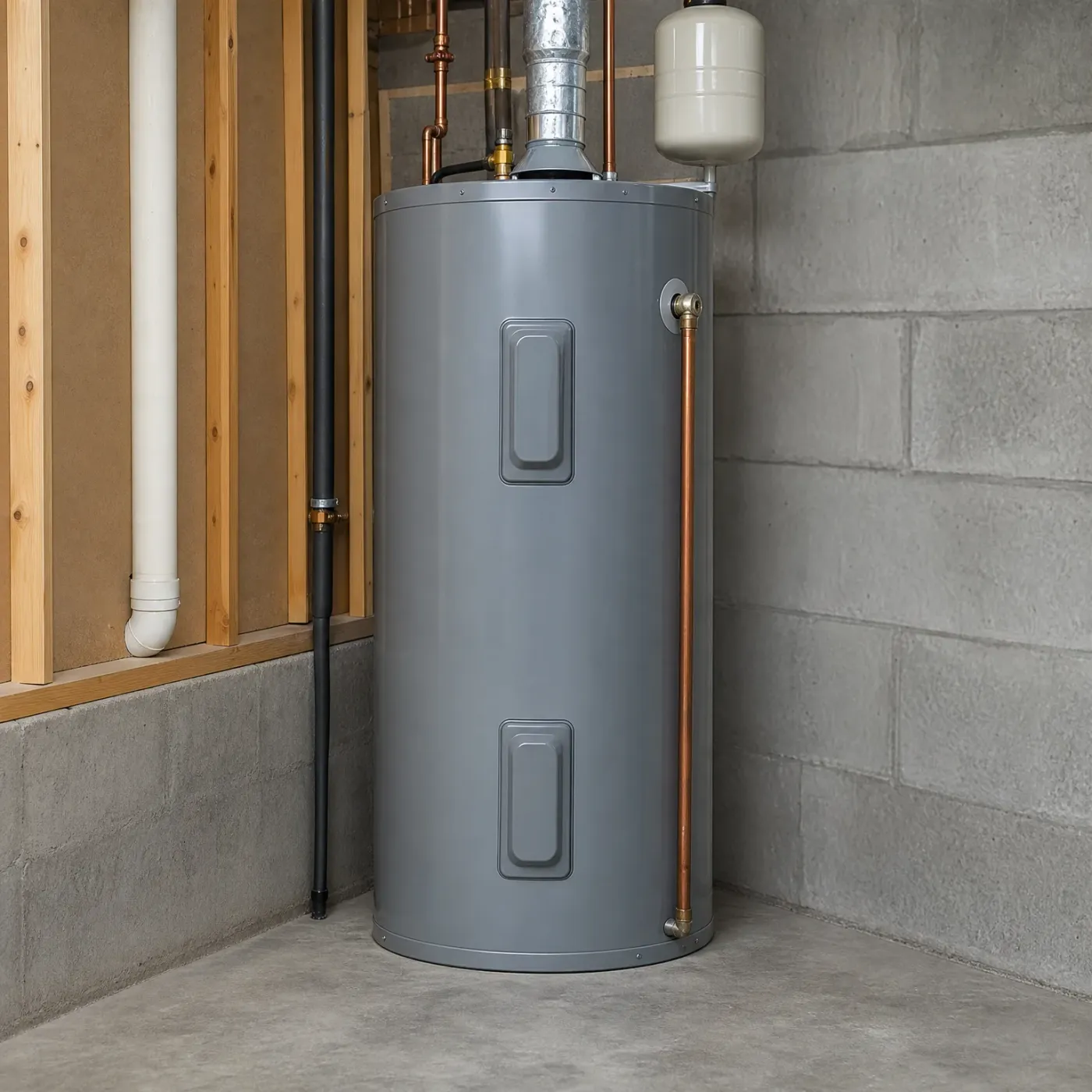
A tank like this heats water and holds it until you need it. The copper lines run hot water out to the house, and the expansion tank above it handles the pressure that builds as water heats up. No rust, no leaks, no strain.
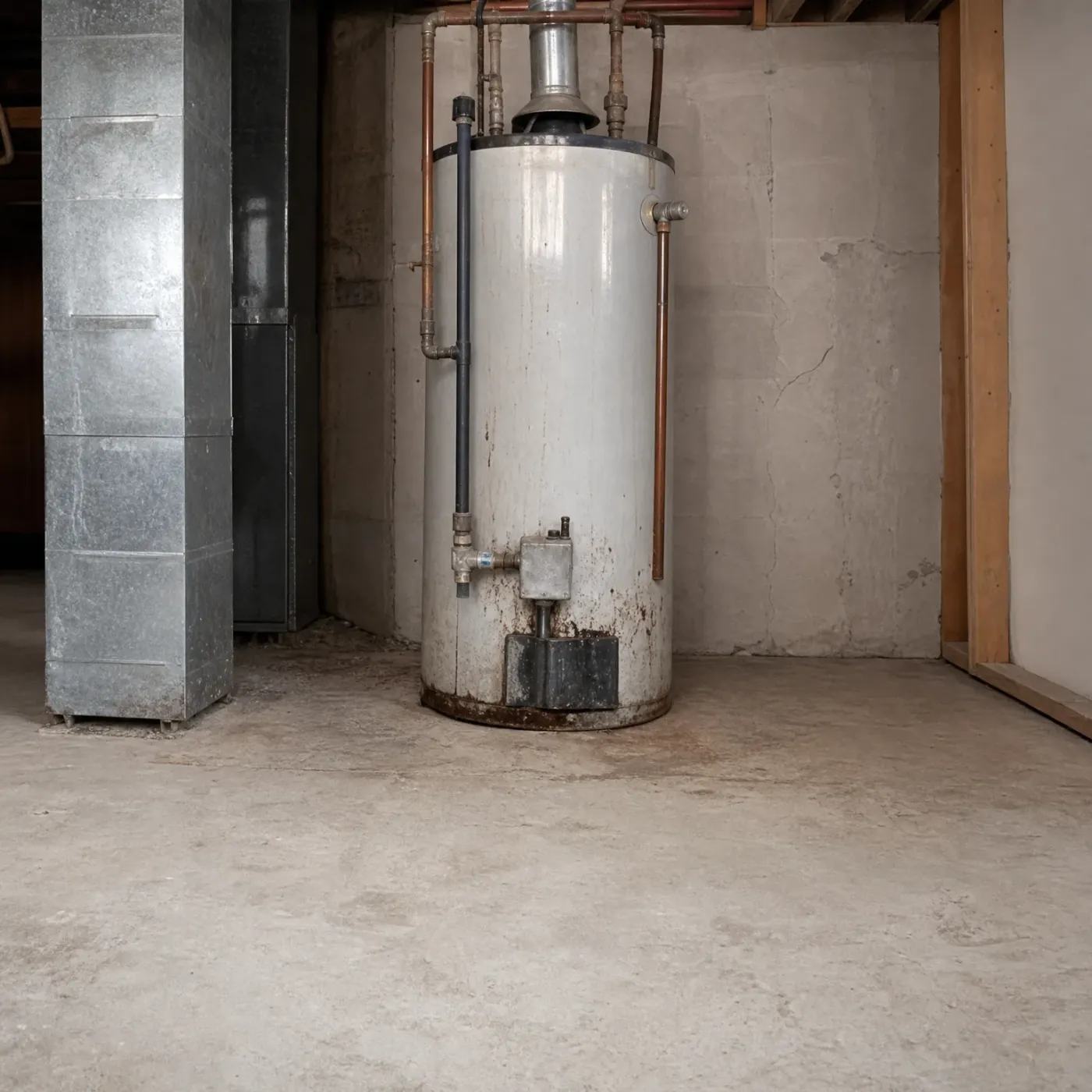
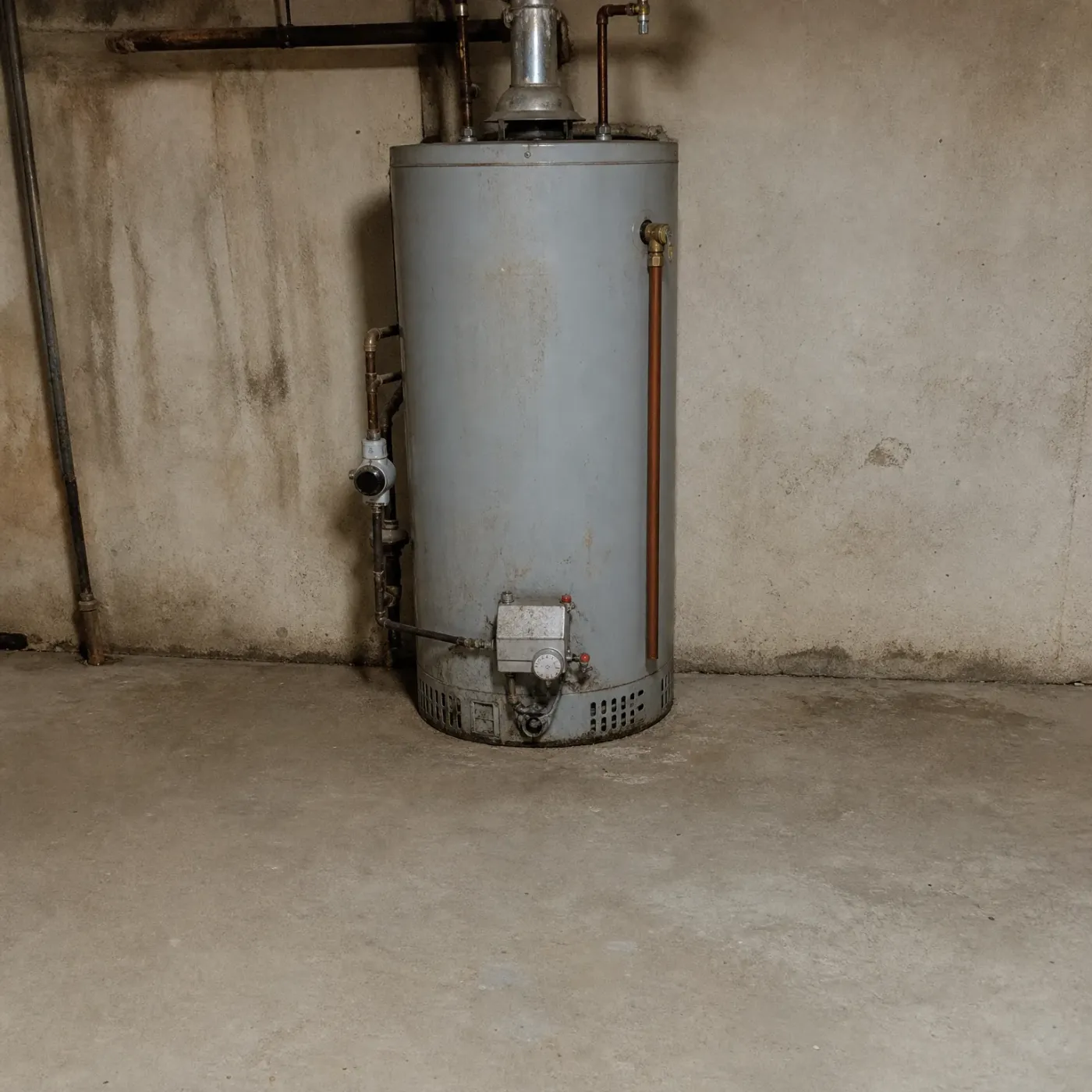
Rust like this on the tank and fittings means the steel is wearing through from the inside. Mineral deposits build up around the base and the connections. A tank in this shape is working harder to heat the same water, and it's closer to a leak than a fix.
2.35 people per household on average
A typical household here runs 2.35 people through showers, laundry and the dishwasher. A tank sized for fewer people falls behind fast.
Half the homes here were built by 1978
Half the homes in Linn County went up in 1978 or earlier. A tank that came with a house that age is working harder than it was built to.
74% of homes heat with gas
74 out of 100 homes here heat water with gas. A gas tank that's losing recovery speed shows up first as water that doesn't last through one shower.
ACS 2020-2024
A gas water heater sits over a burner, and over the years minerals in the water settle to the bottom of the tank. That layer hardens and builds up. Once it covers even a couple inches of the tank floor, it eats into how much water the tank actually holds, and it sits between the burner and the water, slowing how fast the burner can heat what's left. A tank that held 40 gallons of usable hot water when it was new may hold quite a bit less now, even though the label hasn't changed.
Every water heater has a thermostat that controls how hot the water gets before the burner or the element shuts off. If that thermostat drifts low, or a sensor reads the temperature wrong, the tank shuts off before the water reaches the setting on the dial. You get a tank that's technically full, but the water in it is lukewarm instead of hot, so it feels like it ran out faster than it should have. This is checkable: water that cools fast at the tap, not gradually, often points here.


Once the tank gives out partway through a routine, everyone after the first shower feels it. Mornings get rushed, and tempers go with the cold water.
A failing water heater can still raise your gas bill even as it gives you less hot water, since the burner runs longer to push heat through a layer of buildup.
Why does my water heater take so long to recover between uses?
A gas water heater heats water by firing a burner underneath the tank. That heat has to pass through the steel floor of the tank to reach the water above it. Once sediment builds up on that floor, the burner is heating the sediment first, and the sediment is a poor conductor compared to water. The flame runs longer to get the same result, and the tank takes longer to climb back up to temperature after a shower or a load of laundry empties it out. A tank with a couple inches of buildup can take noticeably longer to recover than it did the first year it was installed, even though the burner itself hasn't changed.




The pro who gets in touch is licensed in Iowa and works in Linn County.
No fee to send it, and nothing to sign.
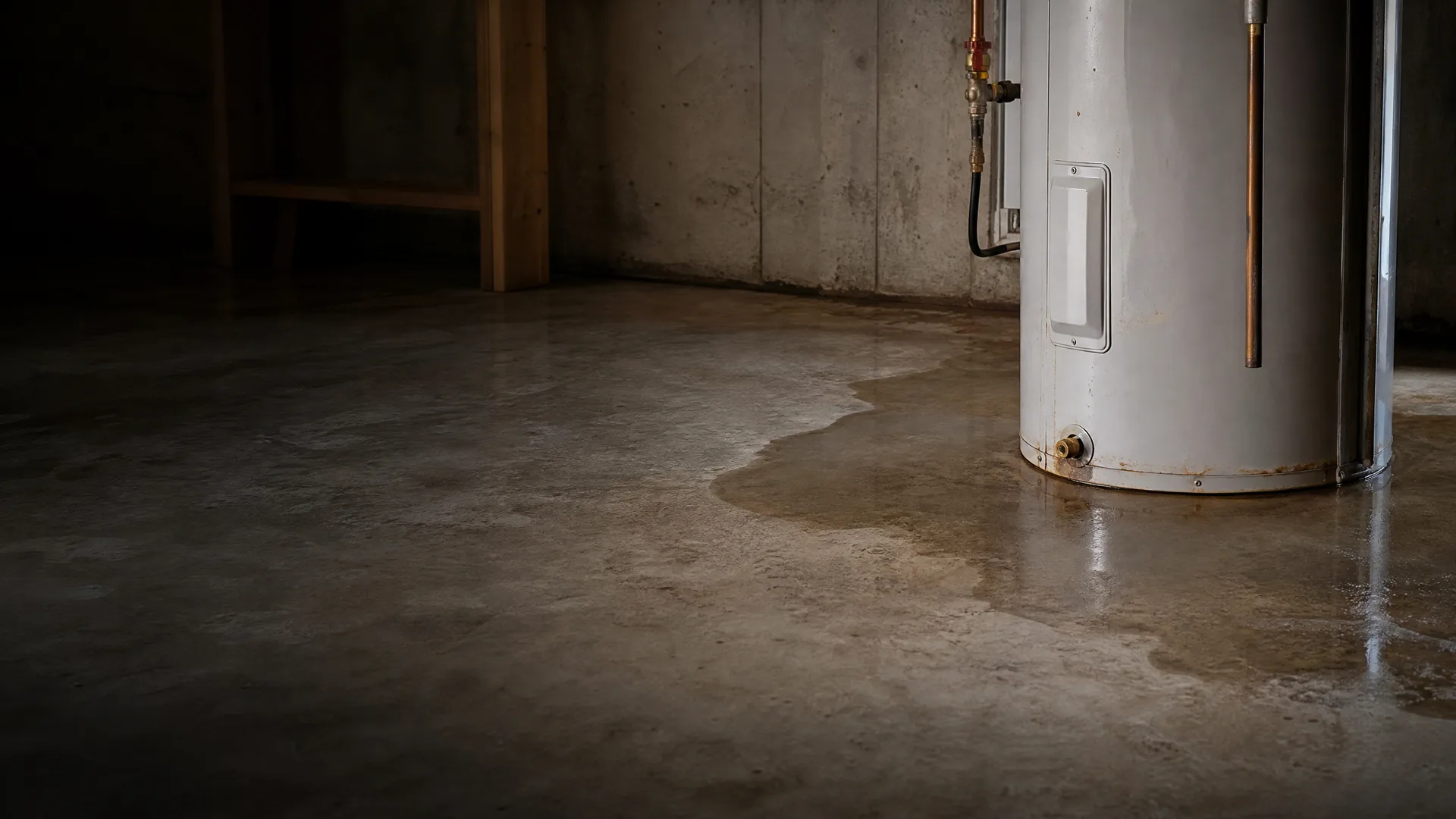
Saturday morning, laundry going, and you head down to the basement for something out of the closet. The floor near the water heater looks wrong before you place why, a sheen catching the light from the one window well. Then you see it, a small pool spreading out from the base of the tank, soaking into the concrete at the seam where it meets the floor. You crouch down and put a hand near the bottom. Wet, and still coming, a slow drip finding its way down the side of the tank. The laundry's still running upstairs. You turn off the water line and stand there a second, doing the math on how old this thing even is.
You notice it in the small ways first. The second shower in the house runs lukewarm, then cold, faster than it used to. The dishwasher finishes a load and the next load of laundry comes out of the wash cycle with a chill to it. Someone asks if the water heater is broken, and nobody's sure. You might hear the tank running longer than it used to, or notice the water taking a while to get hot at the tap. None of this means the tank is about to fail tonight, but a water heater that can't keep up usually isn't getting better on its own, and a tank working harder than it should is one more thing that can go wrong with a basement full of other things nearby.
Burner fires beneath the tank and heats the water above it
Hot water rises while the dip tube feeds in cold at the bottom
Thermostat shuts the burner off once the tank reaches its set temperature
Sediment on the tank floor forces the burner to fire longer and more often
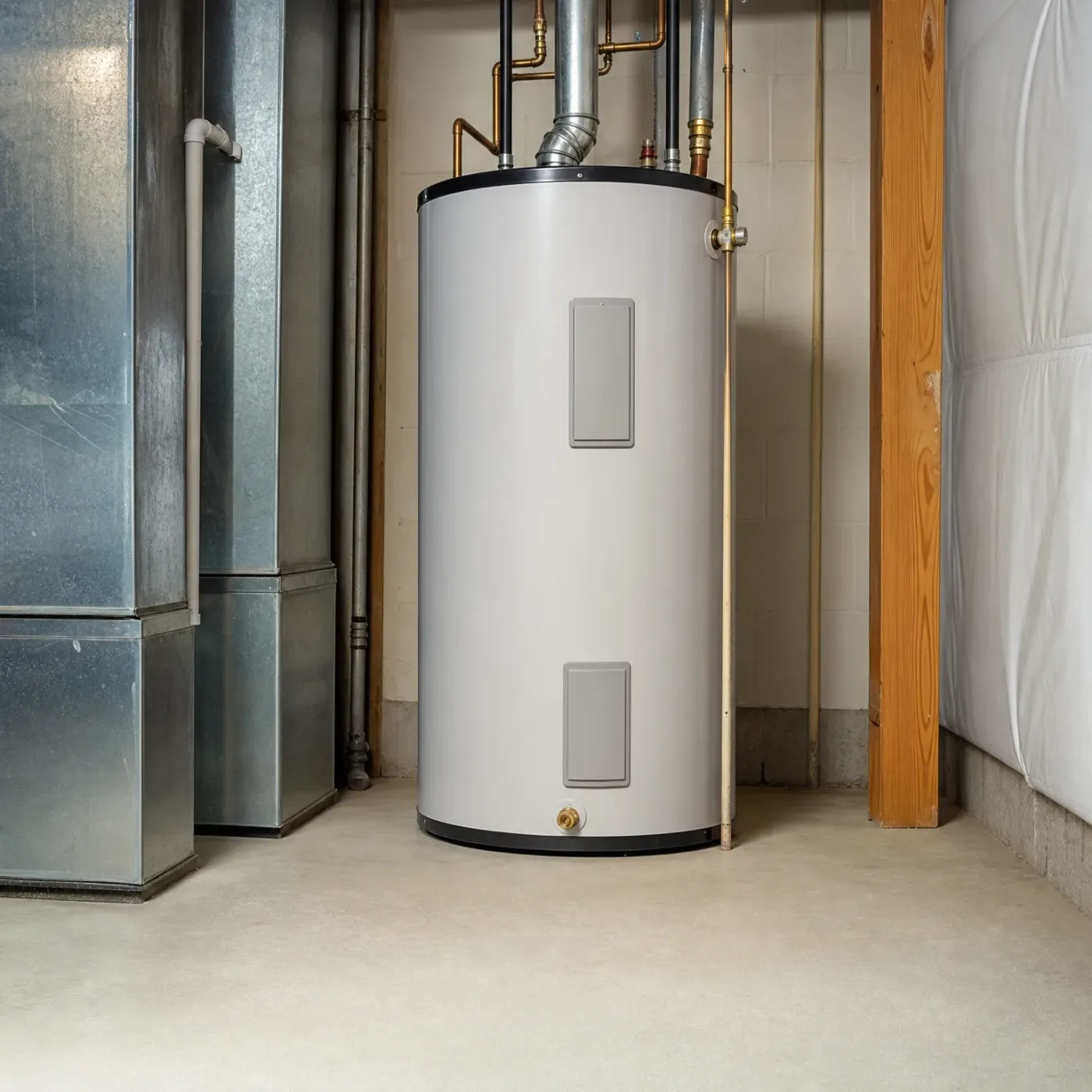
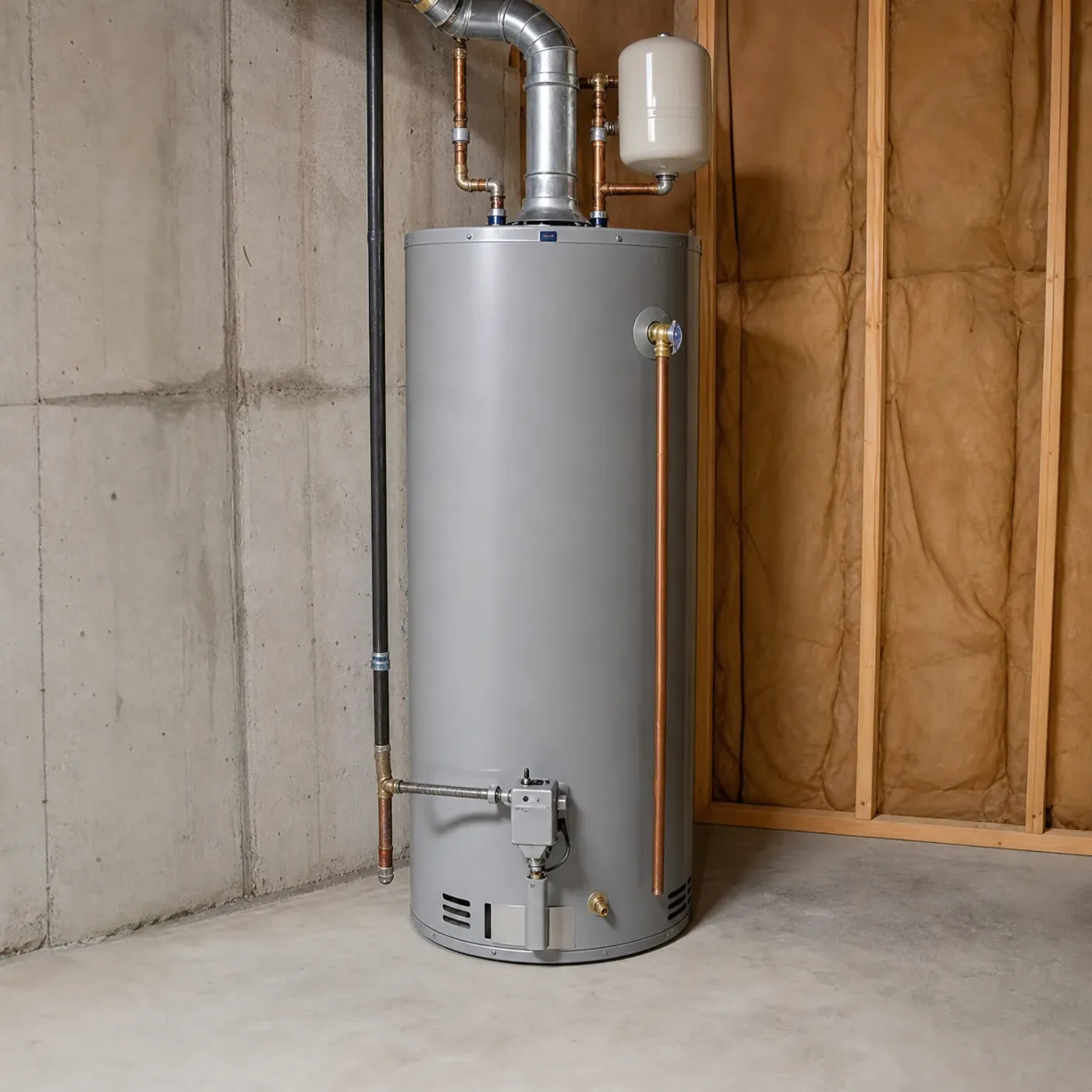
The copper lines run hot water out to the rest of the house, and the expansion tank mounted above handles the pressure that builds as the water heats. The burner fires, recovers, and shuts off on schedule. Nobody downstairs notices it's there.
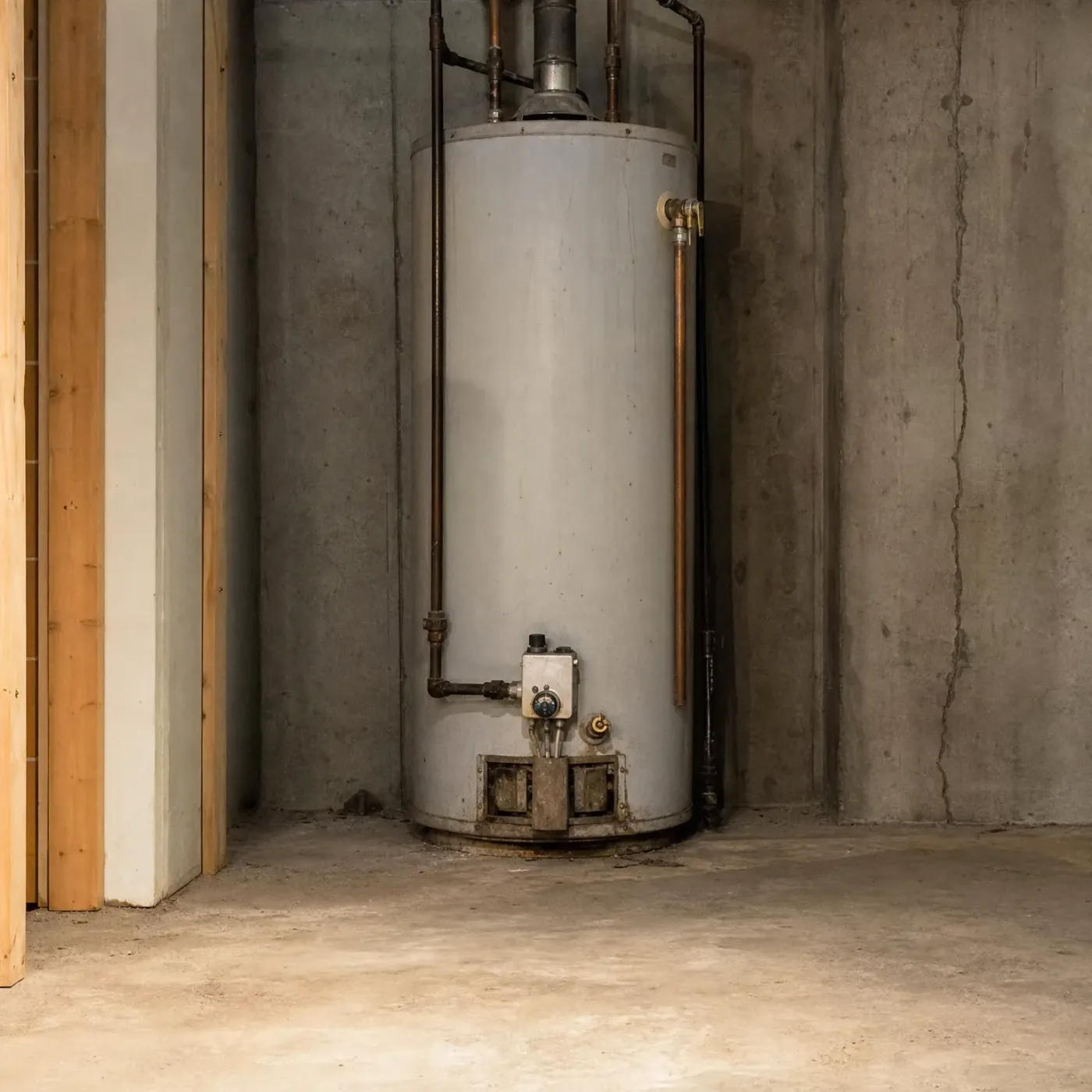
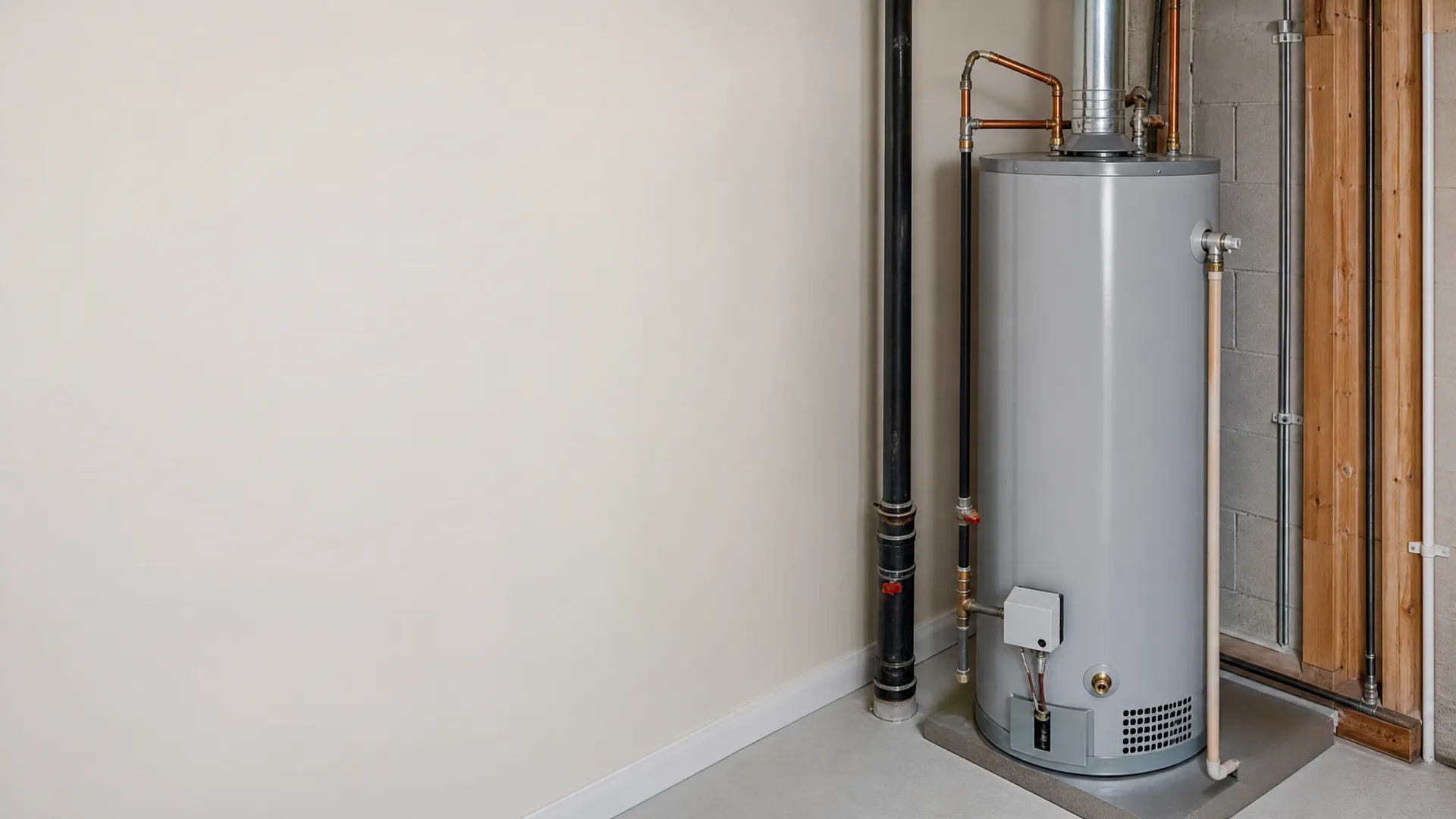
The gas control valve at the base has to work harder and longer to get the same result. Sediment sitting on the tank floor between the burner and the water slows recovery, so the dial runs more than it used to just to keep up with one load of laundry.
Most homes in this area heat water with gas, so electricity isn't what's driving the tank. But at 16.91 cents per kilowatt-hour, running an electric backup or an electric water heater here costs more than it would most places, and a unit working harder than it should to keep up shows up fast on the bill.
EIA-861 2025
Groundwater coming into the house drops into the 30s and 40s during a Cedar Rapids winter. The burner has to work from a colder starting point just to reach the same set temperature, so each tank of hot water takes longer to make and runs out sooner once the house starts pulling from it. A tank that kept up fine in July can fall behind in January without anything in it failing.
Incoming water runs warmer through the summer months, so the burner has less distance to make up before it hits temperature. Recovery is quicker, and the same tank stretches further through back to back showers and a load of laundry. If hot water is still running short in July, the water coming in isn't the reason. Something in the tank, the sediment, a heating element, a thermostat, is behind it instead.

A tank that can't keep up has a reason, whether it's sediment on the bottom, a heating element that's worn out, or a tank that was always too small for what your house asks of it on a Saturday with the laundry going and three people needing a shower. A contractor who works on these tanks all over Linn County has seen the pattern before and can tell you which one yours is.
From here, the next step is getting matched with a licensed contractor local to Cedar Rapids, one who services this kind of tank through winters that make the burner work harder than it should have to. Just the one contractor reaching out, not a handful of companies competing for the job. You'll know who's calling and why, and you can ask them what they find before anything gets fixed.

Get your water heater to the right pro